

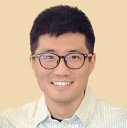
 Shaohan Hu
· 4 previous affiliations
- J.P. MorganSince 2021
- Executive Director · Since 2021
- Current
- Research Staff Member · 2016–2020
- PhD student · 2011–2017
Research Overview
Shaohan Hu focuses on ubiquitous computing, mobile sensing, and applied quantum computing. His early work addressed real-time data acquisition and deep learning frameworks for Internet of Things applications. More recently, his research has shifted toward quantum optimization algorithms, privacy-preserving data obfuscation, and efficient machine learning inference on resource-constrained devices.
Research Trajectory
Following his doctoral studies at the University of Illinois at Urbana-Champaign, Hu's initial research addressed mobile systems and real-time data acquisition. He developed methods for vehicular networking in Towards automatic phone-to-phone communication for vehicular networking applications and explored decision-making under strict timing constraints in Data Acquisition for Real-Time Decision-Making under Freshness Constraints.
This systems-level focus evolved into managing semantic information, as seen in Decision-centric resource-efficient semantic information management. Concurrently, he contributed to deep learning frameworks for mobile sensing. In DeepSense: A Unified Deep Learning Framework for Time-Series Mobile Sensing Data Processing, he helped design architectures to process noisy time-series inputs from on-device sensors like accelerometers and gyroscopes. During this period, his research broadly encompassed areas such as Time Series Forecasting in the Frequency Domain, Spatiotemporal Feature Fusion with Convolutional Recurrent Networks, and Unified Multi-Modal Perception for Heterogeneous Sensor Suites.
Moving toward the late 2010s, Hu continued to participate in IoT and sensor research. He collaborated on self-attention mechanisms for heterogeneous sensors in SADeepSense: Self-Attention Deep Learning Framework for Heterogeneous On-Device Sensors in Internet of Things Applications. He also contributed to STFNets: Learning Sensing Signals from the Time-Frequency Perspective with Short-Time Fourier Neural Networks, which explored extracting features in the frequency domain for physical phenomena.
During his time at the IBM T. J. Watson Research Center around 2018, Hu's trajectory expanded significantly into quantum computing. He introduced frameworks for mapping computationally hard problems onto quantum hardware, beginning with Automatically solving NP-complete problems on a quantum computer. He further developed these mapping techniques in Reduction-Based Problem Mapping for Quantum Computing. His work also addressed hardware-specific constraints, such as designing Efficient Circuits for Quantum Search over 2D Square Lattice Architecture. Notably, he was a key contributor to Qiskit: An Open-source Framework for Quantum Computing, a foundational open-source tool for programming noisy quantum computers at the pulse, circuit, and algorithm levels.
In the 2020s, aligning with his work at the Global Technology Applied Research Center at JPMorgan Chase, his quantum research matured into applied optimization on physical hardware. He directed the development of a quantum algorithm that natively enforces constraints for optimization problems, demonstrated in Constrained quantum optimization for extractive summarization on a trapped-ion quantum computer. This work advanced the research direction of Restricting Quantum Search to Feasible Subspaces. During this period, he also contributed to the broader area of Reducing Communication Latency in Hybrid Quantum Classical Systems. He subsequently participated in research providing empirical backing for quantum speedups, collaborating on Evidence of scaling advantage for the quantum approximate optimization algorithm on a classically intractable problem, which evaluated QAOA on the Low Autocorrelation Binary Sequences problem.
Alongside his quantum computing research, Hu has maintained an active presence in machine learning, particularly concerning privacy, efficiency, and continual learning. He collaborated on data obfuscation frameworks in PASS: Private Attributes Protection with Stochastic Data Substitution, contributing to the area of The Information Theoretic Bottleneck of Attribute Entanglement. His recent work also includes optimizing neural networks for edge devices, as seen in On-Device Dynamic DNN Inference through Spatial Sparsity Exploitation, and addressing model adaptation in ECA: Efficient Continual Alignment for Open-Ended Image-to-Text Generation.
Current Directions
The most recent papers in the evidence point to a dual focus on applied quantum optimization and advanced machine learning systems. In the quantum domain, recent work investigates the scaling advantages of the Quantum Approximate Optimization Algorithm (QAOA) on classically intractable problems, bridging the gap between theoretical algorithms and noisy intermediate-scale quantum (NISQ) hardware.
In machine learning, current research addresses both privacy and efficiency. This includes developing stochastic data substitution frameworks to protect sensitive user attributes across diverse data modalities—such as images, audio, and sensor data—while preserving utility. Additionally, recent efforts explore on-device dynamic inference through spatial sparsity and efficient continual learning methods that allow image-to-text models to adapt to new visual distributions over time without catastrophic forgetting.
Profile updated
Loading new papers…
Other researchers whose papers cluster into the same research directions — a proxy for overlapping technical interests and shared intellectual neighborhoods.
See something wrong? Report a mistake