

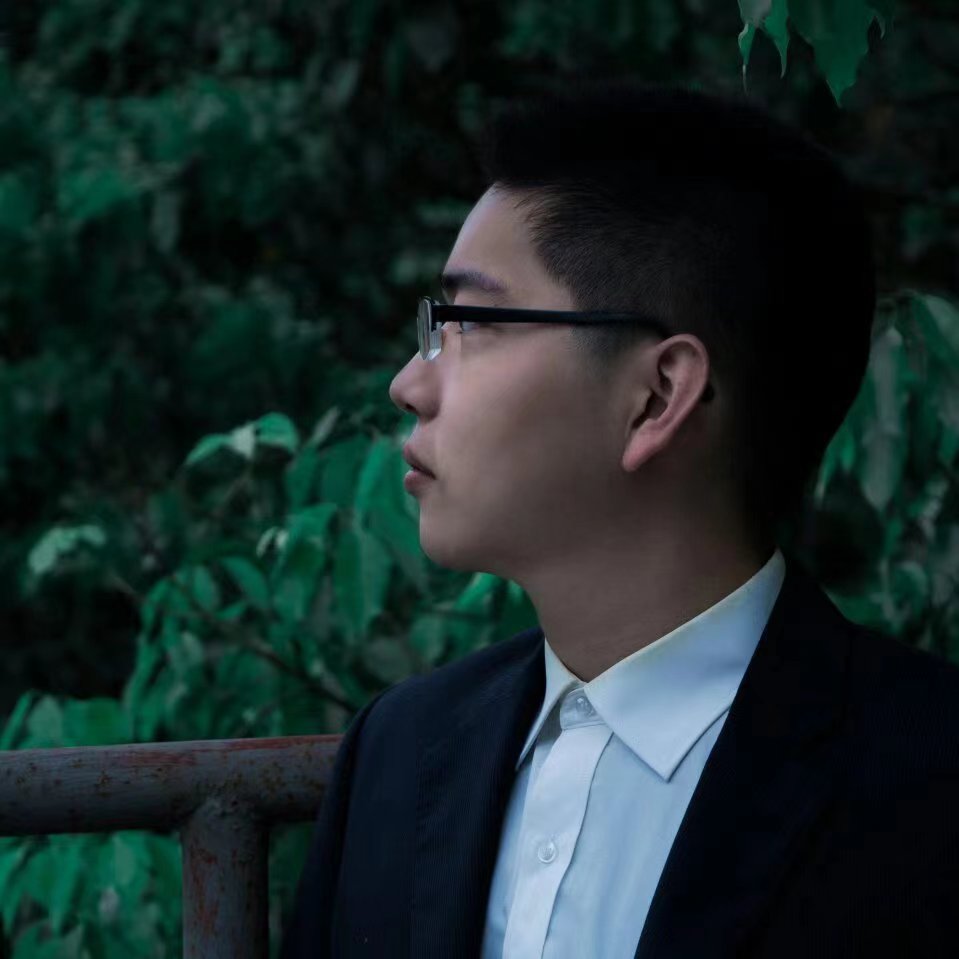
 Ge Yan
· 2 previous affiliations
- Nanyang Technological UniversitySince 2025
- Postdoc · Since 2025
- Shanghai Jiao Tong University2020–2025
- PhD student · 2020–2025
2 other authors named Ge Yan: Ge Yan (University of California San Diego · 14 papers), Ge Yan (University of Washington · 7 papers)
Research Overview
Ge Yan focuses on quantum machine learning, automated quantum circuit synthesis, and variational quantum algorithms. His trajectory spans from early work in quantum graph representation learning to the development of symmetry-preserving circuits for constrained combinatorial optimization. Most recently, his research addresses the practical deployment of quantum systems, including low-latency quantum error correction and the design of quantum neural operators for differential equations.
Research Trajectory
Ge Yan’s early research involved participation in classical network algorithms, exploring parallel greedy algorithms for multiple influence maximization in social networks in Parallel Greedy Algorithm to Multiple Influence Maximization in Social Network (2021). He subsequently transitioned to quantum computing, seeking to overcome the scalability bottlenecks of classical graph learning. In 2022, he introduced a native quantum paradigm for graph representation learning, utilizing a sampling-based recurrent embedding approach to process graph data more efficiently on near-term quantum hardware in Towards a Native Quantum Paradigm for Graph Representation Learning: A Sampling-based Recurrent Embedding Approach.
By 2023, his focus expanded to the more complex domain of 3D graph structures, particularly for molecular applications. He developed a quantum machine learning framework that encodes relative spatial coordinates directly into qubits using parameterized quantum circuits in Quantum 3D Graph Learning with Applications to Molecule Embedding. This work advanced the research direction of Invariant Geometric Representations for 3D Deep Learning and contributed to the broader area of The Quantum Simulation to Hardware Performance Gap by achieving competitive results with significantly fewer parameters than classical models. He further expanded on this by proposing a quantum 3D embedding ansatz designed to learn latent representations of 3D structures directly from Hilbert space in Quantum 3D graph structure learning with applications to molecule computing.
Concurrently, he addressed the challenge of designing efficient quantum circuits. He collaborated on QAS-Bench: Rethinking Quantum Architecture Search and A Benchmark, which introduced a unified benchmark for evaluating search algorithms without domain-specific heuristics. This effort provided foundational datasets for the research direction of Automated Search for Optimal Quantum Circuit Architectures and the area of Automated Synthesis of Sparse Variational Quantum Circuits. Building on the need for efficient circuit design, he contributed to QuantumDARTS: Differentiable Quantum Architecture Search for Variational Quantum Algorithms, a framework utilizing the Gumbel-Softmax trick to search for highly accurate and shallow circuit architectures suitable for noisy quantum environments.
His research also tackled constrained combinatorial optimization using Variational Quantum Algorithms (VQAs). He participated in developing a quantum neural network to solve the Quadratic Assignment Problem (QAP) by treating it as a supervised learning task in Towards Quantum Machine Learning for Constrained Combinatorial Optimization: a Quantum QAP Solver. Recognizing that standard VQAs struggle to enforce hard constraints without relying on problematic penalty terms, he addressed this fundamental issue in Rethinking the symmetry-preserving circuits for constrained variational quantum algorithms. By employing Dynamical Lie Algebra, he designed Hamming Weight preserving quantum circuits that natively restrict the search space to valid states. He extended this methodology in Rethinking Parity Check Enhanced Symmetry-Preserving Ansatz, combining the Hamming Weight preserving ansatz with topological-aware parity checks on physical qubits to enforce error mitigation alongside hard constraints.
In 2024, his work increasingly considered the systems and compilation aspects of quantum computing. He was part of a team that introduced a noise-aware quantum job scheduler to reduce execution latency and improve efficiency in quantum cloud services in On Reducing the Execution Latency of Superconducting Quantum Processors via Quantum Job Scheduling. He also provided a comprehensive overview of the field's progress in Quantum Circuit Synthesis and Compilation Optimization: Overview and Prospects, synthesizing key technologies in logic circuit design, qubit mapping, and routing, while touching upon the research area of Graphical Calculus for Categorical Quantum Mechanics.
Moving into 2025 and 2026, his research shifted toward advanced quantum operators and error correction. He collaborated on QuanONet: Quantum Neural Operator with Application to Differential Equation, which sought to develop quantum counterparts to classical neural operators for solving computationally expensive nonlinear differential equations. Most recently, he investigated the critical trade-offs between accuracy and latency in neural decoders for quantum error correction in Rethink the Role of Neural Decoders in Quantum Error Correction. This work demonstrated that aggressive INT4 quantization, achieved through quantization-aware training, is essential for meeting the microsecond-scale latency requirements necessary for practical deployment on FPGAs.
Current Directions
The most recent work in the evidence addresses the practical deployment, scaling, and real-time operation of quantum systems. A primary focus is overcoming the latency bottlenecks inherent in quantum error correction (QEC). Recent research investigates how to optimize neural decoders for near-term quantum computers, emphasizing that aggressive quantization and specific architectural inductive biases are required to achieve the microsecond-scale inference speeds necessary for hardware deployment, such as on FPGAs. Concurrently, recent collaborative efforts explore the development of quantum neural operators. This direction aims to translate the success of classical neural operators into the quantum domain, providing new, scalable methods for solving complex, nonlinear differential equations that are otherwise computationally prohibitive.
Profile updated
Loading new papers…
Other researchers whose papers cluster into the same research directions — a proxy for overlapping technical interests and shared intellectual neighborhoods.
See something wrong? Report a mistake