

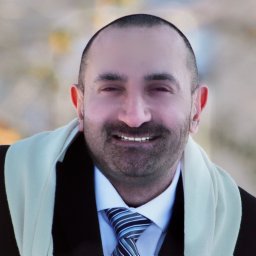
 Marco Pistoia
· 6 previous affiliations
- IonQ (United States)Since 2025
- CEO, IonQ Italia · Since 2025
- JPMorgan Chase & Co (United States)2020–2025
- Managing Director, Global Head of Applied Research, Global Head of Quantum Computing · 2020–2025
- J.P. Morgan2020–2025
- Principal Researcher · 2020–2025
- IBM Distinguished Researcher, Master Inventor, Senior Manager of Quantum Algorithms and Applications · 1996–2020
- New York University2000–2005
- PhD student · 2000–2005
- B.S.-M.S., Mathematics
Research Overview
Marco Pistoia focuses on quantum computing algorithms, quantum machine learning, and the intersection of quantum technologies with cybersecurity. His early work addressed classical program analysis and software security before transitioning to the development of foundational quantum software frameworks. His current research investigates quantum optimization, the trainability of variational quantum circuits, and practical applications of quantum hardware in finance and cryptography.
Research Trajectory
His early research addressed classical software security and program analysis. In Program Analysis and Programming Languages for Security, he explored foundational techniques for securing software systems. This focus on software integrity extended to mobile platforms, as seen in Program Analysis for Mobile Application Integrity and Privacy Enforcement, which proposed hybrid static and dynamic analysis methods to detect privacy violations in mobile applications.
As quantum computing matured, his focus shifted toward quantum software infrastructure and algorithms. He contributed to the development of foundational tools for the field, including Qiskit: An Open-source Framework for Quantum Computing, which provides a comprehensive platform for programming noisy intermediate-scale quantum devices at the level of pulses, circuits, and algorithms.
Applying quantum algorithms to industrial problems became a central theme of his work. With collaborators, he surveyed the potential for quantum disruption in the financial sector in Quantum Machine Learning for Finance, contributing to the area of Quantum Feature Mapping in High-Dimensional Hilbert Spaces. However, his subsequent research rigorously examined the limitations of these approaches. In Numerical evidence against advantage with quantum fidelity kernels on classical data, his team demonstrated that the hyperparameter tuning required to prevent spectrum flattening in quantum kernels often renders them mathematically similar to classical kernels, challenging assumptions about near-term quantum advantage. Despite these challenges, he continued to develop specialized architectures for financial applications, such as Quantum Deep Hedging, which introduced a noise-resilient quantum reinforcement learning framework for derivative hedging, advancing the research direction of Restricting Quantum Search to Feasible Subspaces.
A significant portion of his trajectory involves the Quantum Approximate Optimization Algorithm (QAOA). He participated in extensive numerical investigations of QAOA's scaling properties, such as in Evidence of Scaling Advantage for the Quantum Approximate Optimization Algorithm on a Classically Intractable Problem, which observed favorable runtime scaling on the low autocorrelation binary sequences problem compared to classical solvers. To address the classical optimization bottlenecks inherent in deep QAOA circuits, his group later developed Iterative Interpolation Schedules for Quantum Approximate Optimization Algorithm, proposing methods to mitigate the curse of dimensionality when optimizing circuit parameters.
His theoretical work has deeply investigated the trainability of variational quantum algorithms. In Characterizing barren plateaus in quantum ansätze with the adjoint representation, he provided a rigorous proof linking a quantum model's trainability to the dimension of its Dynamical Lie Algebra. This work showed that gradient variance scales inversely with the algebra's dimension, offering a theoretical foundation for the research direction of Designing Trainable Quantum Circuits by Constraining Dynamical Lie Algebras and informing broader work in the area of Symmetry Aware Quantum Circuit Architectures.
Building on the mathematical properties of Dynamical Lie Algebras, he explored the intersection of quantum machine learning and data privacy. Prospects of Privacy Advantage in Quantum Machine Learning established a fundamental trade-off between a model's trainability and its vulnerability to data recovery attacks. This theoretical vulnerability was practically demonstrated in A Numerical Gradient Inversion Attack in Variational Quantum Neural-Networks, which showed that private training data could be reconstructed from shared gradients in federated quantum machine learning, overcoming the protective effects of noisy loss landscapes.
Most recently, his research has expanded into continuous optimization and hybrid classical-quantum algorithms. To address the computational bottlenecks of retraining classical models on streaming data, he introduced QC-Forest: a Classical-Quantum Algorithm to Provably Speedup Retraining of Random Forest. He has also advanced the area of Zeroth Order Stochastic Optimization through Fast Convex Optimization with Quantum Gradient Methods, and explored real-valued coordinate optimization in On Speedups for Convex Optimization via Quantum Dynamics, contributing to the broader area of Overcoming the Quantum State Preparation Bottleneck. Bridging theoretical algorithms and physical hardware, he led the development of Certified randomness using a trapped-ion quantum processor, a protocol that combines quantum computation with exascale classical verification to generate certifiably random bits.
Current Directions
Recent work investigates the practical deployment of quantum algorithms for continuous optimization and the security implications of distributed quantum machine learning. A major focus is the development of quantum gradient methods for fast convex optimization, aiming to provide speedups for real-valued functions commonly found in machine learning and engineering. Concurrently, his research addresses the privacy-utility trade-off in federated quantum systems, analyzing how the mathematical structures that make quantum neural networks trainable also expose them to gradient inversion attacks. Finally, he continues to work on bridging the gap between theoretical quantum advantage and practical utility, utilizing trapped-ion processors to execute verifiable, real-world cryptographic protocols.
Profile updated
Loading new papers…
Other researchers whose papers cluster into the same research directions — a proxy for overlapping technical interests and shared intellectual neighborhoods.
See something wrong? Report a mistake