

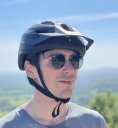
 Enrico Fontana
· 4 previous affiliations
- J.P. MorganSince 2024
- Researcher · Since 2024
- University of Strathclyde2019–2025
- PhD student · 2019–2025
- University of Cambridge2018–2019
- MS student · 2018–2019
- Imperial College London2015–2018
- Undergrad student · 2015–2018
Research Overview
Enrico Fontana focuses on variational quantum algorithms, quantum machine learning, and the theoretical limits of quantum optimization. His early work characterized the cost landscapes of parameterized quantum circuits, identifying how hardware noise and symmetries induce barren plateaus that hinder trainability. More recently, his research investigates the intersection of quantum trainability and classical simulability, alongside quantum speedups for convex optimization.
Research Trajectory
Fontana’s research initially concentrated on the fundamental properties of cost landscapes in parameterized quantum circuits (PQCs), a critical component of near-term quantum machine learning. He investigated the area of The Geometry of Optimization Failure in Flat Landscapes and the broader challenge of Bypassing the Optimization Bottleneck in Variational Quantum Algorithms. In Optimizing parametrized quantum circuits via noise-induced breaking of symmetries (2020), he analytically demonstrated that PQCs possess exponentially large symmetries, which lead to highly degenerate minima in the cost landscape. This theme was expanded in Non-trivial symmetries in quantum landscapes and their resilience to quantum noise (2022), which further explored how these structural properties interact with quantum noise, contributing to the research direction of Symmetry Aware Quantum Circuit Architectures.
Simultaneously, Fontana examined how hardware noise impacts state preparation and algorithm performance. In Evaluating the noise resilience of variational quantum algorithms (2021), he and his collaborators showed that overparameterizing a quantum circuit—adding more gates than strictly necessary—can help the algorithm find noise-resilient paths, maintaining higher fidelity despite hardware errors. However, noise also presents severe fundamental limitations. In Noise-induced barren plateaus in variational quantum algorithms (2021), he provided rigorous proofs that hardware noise flattens the training landscape exponentially as circuits grow deeper. This creates "noise-induced barren plateaus" that make it exceedingly difficult for classical optimizers to navigate the landscape, threatening the potential for quantum advantage.
Moving into 2023, his focus expanded to include classical simulation techniques for quantum systems. He introduced LOWESA in Classical surrogate simulation of quantum systems with LOWESA, a classical algorithm that constructs a surrogate landscape of expectation values. This approach allows researchers to evaluate families of Hamiltonians rapidly, matching or exceeding the performance of complex tensor network methods and near-term quantum hardware.
In 2024, Fontana returned to the theoretical foundations of barren plateaus, contributing to the research direction of Designing Trainable Quantum Circuits by Constraining Dynamical Lie Algebras. In Characterizing barren plateaus in quantum ansätze with the adjoint representation, he utilized the adjoint representation of Lie groups to prove that gradient variance scales inversely with the dimension of a circuit's Dynamical Lie Algebra. This work offered a mathematical framework to design trainable quantum neural networks that avoid untrainable flat landscapes.
By 2025, his collaborative work expanded into quantum optimization and the fundamental tension between trainability and classical simulability. He participated in research on quantum speedups for convex optimization, as seen in On Speedups for Convex Optimization via Quantum Dynamics, which established explicit query complexity bounds for the Quantum Hamiltonian Descent framework. He also contributed to the area of Zeroth Order Stochastic Optimization through Fast Zeroth-Order Convex Optimization with Quantum Gradient Methods. This work introduced quantum algorithms that achieve exponential speedups in dimensionality for zeroth-order convex optimization, matching the efficiency of classical methods that require full gradient access. Finally, addressing a critical open question in the field, he co-authored Does provable absence of barren plateaus imply classical simulability?. This perspective article explores the research direction of Trainability and Classical Simulability in Variational Quantum Learning, arguing that the architectural constraints required to avoid barren plateaus often restrict quantum models to small subspaces that can be efficiently simulated classically.
In 2026, Fontana investigated theoretical limits and algorithmic speedups for noisy inference and constraint satisfaction. In Hypergraph cycle enumeration for efficient inference of planted k-XOR with smooth trade-off, Fontana and colleagues introduced hypergraph cycle enumeration for detecting planted signals in problems such as sparse Learning Parity with Noise, demonstrating a subquadratic quantum speedup via quantum walks. Additionally, Fontana contributed to No Exponential Quantum Advantage for Decoded Quantum Interferometry with Local Quantum Decoders, which established that local decoders for decoded quantum interferometry on sparse constraint problems face information-theoretic thresholds that preclude exponential quantum speedups.
Current Directions
The most recent papers in the evidence address the theoretical limits and potential speedups of quantum optimization, decoding, and hypergraph inference algorithms. Recent work investigates quantum gradient methods and Quantum Hamiltonian Descent, exploring how quantum dynamics can accelerate convex optimization, particularly in high-dimensional or zeroth-order settings where classical methods struggle. Additionally, current research examines the fundamental trade-offs in variational quantum learning, specifically the tension between designing circuits that are trainable (by constraining their algebraic structure to avoid barren plateaus) and ensuring those same circuits remain complex enough to resist efficient classical simulation.
Profile updated
Loading new papers…
Other researchers whose papers cluster into the same research directions — a proxy for overlapping technical interests and shared intellectual neighborhoods.
See something wrong? Report a mistake