

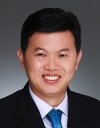
 Zhengguo Li
· 1 previous affiliation
- Principal Researcher · 2025–2035
- Principal Researcher · 2000–2025
Research Overview
Zhengguo Li focuses on computational photography, image enhancement, and monocular depth estimation. His early trajectory addressed dynamic systems and video coding before shifting toward high dynamic range imaging and edge-preserving filtering techniques. More recently, his research investigates physics-driven deep learning frameworks for 3D scene reconstruction and low-light image visibility.
Research Trajectory
Li’s early research investigated control theory and video processing. He developed methods for analyzing the Lyapunov stability of a class of hybrid dynamic systems (2000) and later introduced techniques for Adaptive rate control for H.264 (2006), addressing the complexities of video compression.
Transitioning into computational photography, Li focused heavily on exposure fusion and edge-preserving filtering. He proposed a quadratic optimization-based method in Detail-Enhanced Exposure Fusion (2012) to extract fine details simultaneously from differently exposed low dynamic range (LDR) images. Expanding on this framework, he addressed the challenge of moving subjects in Selectively Detail-Enhanced Fusion of Differently Exposed Images With Moving Objects (2014), incorporating a ghost removal algorithm and a content-adaptive bilateral filter to synthesize sharp images without artifacts.
In 2015, his group advanced local filtering techniques to mitigate the halo artifacts common in edge-preserving smoothing. He directed the development of Gradient Domain Guided Image Filtering, which incorporated an explicit first-order edge-aware constraint to better represent image structures. Concurrently, he introduced Weighted Guided Image Filtering, achieving linear computational complexity while avoiding halo artifacts, with applications spanning haze removal and detail enhancement. This line of work culminated in Detail-Enhanced Multi-Scale Exposure Fusion (2017), which utilized weighted guided image filters on Gaussian pyramids to preserve details in extreme lighting conditions without altering relative brightness.
Moving into the deep learning era, Li’s work bridged physics-based models and neural networks. In Hybrid Saturation Restoration for LDR Images of HDR Scenes (2021), he addressed the ill-posed problem of recovering lost details in saturated image regions. This work contributed significantly to the research direction of Overcoming Sensor Saturation and Dynamic Range Clipping and the broader area of Deghosting Multi Exposure Images in Dynamic Scenes.
Simultaneously, Li established a robust research program in monocular depth estimation (MDE). He guided the creation of SMUDLP: Self-Teaching Multi-Frame Unsupervised Endoscopic Depth Estimation with Learnable Patchmatch (2022), an unsupervised framework designed to handle textureless tissues and lighting fluctuations in medical imaging. Continuing to refine MDE architectures, his team developed URCDC-Depth: Uncertainty Rectified Cross-Distillation with CutFlip for Monocular Depth Estimation (2023), which fused Transformer and CNN paradigms while utilizing uncertainty rectification to filter noisy training labels. They also tackled the fundamental ambiguities of 3D reconstruction from 2D pixels in IEBins: Iterative Elastic Bins for Monocular Depth Estimation (2023). This focus on geometry-driven deep learning was further expanded in NDDepth: Normal-Distance Assisted Monocular Depth Estimation and Completion (2024), which modeled 3D scenes as piece-wise planes by estimating surface normal and plane-to-origin distance maps as intermediate outputs, contributing to the area of Geometric Priors for Generalizable Monocular Depth Estimation.
Most recently, Li has returned to complex image enhancement challenges, particularly in low-light and nighttime environments. He oversaw the design of A Semantic-Aware Detail Adaptive Network for Image Enhancement (2025), which separates images into high- and low-frequency components using a novel total variation regularization module. He also directed research on For Overall Nighttime Visibility: Integrate Irregular Glow Removal With Glow-Aware Enhancement (2026), proposing a physical model-guided framework to mitigate the diffusion of artificial light sources. Additionally, his work encompasses stereo vision, as seen in the development of SRNet: Self-supervised structure regularization for stereo matching (2026).
Current Directions
The most recent papers in the evidence indicate a strong focus on complex, real-world image enhancement and 3D vision tasks under challenging illumination. Recent work investigates physical model-guided frameworks for low-light image enhancement, specifically addressing the removal of irregular glow from artificial light sources to improve overall nighttime visibility. Additionally, ongoing research explores semantic-aware adaptive networks that leverage total variation regularization to recover texture details in degraded images. Beyond enhancement, current efforts also extend to self-supervised structure regularization techniques for stereo matching, continuing a long-standing interest in robust depth and geometry estimation.
Profile updated
| Title | Venue | Year |
|---|---|---|
| Asymptotic attitude tracking control for uncertain quadrotors based on enhanced controllability condition | Journal of Automation and Intelligence | 2026 |
| Semi-LAR: Semi-supervised Contrastive Learning with Linear Attention for Removal of Nighttime Flares | ICML | 2026 |
| SRNet: Self-supervised structure regularization for stereo matching | Neurocomputing | 2026 |
| ADVersa: Abductive Driving Accident Video Understanding | IEEE TPAMI | 2026 |
| Correlation Analysis of Generative Models | arXiv | 2026 |
| TIDAL: Temporally Interleaved Diffusion and Action Loop for High-Frequency VLA Control | arXiv | 2026 |
| For Overall Nighttime Visibility: Integrate Irregular Glow Removal With Glow-Aware Enhancement | Openreview | 2026 |
| GMDepth: Depth Completion via Global Dense-to-Sparse Matching | IEEE Trans. Instrumentation & Measurement | 2025 |
| A Semantic-Aware Detail Adaptive Network for Image Enhancement | IEEE TCSVT | 2025 |
| Data Speaks, But who Gives It a Voice? Understanding Persuasive Strategies in Data-Driven News Articles | IEEE TVCG | 2025 |
Loading new papers…
Other researchers whose papers cluster into the same research directions — a proxy for overlapping technical interests and shared intellectual neighborhoods.
See something wrong? Report a mistake