

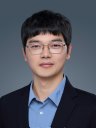
 Kui Jiang
· 3 previous affiliations
- Harbin Institute of TechnologySince 2023
- Associate Professor · Since 2023
- Wuhan University2017–2022
- PhD student · 2019–2022
- MS student · 2017–2019
- Researcher · 2022
Research Overview
Kui Jiang focuses on computer vision, specifically image and video restoration, robust machine perception, and computational pathology. His early work concentrated on super-resolution and deraining algorithms to recover high-frequency details in degraded visual data. More recently, his research has expanded to include multi-modal depth estimation, talking-head generation, and efficient sequence modeling for gigapixel whole-slide images.
Research Trajectory
Jiang’s early research addressed the challenges of enhancing low-resolution remote sensing imagery, where noise and atmospheric interference complicate detail recovery. In 2018, he introduced the Deep Distillation Recursive Network for Remote Sensing Imagery Super-Resolution, utilizing ultra-dense residual blocks to improve upon standard convolutional neural networks for satellite video. Continuing this focus, he developed the Edge-Enhanced GAN for Remote Sensing Image Superresolution (2019), which employs an adversarial learning strategy to recover structural details in noise-contaminated conditions. This early focus established his foundation in the broader area of Preserving High-Frequency Textures in Image Restoration.
His focus subsequently expanded to removing weather-based degradations, a critical component of the research direction Image Restoration for Downstream Machine Perception. Recognizing that rain streaks appear at various scales and distances, he proposed the Multi-Scale Progressive Fusion Network for Single Image Deraining in 2020, which leverages complementary information across different image resolutions to represent and remove rain patterns. To balance restoration quality with computational efficiency for downstream vision tasks, he developed a progressive coupled network in Rain-Free and Residue Hand-in-Hand: A Progressive Coupled Network for Real-Time Image Deraining (2021). He further refined this process with DANet: Image Deraining via Dynamic Association Learning (2022), an architecture that explicitly models the latent correlation between rain streak prediction and background texture recovery.
Alongside weather degradations, Jiang investigated illumination challenges and temporal dynamics, aligning with work in Cross Task Generalization in Image Restoration. In Degrade Is Upgrade: Learning Degradation for Low-Light Image Enhancement (2022), he introduced a two-step generation network inspired by color image formulation, which first estimates illumination degradation and then refines content to recover diffuse color. For video data, he designed a one-stage framework for spatial-temporal video super-resolution (ST-VSR) in Spatial-Temporal Space Hand-in-Hand: Spatial-Temporal Video Super-Resolution via Cycle-Projected Mutual Learning (2022), using iterative projection units to mutually refine spatial details and temporal correlations. He advanced ST-VSR further with Store and Fetch Immediately: Everything Is All You Need for Space-Time Video Super-resolution (2023), utilizing bidirectional memory containers to retrieve high-resolution features from distant frames to reconstruct occluded or fast-moving sequences. This work touches upon the complexities of Navigating One-to-Many Mappings in Image Restoration. His broader contributions to restoration and enhancement also intersect with areas such as Language Guided Image Restoration and Enhancement and Overcoming Low Frequency Bias with Spectral Losses.
Jiang’s recent trajectory demonstrates a diversification into 3D generation, robust multimodal perception, and medical imaging. In the generative space, he developed M2DAO-Talker: Harmonizing Multi-granular Motion Decoupling and Alternating Optimization for Talking-head Generation (2025), a framework leveraging 3D Gaussian Splatting to decouple head, facial, and oral motions for high-fidelity audio-driven synthesis. In the domain of depth estimation, he led a project combining RGB and thermal camera data to improve monocular depth estimation in challenging conditions, detailed in Unveiling the Depths: A Multi-Modal Fusion Framework for Challenging Scenarios (2025). He also addressed adverse weather conditions directly with Always Clear Depth: Robust Monocular Depth Estimation Under Adverse Weather (2025), which utilizes diffusion models for synthetic data generation and multi-layered knowledge distillation to maintain perception in "blind" conditions like heavy rain.
Concurrently, Jiang has applied advanced sequence modeling to computational pathology. He introduced M3amba: Memory Mamba is All You Need for Whole Slide Image Classification (2025), adapting state-space models to efficiently handle the massive scale of gigapixel images in multi-instance learning without the quadratic complexity of standard Transformers. He also addressed the challenge of noisy pseudo-labels in this domain with OODML: Whole Slide Image Classification Meets Online Pseudo-Supervision and Dynamic Mutual Learning (2025), implementing an online mutual learning loop to simultaneously refine features and labels during training.
Most recently, his work has emphasized label-efficient and lightweight models for image enhancement. He collaborated on Self-Supervised Learning on A Lightweight Low-Light Image Enhancement Model with Curve Refinement (2026), which trains exclusively on low-light images to overcome sample bias and enable mobile deployment. He also participated in developing Semi-LAR: Semi-supervised Contrastive Learning with Linear Attention for Removal of Nighttime Flares (2026), a semi-supervised framework that leverages AI-driven quality assessment and contrastive loss to remove lens flares using predominantly unlabeled real-world data.
Jiang has also advanced diffusion-based and agentic architectures for video and multi-task restoration. In PrismRestore: A Compact Restoration Toolbox for Agentic Image Restoration (2026), they constructed a compact prior bank from a single frozen model to enable callable action composition, advancing All-in-One Image Restoration for Compound Degradations. For dynamic weather degradation, Jiang co-authored ReCoRain: Reliability-Coupled Content and Noise Conditioning for Event-Guided Video Deraining (2026), which couples temporal content transfer and noise coordination via correspondence reliability while exploring principles related to Overcoming Low Frequency Bias with Spectral Losses, and participated in Selective Generative Restoration for Video Deraining via Uncertainty-Aware Diffusion (2026), which adaptively balances observation fidelity with generative priors using dual one-step diffusion uncertainty estimates. Additionally, Jiang contributed to underwater enhancement in TDD: Target-Discrepancy Distillation for Underwater Image Enhancement (2026), which distills vision-language target appearances and paired feature residuals into a lightweight network to execute progressive, correction-before-refinement fusion, contributing to Addressing Degradation Modeling Mismatch in Image Restoration.
Current Directions
The most recent papers in the evidence indicate a strong focus on scaling robust perception and classification to increasingly complex and resource-constrained environments. A primary current direction is the adaptation of efficient sequence modeling—such as state-space architectures—to handle the extreme dimensionality of gigapixel whole-slide images in computational pathology. Additionally, ongoing work investigates robust monocular depth estimation in adverse weather and low-light conditions by fusing multi-modal sensor data and leveraging synthetic data generation. Finally, there is a clear emphasis on label-efficient learning paradigms and uncertainty-aware or agentic diffusion frameworks for complex image and video restoration across mixed degradations.
Profile updated
Loading new papers…
Other researchers whose papers cluster into the same research directions — a proxy for overlapping technical interests and shared intellectual neighborhoods.
See something wrong? Report a mistake