

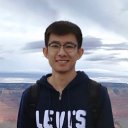
 Chongyi Li
· 4 previous affiliations
- Nankai UniversitySince 2023
- Full Professor · Since 2023
- Current
- Nanyang Technological University2020–2023
- Assistant Professor · 2021–2023
- Postdoc · 2020–2021
- City University of Hong Kong2018–2020
- Postdoc · 2018–2020
- Tianjin University2014–2018
- PhD student · 2014–2018
1 other author named Chongyi Li: Chongyi Li (1 paper)
Research Overview
Chongyi Li focuses on low-level computer vision, specifically image restoration, low-light enhancement, and underwater image processing. His trajectory spans from foundational physics-informed models for degraded environments to zero-reference learning and discrete codebook priors for blind restoration. His most recent work investigates diffusion-based generative priors and multimodal frameworks for high-fidelity image and video enhancement.
Research Trajectory
Li’s early research established foundational techniques for processing images captured in challenging environments, particularly underwater and low-light settings. In 2016, he developed Underwater Image Enhancement by Dehazing With Minimum Information Loss and Histogram Distribution Prior, addressing the complex scattering and absorption effects of aquatic environments. Recognizing the lack of standardized evaluation in this domain, he subsequently introduced An Underwater Image Enhancement Benchmark Dataset and Beyond (2020). This work provided the first large-scale, real-world dataset for underwater image enhancement (UIEB) and proposed a baseline deep learning model, Water-Net, to facilitate the training of convolutional neural networks for aquatic vision.
Parallel to his underwater research, Li made significant contributions to low-light image enhancement. In 2020, he introduced Zero-Reference Deep Curve Estimation for Low-Light Image Enhancement (Zero-DCE). This approach reformulated enhancement as an image-specific curve estimation task, allowing a deep network to be trained without any paired or unpaired reference images. This work advanced the area of Zero-Reference Learning for Image Enhancement and contributed to the broader area of Spatially Adaptive Parameter Maps for Image Restoration. He later synthesized the rapid advancements in this field by publishing Low-Light Image and Video Enhancement Using Deep Learning: A Survey (2022), which provided a comprehensive taxonomy of algorithms, loss functions, and network structures while introducing a new dataset captured under diverse illumination conditions.
As his focus expanded to highly ill-posed restoration tasks and higher resolutions, Li explored novel architectural priors. With collaborators, he participated in the development of CodeFormer, detailed in Towards Robust Blind Face Restoration with Codebook Lookup Transformer (2022). By casting blind face restoration as a code prediction task within a learned discrete proxy space, this work significantly reduced the ambiguity of restoration mappings, advancing the research direction of Image Restoration via Discrete Codebook Retrieval. Addressing the computational and qualitative challenges of modern camera sensors, he proposed UHDFour in Embedding Fourier for Ultra-High-Definition Low-Light Image Enhancement (2023). This cascaded network operated in the Fourier domain to jointly enhance luminance and remove noise, contributing to the area of Decoupling Style and Structure with Fourier Phase and Amplitude.
In recent years, Li’s research has increasingly leveraged large-scale generative models, diffusion frameworks, and multimodal architectures to tackle complex restoration and editing tasks. In the domain of super-resolution and blind restoration, his group developed DiT4SR: Taming Diffusion Transformer for Real-World Image Super-Resolution (2025), which embeds low-resolution inputs directly into the attention mechanisms of Diffusion Transformers to restore fine architectural and textual details. Building on his earlier codebook research, he also co-authored Incorporating Uncertainty-Guided and Top-k Codebook Matching for Real-World Blind Image Super-Resolution (2025), utilizing uncertainty estimation to prevent over-sharpened artifacts. For environments with mixed or unseen degradations, he guided the development of RAM++: Robust Representation Learning via Adaptive Mask for All-in-One Image Restoration (2025), an all-in-one framework that combines masked pre-training with semantic priors from vision foundation models.
Li has also extended his enhancement techniques to high-dynamic-range (HDR) imaging, video, and 3D reconstruction. He led the development of UltraLED: Learning to See Everything in Ultra-High Dynamic Range Scenes (2025), a framework that reconstructs ultra-high dynamic range scenes from a single short-exposure RAW image by decoupling exposure correction from denoising. For temporal consistency in high-resolution media, his work on VTinker: Guided Flow Upsampling and Texture Mapping for High-Resolution Video Frame Interpolation (2025) introduced a texture mapping strategy to eliminate ghosting in 4K video interpolation. Returning to aquatic environments, he adapted 3D Gaussian Splatting for underwater scenes in 3D-UIR: 3D Gaussian for Underwater 3D Scene Reconstruction via Physics Based Appearance-Medium Decoupling (2025). By integrating a physics-based imaging model, this approach achieves descattered real-time 3D reconstruction, furthering the domain of Channel Specific Restoration for Wavelength Dependent Light Attenuation. The intersection of these enhancement techniques with downstream perception is explored in his survey, Underwater Optical Object Detection in the Era of Artificial Intelligence: Current, Challenge, and Future (2026), which aligns with the broader area of Image Restoration for Downstream Machine Perception.
Finally, Li’s recent trajectory includes semantic editing and multimodal image quality assessment. He contributed to A Diffusion-Based Framework for Occluded Object Movement (2025), which seamlessly hallucinates missing object parts during relocation. He also explored personalized, region-aware editing through a vision-language model (VLM) agent in PerTouch: VLM-Driven Agent for Personalized and Semantic Image Retouching (2025). To evaluate the quality of such generated and user-captured content, he co-authored ViDA-UGC: Detailed Image Quality Analysis via Visual Distortion Assessment for UGC Images (2025), introducing a large-scale dataset and a Chain-of-Thought framework that allows AI models to locate and reason about specific visual distortions.
Current Directions
The most recent papers in the evidence indicate a strong focus on integrating generative AI—particularly diffusion models and vision-language models—into low-level vision tasks. Current work investigates how to adapt large-scale Diffusion Transformers (DiTs) for real-world super-resolution and how to utilize VLM-driven agents for personalized, semantic image retouching. Additionally, Li is actively exploring physics-informed 3D scene reconstruction in scattering media, adapting techniques like 3D Gaussian Splatting to decouple object appearance from environmental degradation. Another major ongoing theme is the development of explainable, multimodal frameworks for Image Quality Assessment (IQA), moving beyond numerical scoring to detailed, localized reasoning about visual distortions in user-generated content.
Profile updated
Loading new papers…
Other researchers whose papers cluster into the same research directions — a proxy for overlapping technical interests and shared intellectual neighborhoods.
See something wrong? Report a mistake