

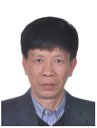
 Weihai Chen
· 2 previous affiliations
- Beihang UniversitySince 1992
- Full Professor · Since 2007
- Associate Professor · 1998–2007
- Postdoc · 1996–1998
- PhD student · 1992–1996
- MS student · 1985–1988
- Zhejiang University1978–1982
- Undergrad student · 1978–1982
Research Overview
Weihai Chen focuses on the intersection of robotics, computer vision, and autonomous systems, with a particular emphasis on kinematic control, perceptual sensing, and robust localization. His work has evolved from the fundamental mechanical analysis of redundant manipulators and cable-driven systems toward the development of sophisticated deep learning frameworks for 3D scene reconstruction and environmental mapping. Currently, his research addresses the challenges of high-precision localization in extreme environments and the extraction of physiological signals through non-contact imaging techniques.
Research Trajectory
The early stages of Chen’s research, beginning in the late 1990s, were primarily concerned with the mathematical and geometric foundations of robot kinematics. This period focused on the control of redundant manipulators, where the primary challenge was managing the additional degrees of freedom to avoid mechanical singularities and joint velocity limits. By developing methods to optimize joint velocities, Chen sought to improve real-time control efficiency, a theme that transitioned into the mid-2000s with the design of novel mechanical structures. During this time, he investigated cable-driven humanoid mechanisms, analyzing the coupling between joints and the workspace constraints inherent in parallel manipulators. This work established a rigorous approach to understanding how mechanical design influences the operational range and load capacity of robotic limbs.
In the 2010s, Chen’s focus expanded to include the integration of external sensors for autonomous navigation and human-machine interaction. This shift was marked by the application of depth-sensing technologies, such as the Kinect sensor, to the problem of obstacle detection for legged robots. Unlike wheeled vehicles, legged systems require a more nuanced understanding of terrain, and Chen’s work in this area emphasized real-time processing of environmental data to facilitate movement in complex spaces. Simultaneously, he participated in research involving human-centric robotics, including the development of EMG-controlled prosthetic hands and intelligent transportation systems. These projects reflected a growing interest in how robotic systems interpret and respond to human inputs and environmental stimuli, such as the modeling of driver decision-making in ramp-merging scenarios.
Since 2019, Chen’s research has increasingly centered on computer vision and Simultaneous Localization and Mapping (SLAM). This recent phase is characterized by the use of deep learning to solve long-standing problems in spatial awareness, such as loop closure detection and point cloud registration. His work in this domain addresses the "ill-posed" nature of Resolving Ambiguity in Monocular Depth Estimation, where models must infer 3D structure from 2D visual signals. To improve the accuracy of these reconstructions, he has explored Scene Adaptive Depth Discretization for 3D Vision, a method that optimizes how continuous space is discretized by neural networks.
Current Directions
Chen’s current research program is focused on enhancing the robustness of autonomous systems in challenging or "extreme" environments. This involves addressing the Error Propagation in Iterative Refinement Systems, where initial coarse estimates are systematically improved to reach high-fidelity outputs. A significant portion of this effort is dedicated to Uncertainty-Aware Depth Fusion and Spatial Refinement, which seeks to eliminate artifacts like "ghosting" or blurred edges that occur when sensors encounter noise or transparent surfaces.
To achieve more efficient 3D modeling, Chen has utilized Piecewise Planar Priors for Efficient 3D Scene Reconstruction, leveraging the geometric regularity of man-made environments to simplify complex point clouds. This is complemented by techniques for Sharpening Depth Discontinuities for Accurate 3D Reconstruction, ensuring that object boundaries remain distinct in three-dimensional space. Beyond navigation, Chen is also applying his expertise in image enhancement to the medical domain, specifically in remote photoplethysmography (rPPG). This work aims to enable non-contact heart rate monitoring in low-light conditions, bridging the gap between computer vision and clinical diagnostics.
Representative Work
Singularity avoidance based on avoiding joint velocity limits for redundant manipulators In this early work, Chen addresses the difficulty of dexterity control in redundant robots. The paper proposes a method to improve the weighted manipulability ellipsoid by optimizing joint velocities, allowing the robot's geometrical position and orientation to be optimized indirectly. This approach provided a computationally simple arithmetic suitable for real-time control, laying the groundwork for subsequent research into complex robotic kinematics.
Forward Kinematics and Workspace Analysis for a 7-DOF Cable-Driven Humanoid Arm This research introduces a novel design for a humanoid arm that combines cable-driven mechanisms with parallel manipulators. Chen analyzes the relationships between cable lengths and joint angles, specifically focusing on the coupling among joints in a 3-DOF parallel mechanism. The study provides a detailed workspace analysis, demonstrating how cable distribution affects the motion range and load capacity of bionic robotic systems.
Real-time obstacle detection for legged robots using the Kinect sensor Transitioning into perceptual robotics, this paper explores the challenges of autonomous navigation for legged robots in complex environments. Chen utilizes depth data from the Kinect sensor to develop a real-time obstacle detection framework. The work highlights the necessity of terrain-aware sensing for robots that possess different traverse capabilities than standard ground vehicles, marking a shift toward integrated sensing and motion planning.
Automatic Vocabulary and Graph Verification for Accurate Loop Closure Detection In this second-author contribution, Chen presents a self-supervised framework for Loop Closure Detection (LCD) in SLAM. The system addresses the problem of perceptual aliasing by using feature descriptor "drift" as a criterion for clustering and implementing a lightweight topological graph verification step. This method reduces the need for manual tuning of visual vocabularies, significantly improving the precision of robot localization over long durations.
Image Enhancement for Remote Photoplethysmography in a Low-Light Environment This paper addresses the failure of remote heart rate monitoring in dark environments. Chen introduces a specialized low-light image enhancement framework and a multi-illumination dataset. By stabilizing facial features and reducing signal noise, the proposed system makes non-contact physiological monitoring viable in environments as dim as 1 lux, demonstrating the application of computer vision in healthcare contexts.
LP-ICP: General Localizability-Aware Point Cloud Registration for Robust Localization in Extreme Unstructured Environments As the senior author, Chen presents LP-ICP, a point cloud registration framework designed for featureless or unstructured environments such as tunnels. The framework prevents "slipping" in LiDAR-based SLAM by analyzing the geometric contribution of individual points. By applying a combination of soft and hard optimization constraints, the system maintains high localization accuracy even when traditional algorithms suffer from geometric degeneracy.
Profile updated
Loading new papers…
Other researchers whose papers cluster into the same research directions — a proxy for overlapping technical interests and shared intellectual neighborhoods.
See something wrong? Report a mistake