

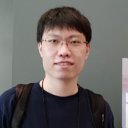
 Yu Zhang
· 3 previous affiliations
- Texas A&M UniversitySince 2025
- Assistant Professor · Since 2025
- PhD student · 2019–2024
- MS student · 2017–2019
- Peking University2013–2017
- Undergrad student · 2013–2017
50 other authors named Yu Zhang: Yu Zhang (Southern University of Science and Technology · 438 papers), Yu Zhang (Zhejiang University · 189 papers), Yu Zhang (University of Science and Technology of China · 147 papers), Yu Zhang (Southeast University · 109 papers), Yu Zhang (Stanford University · 104 papers), and 45 more
Research Overview
Yu Zhang focuses on natural language processing, data mining for scientific applications, and the integration of structural knowledge into large language models. His early work explored network influence and hierarchical topic mining, gradually evolving into deep representation learning for text-attributed graphs. Currently, he investigates agentic reasoning, curriculum reinforcement learning, and the optimization of language models for complex planning and tool use.
Research Trajectory
Yu Zhang's research trajectory begins with foundational work in network analysis and topic modeling, subsequently evolving into deep representation learning for text-rich networks and the application of large language models to scientific domains.
His early investigations explored information diffusion in social networks. He introduced a coordination game model to understand how information spreads, developing an efficient algorithm to accelerate influence maximization while maintaining high effectiveness (Top-K Influential Nodes in Social Networks: A Game Perspective). He also participated in unsupervised text analysis, contributing to methods for extracting hierarchical topics guided by category names to better align with user interests (Hierarchical Topic Mining via Joint Spherical Tree and Text Embedding).
Moving into large-scale text classification, Zhang focused on integrating external context to improve model performance. He developed the MATCH framework, which jointly learns representations for text and document metadata—such as authors and venues—while incorporating label hierarchy through regularization (MATCH: Metadata-Aware Text Classification in A Large Hierarchy). This work advanced the broader research areas of Grounding Text Representations with External Metadata and Modeling Label Dependencies in Multi-Label Learning. He subsequently extended these principles to zero-shot multi-label text classification. By leveraging document metadata to construct similar document pairs for contrastive learning, he created a framework capable of identifying infrequent labels without relying on expensive human annotations (Metadata-Induced Contrastive Learning for Zero-Shot Multi-Label Text Classification).
To bridge textual semantics and complex network topologies, Zhang introduced Heterformer, a Transformer-based architecture designed for heterogeneous text-rich networks. By injecting network structure directly into the layers of a pretrained language model, this approach allows text and topology to inform each other during encoding (Heterformer: Transformer-based Deep Node Representation Learning on Heterogeneous Text-Rich Networks), contributing significantly to the direction of Deeply Integrated Architectures for Text-Attributed Graphs.
A major theme in his recent work is the application of natural language processing to scientific and academic domains. Addressing the scarcity of annotated data in specialized fields, he developed a seed-guided approach for fine-grained entity typing in science and engineering texts (Seed-Guided Fine-Grained Entity Typing in Science and Engineering Domains). He also provided a comprehensive analysis of the field's landscape by surveying cross-modal and cross-field connections among scientific large language models (A Comprehensive Survey of Scientific Large Language Models and Their Applications in Scientific Discovery). In the realm of academic infrastructure, he proposed a unified model for paper-reviewer matching that jointly evaluates semantic similarity, shared topics, and citation connections (Chain-of-Factors Paper-Reviewer Matching). Complementing these technical systems, he conducted a scientometric study analyzing four decades of NLP research to quantify its disparate impacts across academia, patents, media, and policy (Internal and External Impacts of Natural Language Processing Papers).
Most recently, Zhang has participated in collaborative efforts to enhance the reasoning capabilities and agentic behaviors of large language models through reinforcement learning. This includes research on curriculum learning strategies that use probabilistic scheduling to train models progressively from easy to hard tasks (Curriculum Reinforcement Learning from Easy to Hard Tasks Improves LLM Reasoning). He also contributed to the development of Reasoning Reward Models, a paradigm that treats reward modeling as a deep reasoning task via a "Chain-of-Rubrics" mechanism (RM-R1: Reward Modeling as Reasoning). Further extending these capabilities to complex, multi-step environments, he collaborated on frameworks for optimizing modular agentic systems, utilizing novel reinforcement learning algorithms to improve long-term planning and tool use (In-the-Flow Agentic System Optimization for Effective Planning and Tool Use).
Current Directions
Recent work investigates the optimization of large language models for complex reasoning and agentic behavior. A primary focus is the application of reinforcement learning to improve how models handle multi-step planning and tool use in dynamic environments. This includes exploring curriculum learning strategies that progressively scale task difficulty, as well as developing sophisticated reward modeling paradigms that treat evaluation itself as a deep reasoning process. Concurrently, ongoing research addresses the intersection of natural language processing and scientific discovery, focusing on building robust academic infrastructure—such as advanced paper-reviewer matching systems—and analyzing the broader societal and cross-disciplinary impacts of scientific literature.
Profile updated
Loading new papers…
Other researchers whose papers cluster into the same research directions — a proxy for overlapping technical interests and shared intellectual neighborhoods.
See something wrong? Report a mistake