

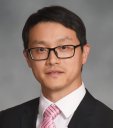
 Yu Zhang
· 2 previous affiliations
- Stanford UniversitySince 2025
- Assistant Professor · Since 2025
- Lehigh University2020–2025
- Associate Professor · 2024–2025
- Assistant Professor · 2020–2024
50 other authors named Yu Zhang: Yu Zhang (Southern University of Science and Technology · 438 papers), Yu Zhang (Zhejiang University · 189 papers), Yu Zhang (University of Science and Technology of China · 147 papers), Yu Zhang (Southeast University · 109 papers), Yu Zhang (Texas A&M University · 78 papers), and 45 more
Research Overview
Yu Zhang focuses on the intersection of machine learning, multimodal neuroimaging, and precision psychiatry, developing computational frameworks to extract generalizable biomarkers from high-dimensional neural data. His work spans the development of generative AI models for neuroscience, graph-based deep learning for brain network analysis, and the implementation of brain-machine interfaces. By linking representational geometry with clinical and cognitive states, Zhang aims to identify actionable patterns for the diagnosis, prognosis, and targeted intervention of neuropsychiatric conditions, including mood disorders and neurodevelopmental disabilities.
Research Trajectory
The evolution of Zhang’s research reflects a transition from general computational linguistics and unsupervised learning toward specialized applications in neuroimaging and clinical neuroscience. His early work in the mid-2000s focused on natural language processing, specifically the development of semi-automatic techniques for emotion recognition. In Construction and evaluation of Chinese emotion classification model, Zhang established a foundational approach to lexical and syntax analysis for emotion sensing, a precursor to his later interest in quantifying behavioral and affective states through neural signals. By 2014, this interest in high-dimensional data organization matured into the development of unsupervised frameworks for large-scale archives, as seen in A Topic Clustering Approach to Finding Similar Questions from Large Question and Answer Archives, which utilized Latent Dirichlet Allocation (LDA) to resolve semantic mismatches in community-driven data.
In the mid-2010s, Zhang shifted his focus toward electroencephalogram (EEG) signal processing and Brain-Computer Interfaces (BCI). This period was characterized by a rigorous effort to address the inherent noise and artifact contamination in neural recordings. He introduced sophisticated signal recovery methods, such as the use of Transforming Non-Linear Array Manifolds into Virtual Linear Structures and tensor-based decomposition. In Removal of EEG artifacts for BCI applications using fully Bayesian tensor completion, Zhang proposed a Bayesian tensor factorization method to recover disturbed EEG segments, treating artifacts as missing values and automatically inferring model rank through sparsity-inducing priors. This methodological shift toward robust signal processing laid the groundwork for more complex decoding tasks, such as the multi-class classification of upper limb movements for non-invasive BCIs.
As Zhang transitioned into neuroimaging and precision psychiatry, his work began to integrate functional magnetic resonance imaging (fMRI) with advanced network modeling. He participated in the development of standardized toolboxes, such as A toolbox for brain network construction and classification (BrainNetClass), which aimed to move the field beyond static pairwise correlations toward high-order connectivity construction. This era of his research focused on the "black box" nature of clinical AI, emphasizing the need for Grading the Certainty of Clinical Evidence when translating neuroimaging findings into bedside decisions. His editorial work during this time highlighted how modern architectures, including Cycle-GANs and LSTMs, could overcome classic hurdles like small sample sizes and missing data modalities in neurological disease analysis.
In the most recent phase of his career (2024–2026), Zhang has emerged as a proponent of generative AI and foundation models in neuroscience. This work addresses the Scaling Synthetic Data Diversity for Robust Sim-to-Real Transfer by evaluating how well deep learning-generated MRIs capture anatomical plausibility. His leadership in this area is evidenced by the development of large-scale graph-based foundation models that utilize self-supervised learning and language-guided prompting to generalize across diverse brain atlases and clinical disorders.
Current Directions
Zhang’s current research is primarily centered on "Precision NeuroIntelligence," a framework that combines generative AI with translational neuroscience. A major pillar of this work is the development of the Brain Graph Foundation Model (BrainGFM), which seeks to provide a unified architecture for analyzing fMRI data across broad populations and neurological conditions. This model is designed to achieve zero-shot generalization, allowing it to classify entirely new diseases and brain maps without extensive retraining.
Another significant focus is the application of diffusion models to computational neuroimaging. Zhang is investigating how these generative models can be tailored to unlock neurobiological mechanisms and synthesize high-fidelity brain images that maintain structural and functional integrity. This involves not only the generation of data but also the creation of rigorous evaluation metrics to ensure that synthetic brain MRIs are anatomically plausible and useful for downstream clinical discovery.
Finally, Zhang is increasingly focused on the practical application of these models in precision psychiatry. This includes identifying structure-function covariations that can predict antidepressant responses and developing interpretable graph neural networks to quantify brain dysfunction in conditions such as Autism Spectrum Disorder (ASD). His work aims to bridge the gap between advanced computational modeling and actionable precision brain health.
Representative Work
In A Brain Graph Foundation Model: Pre-Training and Prompt-Tuning across Broad Atlases and Disorders, Zhang led the development of a large-scale graph-based foundation model for fMRI analysis. The framework utilizes self-supervised learning and language-guided prompting to achieve state-of-the-art performance in brain disorder classification, demonstrating a unique capacity for zero-shot generalization to novel diseases and brain atlases.
Zhang provided a comprehensive roadmap for the integration of generative AI in Diffusion Models for Computational Neuroimaging: A Survey. This work synthesizes the current state of diffusion models (DMs) and outlines how they are being adapted to address the specific complexities of human brain data, from structural MRI to functional connectivity.
The challenge of validating synthetic neuroimaging data was addressed in Evaluating the Quality of Brain MRI Generators. Zhang demonstrated that standard metrics for natural images, such as Fréchet Inception Distance, are often inadequate for assessing anatomical plausibility in brain MRIs. The study compared six state-of-the-art generative models, highlighting the need for metrics that specifically capture the macrostructural properties of brain regions.
In the domain of brain-machine interaction, Zhang developed a novel machine learning method in Towards Multi-class Pre-movement Classification. By extending task-related component analysis to handle multiple classes without dimensionality explosion, he achieved successful decoding of seven different arm and hand movements from EEG signals, outperforming existing deep learning baselines.
Zhang’s earlier contribution to signal processing is exemplified by Removal of EEG artifacts for BCI applications using fully Bayesian tensor completion. This work introduced a Bayesian tensor factorization approach to recover contaminated EEG segments, providing a more robust alternative to the common practice of discarding disturbed data.
In A Topic Clustering Approach to Finding Similar Questions from Large Question and Answer Archives, Zhang served as the senior author on a project that developed an unsupervised machine-learning framework for community question-answering archives. By mapping questions into a "topic space" using LDA and structural similarity filters, the approach effectively addressed the word mismatch problem in large-scale datasets.
Profile updated
Loading new papers…
Other researchers whose papers cluster into the same research directions — a proxy for overlapping technical interests and shared intellectual neighborhoods.
See something wrong? Report a mistake