

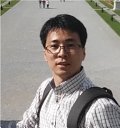
 Heung-Il Suk
· 1 previous affiliation
- Korea UniversitySince 2015
- Full Professor · Since 2015
Research Overview
Heung-Il Suk focuses on machine learning for clinical diagnostics, neuroimaging analysis, and brain-computer interfaces. His early work developed robust feature representation and fusion techniques for diagnosing neurodegenerative diseases like Alzheimer's. More recently, his research addresses explainable artificial intelligence, domain generalization, and advanced representation learning for complex physiological time series and medical imaging.
Research Trajectory
Heung-Il Suk’s early research focused on sequence modeling for computer vision tasks. In 2010, he developed a dynamic Bayesian network model for continuous video stream analysis, introducing a real-time decoding algorithm in Hand gesture recognition based on dynamic Bayesian network framework. This foundational interest in modeling complex, sequential data soon transitioned into the medical domain, specifically targeting the diagnosis of neurodegenerative diseases through advanced neuroimaging analysis.
By 2014, his focus had shifted toward Alzheimer's Disease (AD) and Mild Cognitive Impairment (MCI). He introduced methods for high-level latent feature extraction and multimodal fusion, demonstrating how combining different neuroimaging modalities could significantly enhance diagnostic accuracy in Hierarchical feature representation and multimodal fusion with deep learning for AD/MCI diagnosis. Continuing this trajectory, he addressed the high-dimensional challenges of estimating functional connectivity from resting-state fMRI data. In Supervised Discriminative Group Sparse Representation for Mild Cognitive Impairment Diagnosis (2015), he utilized structural equation modeling to extract brain network features, contributing to the broader area of Joint Feature Selection via Group Sparsity.
As his research expanded, he began applying deep learning to other complex physiological signals, particularly electroencephalography (EEG) for Brain-Computer Interfaces (BCIs) and irregular clinical time series. He addressed the persistent "calibration bottleneck" in BCIs in a comprehensive 2021 review, A Survey on Deep Learning-Based Short/Zero-Calibration Approaches for EEG-Based Brain–Computer Interfaces. This work aligned with his growing interest in the area of Adversarial Alignment for Domain Invariant Feature Learning, seeking to make models robust across different subjects. In parallel, collaborative work investigated missing data in medical records, proposing an architecture for joint imputation and prediction in Uncertainty-Aware Variational-Recurrent Imputation Network for Clinical Time Series (2022), advancing research in Temporal Decay Mechanisms for Irregularly Sampled Sequences. Further research explored subject-invariant representations for BCIs in Mutual Information-Driven Subject-Invariant and Class-Relevant Deep Representation Learning in BCI (2023), contributing to the research direction of The Computational Cost of Neural Mutual Information Estimation.
Around 2023, a major theme of explainability and interpretability emerged in his diagnostic modeling. To move beyond simple correlations in brain imaging, his group introduced EAG-RS: A Novel Explainability-guided ROI-Selection Framework for ASD Diagnosis via Inter-regional Relation Learning. This framework utilized explainable AI to guide feature selection and capture high-order non-linear relationships for Autism Spectrum Disorder diagnosis, a key advancement in the direction of Explainable Deep Learning for Clinical Diagnostics. Additional work proposed using counterfactual reasoning to reinforce diagnostic models in Learn-Explain-Reinforce: Counterfactual Reasoning and its Guidance to Reinforce an Alzheimer's Disease Diagnosis Model, engaging with the area of Explaining Classifiers via Generative Counterfactual Transformations. His work on attention mechanisms also extended to general computer vision tasks; for instance, he developed a plug-and-play attention module integrating channel and spatial axes for weakly supervised object localization in Module of Axis-based Nexus Attention for weakly supervised object localization (2023).
In 2024, his research synthesized longitudinal predictive modeling with advanced imaging techniques. He led the development of a framework to forecast the individualized progression of cognitive decline in Deep learning model for individualized trajectory prediction of clinical outcomes in mild cognitive impairment, fusing MRI, PET, and clinical scores via an attention-based recurrent neural network. Concurrently, he addressed the accessibility of high-resolution neuroimaging in Transferring Ultrahigh-Field Representations for Intensity-Guided Brain Segmentation of Low-Field Magnetic Resonance Imaging, introducing an adaptive fusion module to distill structural knowledge from 7T MRI scans into models operating on standard 3T images.
Most recently, his work has incorporated generative models and advanced architectures for domain generalization and representation learning. In 2025, his group introduced ExpertDiff: Head-less Model Reprogramming with Diffusion Classifiers for Out-of-Distribution Generalization, a technique that repurposes text-to-image diffusion models into high-performance classifiers for specialized domains like medical imagery without traditional classification layers. He also tackled individual physiological variability in sleep staging with MEASURE: Multi-scale Minimal Sufficient Representation Learning for Domain Generalization in Sleep Staging, stripping away domain-specific noise while preserving crucial temporal patterns. Moving into 2026, collaborative efforts have explored novel spectral-spatial architectures, such as in Complex wavelet-based Transformer for neurodevelopmental disorder diagnosis via direct modeling of real and imaginary components. Furthermore, he has investigated the semantic properties of generative models, formalizing the "Semantic Scale Hypothesis" to enable precise, training-free image editing in Deconstructing Guidance: A Semantic Hierarchy for Precise Diffusion Model Editing.
Current Directions
The most recent papers in the evidence indicate a strong focus on adapting foundation models and generative architectures for specialized, high-stakes domains. A primary current direction involves leveraging diffusion models not just for generation, but as robust classifiers and feature extractors. This includes reprogramming off-the-shelf diffusion models for out-of-distribution generalization in medical imaging and deconstructing their guidance signals to enable precise, artifact-free semantic editing.
Additionally, recent work investigates domain generalization in complex physiological time series, seeking to extract minimal sufficient representations that are invariant to individual patient differences. This is complemented by the exploration of novel neural architectures, such as complex wavelet-based Transformers, designed to directly model the intricate spectral and spatial components of neuroimaging data for the diagnosis of neurodevelopmental disorders. Together, these directions reflect an ongoing effort to build highly generalizable, interpretable, and architecturally sophisticated models for clinical and physiological applications.
Profile updated
Loading new papers…
Other researchers whose papers cluster into the same research directions — a proxy for overlapping technical interests and shared intellectual neighborhoods.
See something wrong? Report a mistake