

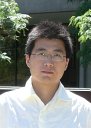
 Daoqiang Zhang
· 1 previous affiliation
- Full Professor · Since 2008
- Associate Professor · 2006–2008
Research Overview
Daoqiang Zhang focuses on medical image analysis, neuroinformatics, and machine learning for clinical diagnostics. His early trajectory established foundational methods for multimodal biomarker fusion and brain disease classification, particularly in Alzheimer's disease. More recently, his work investigates foundation models for time-series analysis, weakly supervised learning in digital pathology, and unified representations of cortical development across the human lifespan.
Research Trajectory
Daoqiang Zhang’s early research concentrated on improving the precision of medical image segmentation and computer-aided diagnosis. In 2004, he introduced A novel kernelized fuzzy C-means algorithm with application in medical image segmentation, which modified traditional clustering techniques with a kernel-induced distance metric and spatial penalties to robustly segment magnetic resonance imaging (MRI) data. He subsequently expanded this focus to the multimodal diagnosis of neurodegenerative diseases. Recognizing that structural MRI, functional PET imaging, and cerebrospinal fluid biomarkers offer complementary information, he developed Multimodal classification of Alzheimer's disease and mild cognitive impairment (2011). Building on this framework, he introduced Multi-modal multi-task learning for joint prediction of multiple regression and classification variables in Alzheimer's disease (2012), which allowed models to simultaneously estimate continuous clinical variables and categorical disease states by leveraging the intrinsic correlations among them.
As deep learning transformed neuroimaging, his focus shifted toward scalable representations of functional brain activity. He presented Deep Hyperalignment in 2017, a framework utilizing deep neural networks to align functional MRI data across different individuals. This contribution advanced the area of Functional Alignment of Neural Representational Geometries by moving beyond linear transformations to decode mental states across massive datasets. His group continued to refine brain mapping techniques, later proposing Automated individual cortical parcellation via consensus graph representation learning (2024), a data-driven approach that generates highly consistent functional parcellations to improve the prediction of behavioral and demographic traits from brain networks.
In parallel with his applied neuroimaging research, Zhang has made significant contributions to core machine learning methodology, particularly in handling imperfect or missing data. His lab addressed the challenge of classifying unseen categories with Complementary Labels Learning with Augmented Classes (2024), developing an unbiased risk estimator that leverages unlabeled data. This work is representative of his broader contributions to the research direction of Unbiased Risk Estimation for Weakly Supervised Learning.
Expanding into digital pathology, his team has developed hierarchical models to process gigapixel images. He oversaw the development of MAPLE: Multi-scale Attribute-enhanced Prompt Learning for Few-shot Whole Slide Image Classification (2025), which adapts vision-language models for cancer diagnosis by using large language models to define specific histological features across magnifications. Further work in this domain includes Cancer Survival Analysis via Zero-shot Tumor Microenvironment Segmentation on Low-resolution Whole Slide Pathology Images (2025), which leverages weakly supervised segmentation and graph representations of cellular topology to analyze the tumor microenvironment without requiring exhaustive annotations.
Recently, Zhang has extensively investigated foundation models and domain adaptation for multivariate time series. To address the challenge of adapting models to new sensor environments without access to original training data, his team introduced Temporal Restoration and Spatial Rewiring for Source-Free Multivariate Time Series Domain Adaptation (2025). He also advanced pretraining techniques with Bridging Distribution Gaps in Time Series Foundation Model Pretraining with Prototype-Guided Normalization (2025), introducing a dynamic normalization layer that adapts to heterogeneous data distributions. For real-time data streams, his group developed Augmented Contrastive Clustering with Uncertainty-Aware Prototyping for Time Series Test Time Adaptation (2025), utilizing a memory bank of class prototypes to handle signal variability.
Returning to neuroinformatics and clinical neurodevelopment, Zhang’s recent work integrates complex graph learning with clinical investigations. He led the development of NeuroH-TGL: Neuro-Heterogeneity Guided Temporal Graph Learning Strategy for Brain Disease Diagnosis (2025), which decouples stable and dynamic brain structures to identify Alzheimer’s and Parkinson’s diseases. Clinically, he has directed studies on early brain development in vulnerable populations, publishing Sex effects on cortical alterations in infants with complex congenital heart disease (2025) and Alteration in Cortical Structure Mediating the Impact of Blood Oxygen‐Carrying Capacity on Gross Motor Skills in Infants With Complex Congenital Heart Disease (2025).
His most recent publications continue to push the boundaries of representation learning in both neuroimaging and time series. In 2026, he contributed to CortiLife: A Unified Framework for Cortical Representation Learning across the Lifespan, addressing the non-Euclidean geometric challenges of modeling the human cerebral cortex from infancy to old age—a key advancement in the broader area of Multimodal Foundation Models for Unified Brain Representation. Concurrently, his research in time-series adaptation culminated in Evidentially Calibrated Source-Free Time-Series Domain Adaptation With Temporal Imputation (2026), which aligns with his ongoing work in the research direction of Evidential Deep Learning for Predictive Uncertainty Quantification to better handle uncertainty during model adaptation.
Current Directions
Based on his most recent publications, Zhang’s current research agenda is defined by three primary themes. First, he is advancing foundation models for complex, heterogeneous data, particularly focusing on multivariate time series. This involves developing novel normalization techniques and source-free domain adaptation frameworks that allow models to generalize across highly variable sensor distributions without requiring access to the original training data.
Second, he continues to drive innovation in neuroinformatics and brain network analysis. His recent work emphasizes unified, lifespan-spanning models of cortical development, overcoming the geometric complexities of the brain's changing structure to better predict neurodevelopmental outcomes and diagnose neurodegenerative diseases.
Finally, in the domain of digital pathology, his group is actively exploring the intersection of vision-language models and gigapixel image analysis. By integrating prompt learning and hierarchical graph reasoning, his current methods aim to provide highly accurate, interpretable, and weakly supervised diagnostic tools for clinical oncology.
Profile updated
Loading new papers…
Other researchers whose papers cluster into the same research directions — a proxy for overlapping technical interests and shared intellectual neighborhoods.
See something wrong? Report a mistake