

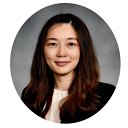
 Lifang He
· 5 previous affiliations
- Lehigh UniversitySince 2019
- Associate Professor · Since 2025
- Assistant Professor · 2019–2025
- University of Pennsylvania2017–2019
- Postdoc · 2017–2019
- Cornell Tech2017–2018
- Postdoc · 2017–2018
- University of Illinois Chicago2014–2017
- Postdoc · 2014–2017
- South China University of Technology2009–2014
- PhD student · 2009–2014
Research Overview
Lifang He focuses on machine learning, tensor analysis, and biomedical informatics, developing computational methods to extract knowledge from complex, highly structured data. Her early work established foundational techniques for structure-preserving tensor representations and neuroimaging classification. More recently, her research investigates advanced graph neural networks, multi-view clustering, and foundation models for medical image analysis and brain connectomics.
Research Trajectory
Her early research focused heavily on advancing tensor analysis for classification and regression, particularly applied to the challenges of neuroimaging data. She contributed to A Linear Support Higher-Order Tensor Machine for Classification in 2013, which integrated linear support vector machines with tensor rank-one decomposition to avoid the computational bottlenecks of non-convex optimization. Expanding on this foundation, she developed DuSK: A Dual Structure-preserving Kernel for Supervised Tensor Learning with Applications to Neuroimages. This work advanced the broader area of Multilinear Structure Preservation in Tensor Learning and contributed to the research direction of Learning Directly on Multidimensional Tensor Structures by mapping tensor factorizations to capture complex relationships in limited neuroimaging datasets. This period of research also touched on the area of Automated Rank Selection for Efficient Tensor Networks. She continued to refine these methods in Multi-way Multi-level Kernel Modeling for Neuroimaging Classification and Kernelized Support Tensor Machines, introducing kernelized CP tensor factorizations to extract discriminative, nonlinear representations. In 2018, she introduced Boosted Sparse and Low-Rank Tensor Regression, proposing a divide-and-conquer strategy to relate univariate outcomes to feature tensors through sparse, interpretable pathways. Alongside tensor analysis, she also explored network structures, as seen in her work on Joint Community and Structural Hole Spanner Detection via Harmonic Modularity.
Moving into the 2020s, her research expanded to encompass graph representation learning while continuing to innovate in tensor-based multi-modality. Her lab developed novel adversarial mechanisms for directed graphs in Adversarial Directed Graph Embedding, deploying a discriminator and two generators to jointly learn source and target node vectors. Addressing the fundamental challenge of hyperparameter selection in graph neural networks, she guided the development of the Minimum Graph Entropy (MinGE) algorithm in Graph Entropy Guided Node Embedding Dimension Selection for Graph Neural Networks. Returning to medical applications, she directed research on Tensor-Based Multi-Modality Feature Selection and Regression for Alzheimer's Disease Diagnosis, leveraging multilinear structures to identify biomarkers from multi-modality imaging. This tensor expertise was further formalized in A Multilinear Least-Squares Formulation for Sparse Tensor Canonical Correlation Analysis, which addressed high-order relations and gross noise in arbitrary tensor data.
A significant portion of her subsequent trajectory focuses on multi-view learning and complex graph clustering. She oversaw the creation of the Sufficient Multi-View Clustering (SUMVC) framework in A Novel Approach for Effective Multi-View Clustering with Information-Theoretic Perspective, utilizing Information Bottleneck theory to mathematically balance consistent shared information against view-specific redundancy. This was complemented by Multi-VAE: Learning Disentangled View-common and View-peculiar Visual Representations for Multi-view Clustering, which employed generative models to disentangle visual representations. Her group then tackled the limitations of conventional low-pass graph filters on non-homophilous data. In Homophily-Related: Adaptive Hybrid Graph Filter for Multi-View Graph Clustering, they developed adaptive filters for multi-view graphs. This culminated in Multi-View Graph Clustering via Node-Guided Contrastive Encoding, a framework that seamlessly integrates structural and feature information. This work directly advances the research direction of Overcoming the Homophily Assumption in Graph Neural Networks by effectively handling graphs where dissimilar nodes connect.
Most recently, her work has heavily emphasized biomedical informatics and foundation models for neuroimaging. She collaborated on Rethinking functional brain connectome analysis: do graph deep learning models Help, which critically evaluated message aggregation in graph deep learning and proposed a dual-pathway model combining linear models with graph attention networks. She also contributed to the development of BrainGFM in A Brain Graph Foundation Model: Pre-Training and Prompt-Tuning across Broad Atlases and Disorders, a large-scale graph-based foundation model capable of zero-shot generalization across various brain atlases and neurological diseases. Concurrently, she led the design of TTT-UNet: Enhancing U-Net with Test-Time Training Layers for Biomedical Image Segmentation, introducing dynamic inference-time parameter adaptation to improve local and long-range dependency capture in medical imaging tasks.
Current Directions
The most recent papers in the evidence indicate a strong focus on adapting advanced deep learning architectures for complex biomedical and neuroimaging applications. Current work investigates the deployment of large-scale graph foundation models capable of zero-shot generalization across diverse brain atlases and neurological disorders. Additionally, recent research addresses the limitations of standard graph deep learning in functional brain connectome analysis, exploring dual-pathway models that better preserve raw time-series signals. In the domain of medical image segmentation, ongoing efforts involve integrating test-time training mechanisms into established architectures like U-Net to enable dynamic, inference-time adaptation. Methodologically, there is also a continued emphasis on multi-view graph clustering, particularly in developing contrastive encoding techniques that robustly handle heterophilic graph structures.
Profile updated
Loading new papers…
Other researchers whose papers cluster into the same research directions — a proxy for overlapping technical interests and shared intellectual neighborhoods.
See something wrong? Report a mistake