

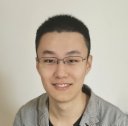
 Yu Meng
· 2 previous affiliations
- University of VirginiaSince 2024
- Assistant Professor · Since 2024
- PhD student · 2019–2023
2 other authors named Yu Meng: Yu Meng (Jiangsu Ocean University · Nanjing University · 1 paper), Yu Meng (University of Science and Technology Beijing · 1 paper)
Research Overview
Yu Meng focuses on natural language processing, text representation learning, and the optimization of large language models. His early work explored weakly supervised text classification and spherical latent spaces for semantic modeling. Currently, his research addresses the post-training alignment, reasoning capabilities, and inference efficiency of foundational language models.
Research Trajectory
His early research addressed the challenge of training deep neural networks for natural language processing tasks with limited labeled data. He introduced Weakly-Supervised Neural Text Classification, which developed a pseudo-document generator to train models without extensive manual annotations. This foundational work advanced the research direction of Text Classification with Minimal Supervision. He expanded on these minimal-supervision techniques by exploring how models could learn from the barest of signals, demonstrating this in Text Classification Using Label Names Only: A Language Model Self-Training Approach. During this period, he also applied weak supervision to topic mining, developing category-name guided embeddings in Discriminative Topic Mining via Category-Name Guided Text Embedding. He subsequently extended this approach to hierarchical structures in Hierarchical Topic Mining via Joint Spherical Tree and Text Embedding. Together, these efforts contributed to the broader area of Learning with Overlapping and Ambiguous Semantic Categories and work in Learning from Heterogeneous Weak Supervision.
Concurrently, he investigated the geometric properties of text representations. Recognizing that directional similarity is often more effective than Euclidean distance for semantic tasks like document clustering, he introduced Spherical Text Embedding, which jointly learned word and paragraph embeddings using Riemannian optimization. This advanced the research direction of Spherical Latent Spaces for Directional Semantic Modeling. His focus on foundational representations continued with COCO-LM: Correcting and Contrasting Text Sequences for Language Model Pretraining. This self-supervised framework utilized an auxiliary language model to corrupt and correct text sequences, improving both token-level semantics and sequence alignment during pretraining.
Building on these pretraining foundations, his later work identified structural inefficiencies in standard language models. In Representation Deficiency in Masked Language Modeling, he demonstrated that models waste internal capacity on mask tokens. To resolve this, he proposed an asymmetric autoencoder approach that excludes mask tokens from the encoder, reclaiming this space for more expressive representations. As the field shifted toward large language models (LLMs), he addressed the critical challenge of aligning these models with human preferences. He developed SimPO: Simple Preference Optimization with a Reference-Free Reward, an algorithm that uses average log probability and a target reward margin to align models without requiring a reference model, significantly reducing memory overhead while improving performance.
Most recently, his trajectory has focused on the reasoning capabilities and inference efficiency of LLMs. To improve retrieval-augmented generation, his lab introduced InstructRAG: Instructing Retrieval-Augmented Generation via Self-Synthesized Rationales, which teaches models to explicitly explain how they derive answers from retrieved documents without requiring human-labeled data. Investigating how models learn to reason, he explored reinforcement learning dynamics in The Surprising Effectiveness of Negative Reinforcement in LLM Reasoning, showing that penalizing incorrect responses preserves creative diversity and refines logic. On the efficiency front, he developed AdaDecode: Accelerating LLM Decoding with Adaptive Layer Parallelism, a decoding strategy that adaptively predicts tokens at intermediate layers to speed up inference while maintaining a perfect key-value cache. His group also proposed new metrics for measuring computational effort during inference, such as the Deep-Thinking Ratio introduced in Think Deep, Not Just Long: Measuring LLM Reasoning Effort via Deep-Thinking Tokens. Additionally, he participated in research on test-time guidance for vision-language models, contributing to the development of small visual reasoners in ProxyThinker: Test-Time Guidance through Small Visual Reasoners.
Current Directions
The most recent papers in the evidence address the dual challenges of scaling reasoning capabilities and improving inference efficiency in large language models. Recent work investigates test-time compute strategies, such as adaptive layer parallelism to accelerate decoding and new metrics to quantify the internal reasoning effort of models across transformer layers. Additionally, current research explores post-training alignment techniques, particularly the use of negative reinforcement signals to refine logical reasoning and the synthesis of rationales to improve retrieval-augmented generation without relying on extensive human annotations.
Profile updated
Loading new papers…
Other researchers whose papers cluster into the same research directions — a proxy for overlapping technical interests and shared intellectual neighborhoods.
See something wrong? Report a mistake