

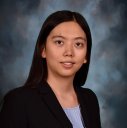
 Xuan Wang
· 4 previous affiliations
- Virginia TechSince 2023
- Assistant Professor · Since 2023
- NSF I-Corps Hub Mid-Atlantic RegionSince 2025
- Member · Since 2025
- Doctor of Philosophy (PhD), Computer Science · 2017–2022
- Graduate Research Assistant · 2017
- Master of Science (M.S.), Statistics · 2016–2017
- Graduate Teaching Assistant · 2014–2015
- IBM2020
- Summer Intern · 2020
11 other authors named Xuan Wang: Xuan Wang (Harbin Institute of Technology · 575 papers), Xuan Wang (Meituan (China) · 35 papers), Xuan Wang (Ant Group (China) · 11 papers), Xuan Wang (National University of Defense Technology · 6 papers), Xuan Wang (Northwestern Polytechnical University · 5 papers), and 6 more
Research Overview
Xuan Wang focuses on natural language understanding with limited supervision, multimodal foundation models for scientific data, and the development of efficient language model agents. Her early work emphasized distant supervision and information extraction for biomedical literature. Recently, she investigates multi-agent collaboration, complex reasoning, and small, open-source language models applied to domains ranging from neural signal decoding to cosmological simulations.
Research Trajectory
Xuan Wang’s early research concentrated on overcoming the data-annotation bottleneck in biomedical natural language processing (NLP) through weakly supervised and distantly supervised methods. In 2018, she developed a framework for biomedical open information extraction, detailed in Open Information Extraction with Meta-pattern Discovery in Biomedical Literature. This system, CPIE, incorporated clause extraction and meta-pattern discovery to automatically extract structured relation tuples from unstructured text with minimal supervision. She subsequently expanded on entity-specific challenges with Cross-type biomedical named entity recognition with deep multi-task learning, which utilized neural network architectures to reduce the reliance on handcrafted features across disparate entity types like genes, chemicals, and diseases.
This focus on reducing manual annotation naturally progressed into the broader area of Scaling Training Data via Distant Supervision. In 2020, she introduced EVIDENCEMINER: Textual Evidence Discovery for Life Sciences, a web-based system designed to automatically pinpoint sentences that serve as direct evidence for scientific claims, aiding hypothesis generation without requiring human-annotated training data. During the same period, she contributed to the research direction of Automated Knowledge Synthesis from Scientific Literature by developing Comprehensive Named Entity Recognition on CORD-19 with Distant or Weak Supervision. This work yielded a dataset featuring 75 fine-grained entity types for COVID-19 research, demonstrating that distant supervision could outperform fully supervised baselines while remaining adaptable to new entity classes. She continued to refine these ontology-guided techniques in ChemNER: Fine-Grained Chemistry Named Entity Recognition with Ontology-Guided Distant Supervision.
By 2024, Wang’s research expanded into multimodal foundation models, particularly focusing on the intersection of neural signals and natural language. She led the development of EEG2TEXT: Open Vocabulary EEG-to-Text Decoding with EEG Pre-Training and Multi-View Transformer. This system translated non-invasive EEG signals directly into open-vocabulary text by combining self-supervised pre-training with a multi-view transformer that accounted for spatial differences in brain regions. This work advanced both the field of Decoding Noisy Neural Signals via Latent Generative Priors and the area of Masked Signal Reconstruction for Neural Foundation Models.
In 2025, her trajectory shifted toward the reasoning capabilities and collaborative dynamics of Large Language Models (LLMs). Addressing the challenge of multi-hop question answering, she and her collaborators proposed StoC-TOT: Stochastic Tree-of-Thought with Constrained Decoding for Complex Reasoning in Multi-Hop Question Answering. By treating reasoning as a probabilistic tree search and enforcing constrained decoding grounded in provided evidence, the framework significantly reduced hallucinations, contributing to the research direction Semantic Redundancy Pruning for Search-Based Reasoning.
Simultaneously, Wang began exploring how multiple LLM agents could interact to solve complex problems. She developed OPTAGENT: Optimizing Multi-Agent LLM Interactions Through Verbal Reinforcement Learning for Enhanced Reasoning, a framework that treated agent interactions as a dynamic graph optimized via linguistic feedback. This approach advanced work in the area of Persona Diversification in Multi-Agent Large Language Models by moving beyond static majority-vote systems. She applied these multi-agent paradigms to highly specialized scientific domains, as seen in Bridging Literature and the Universe Via A Multi-Agent Large Language Model System, which automated the extraction of parameters from dense academic papers to generate executable code for cosmological simulations. Returning to her earlier focus on information extraction, she also introduced CROSSAGENTIE: Cross-Type and Cross-Task Multi-Agent LLM Collaboration for Zero-Shot Information Extraction, utilizing specialized debating agents and template fine-tuning to resolve entity and relation conflicts in a zero-shot setting.
Most recently, in 2026, Wang’s work has emphasized the rigorous evaluation of AI systems and the optimization of smaller, more efficient models. Recognizing the flaws in how multi-agent systems are typically assessed, she published A Diagnostic Study of Multi-Agent LLMs for Real-World Debates, which introduced a framework to measure the deliberative process itself rather than mere consensus, exposing issues like sycophancy in agent interactions. To address data contamination in standard benchmarks, she developed BeyondBench: Contamination-Resistant Evaluation of Reasoning in Language Models, an algorithmic generator of mathematically grounded problems that revealed significant reasoning bottlenecks in advanced models.
Her recent architectural research includes BIOARC: Discovering Optimal Neural Architectures for Biological Foundation Models, an automated framework utilizing Neural Architecture Search to discover hybrid networks for biological sequences that are substantially smaller than standard Transformers. Building on this theme of efficiency, she introduced EffGen: Enabling Small Language Models as Capable Autonomous Agents, an open-source framework that leverages prompt compression and hierarchical memory to optimize Small Language Models (SLMs) for autonomous tasks, proving that massive scale is not a strict prerequisite for agentic capabilities.
Current Directions
Recent work investigates the design, evaluation, and optimization of multi-agent language model systems, with a particular emphasis on making these systems efficient and scientifically grounded. The most recent papers in the evidence address the critical need for contamination-resistant benchmarks to accurately measure true algorithmic reasoning rather than memorization. Additionally, there is a strong focus on empowering Small Language Models (SLMs) to function as capable autonomous agents through specialized memory architectures and pre-execution routing. This push for efficiency extends to domain-specific foundation models, where automated architecture search is being used to discover compact, high-performing neural networks tailored for complex biological data.
Profile updated
Loading new papers…
Other researchers whose papers cluster into the same research directions — a proxy for overlapping technical interests and shared intellectual neighborhoods.
See something wrong? Report a mistake