

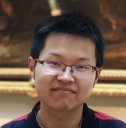
 Jiaming Shen
· 4 previous affiliations
- Google DeepMind (United Kingdom)Since 2024
- Staff Research Scientist · Since 2026
- Senior Research Scientist · 2024–2026
- Google (United States)2020–2026
- Research Scientist · 2024–2026
- Senior Research Scientist · 2023–2024
- Research Scientist · 2021–2024
- Research Scientist · 2021–2023
- Student Researcher · 2020
- Research Assistant · 2020–2021
- Doctorate, Computer Science · 2016–2021
- Teaching Assistant · 2020
- Research Assistant · 2016–2020
- Shanghai Jiao Tong University2012–2016
- Bachelor of Science (B.S.), Computer Science · 2012–2016
1 other author named Jiaming Shen: Jiaming Shen (1 paper)
Research Overview
Jiaming Shen focuses on large language models, reinforcement learning, and automated knowledge graph construction. His early research explored taxonomy discovery and efficient text encoder pre-training, establishing a foundation for structured knowledge extraction. Recently, his work centers on improving reward model training, mitigating hallucinations in language models, and enhancing agentic reasoning capabilities.
Research Trajectory
Shen’s early research concentrated on information extraction, taxonomy construction, and the optimization of pre-trained text encoders. Much of this foundational work aimed at improving how machine learning models understand and organize textual data with limited human annotation. He developed methods for discovering structured knowledge from unstructured text, such as his work on Corpus-based Open-Domain Event Type Induction, which sought to automatically identify and categorize event types from large corpora. Concurrently, he investigated ways to make the pre-training of language models more computationally efficient. In Training ELECTRA Augmented with Multi-word Selection, he introduced a multi-task learning approach that improved upon standard discriminator-based pre-training by requiring the model to simultaneously detect replaced tokens and select the original tokens from candidate sets. This line of research culminated in a comprehensive overview of the field, published as the book Automated Taxonomy Discovery and Exploration, which synthesized label-efficient machine learning methods for building and utilizing taxonomies in real-world applications.
As large language models became more prevalent, Shen’s focus expanded to address their reliability, particularly concerning the problem of hallucination in automated text generation. A major challenge in deploying automated summarization and headline generation systems is ensuring that the output is factually supported by the source material. To tackle this, he developed ExHalder, a novel framework detailed in "Why is this misleading?": Detecting News Headline Hallucinations with Explanations. By leveraging knowledge from Natural Language Inference (NLI) tasks, ExHalder not only detects unsupported headlines but also generates human-readable explanations for its predictions, contributing directly to the research direction of Grounded Attribution in Large Language Models. Recognizing that hallucination detection was predominantly focused on English and often relied on overly simplistic classification schemes, he subsequently introduced a more comprehensive benchmark in Multilingual Fine-Grained News Headline Hallucination Detection. This work provided a dataset of over 11,000 annotated article-headline pairs across five languages, enabling more nuanced evaluation of hallucination types.
Currently a senior research scientist at Google DeepMind, Shen has increasingly focused on the alignment and agentic capabilities of large language models. A critical component of aligning models with human preferences is the training of robust reward models. Because curating high-quality human-labeled preference data is expensive, researchers often use powerful language models to generate synthetic labels, which can introduce noise. In RMBoost: Reward Model Training With Preference-Conditional Multi-Aspect Synthetic Data Generation, Shen presented a novel synthetic data generation paradigm that generates preference-conditional responses to improve reward model quality and mitigate the noise inherent in traditional synthetic pipelines.
Alongside alignment, his recent trajectory includes advancing how models retrieve and reason over external information. He collaborated on RAS: Retrieval-And-Structuring for Knowledge-Intensive LLM Generation, a framework that moves beyond standard flat-text retrieval. By dynamically building question-specific knowledge graphs during inference and interleaving iterative retrieval with structured knowledge construction, the RAS framework helps models reason more accurately over complex, multi-hop queries. This work reflects his active participation in broader research areas such as Contextualized Subgraph Pruning for Knowledge Intensive Reasoning, On-Demand Knowledge Graph Construction for Multi-Hop Reasoning, and Agentic Search for Iterative Knowledge Synthesis.
Current Directions
The most recent papers in the evidence point to a sustained focus on the intersection of reinforcement learning from human feedback (RLHF) and agentic tool use. A primary current direction is the refinement of reward models through advanced synthetic data generation. By developing preference-conditional generation techniques, Shen is addressing the bottleneck of data quality in alignment, seeking ways to train more accurate reward models without relying exclusively on expensive human annotation.
Additionally, his recent work investigates agentic search and knowledge-intensive reasoning. Rather than relying on static, global knowledge bases or single-pass document retrieval, this direction emphasizes dynamic, on-demand structuring of information. By enabling language models to iteratively retrieve data and construct localized knowledge graphs during inference, this approach aims to solve complex, multi-hop reasoning tasks while managing the computational costs and noise typically associated with large-scale retrieval systems.
Profile updated
Loading new papers…
Other researchers whose papers cluster into the same research directions — a proxy for overlapping technical interests and shared intellectual neighborhoods.
See something wrong? Report a mistake