

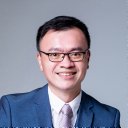
 Yu-Chiang Frank Wang
· 4 previous affiliations
- National Taiwan UniversitySince 2017
- Full Professor · Since 2019
- Associate Professor · 2017–2019
- Undergrad student · 1997–2001
- Nvidia (United States)Since 2022
- Research Director · Since 2022
- Academia Sinica2009–2017
- Associate Research Fellow · 2013–2017
- Assistant Research Fellow · 2009–2013
- Carnegie Mellon University2002–2009
- PhD student · 2004–2009
- MS student · 2002–2004
Research Overview
Yu-Chiang Frank Wang focuses on computer vision, multimodal machine learning, and 3D visual reasoning. His research trajectory spans foundational work in image processing and transfer learning to advanced architectures for vision-language models and generative video synthesis. Currently, his work addresses temporal reasoning in video models, test-time scaling for complex retrieval, and high-fidelity 3D scene generation.
Research Trajectory
Wang’s early research established strong foundations in computer vision and pattern recognition. His work addressed core challenges in image processing and representation learning, contributing significantly to the research direction of Generalizing Person Re-Identification Across Unseen Camera Networks and the area of Arbitrary Scale Super Resolution. He also explored the structural efficiency of deep learning models, investigating the research area of The Computational Overhead of Multi Network Training Frameworks. As his focus expanded toward complex visual reasoning and sequence generation, he tackled problems in the area of Exposure Bias in Autoregressive Sequence Generation and developed methods for the broader direction of Relational Scene Graphs for Visual Reasoning. In 2022, Wang assumed the role of Research Director in Deep Learning and Computer Vision at NVIDIA, running parallel to his ongoing academic leadership.
Building on this foundation, Wang’s recent trajectory has heavily emphasized the efficiency and adaptability of multimodal large language models (LLMs). He introduced Masking Teacher and Reinforcing Student for Distilling Vision-Language Models, a framework designed to solve the capacity gap in knowledge distillation. By progressively restoring a masked teacher model and utilizing offline reinforcement learning with dual rewards, this approach allows smaller models to match the performance of much larger counterparts. This work advances the broader area of bridging the capacity gap with progressive distillation and addresses why reinforcement learning for large models is computationally expensive. To further adapt these models to specialized domains, he developed LEAML: Label-Efficient Adaptation to Out-of-Distribution Visual Tasks for Multimodal Large Language Models. By leveraging a massive teacher model to generate captions and selectively updating relevant neurons, LEAML enables smaller models to synthesize high-quality training data, directly tackling the challenge of overcoming the expert annotation bottleneck.
A major theme in Wang's recent research involves the temporal dynamics of video generation and understanding. He has developed sophisticated techniques for customizing text-to-video diffusion models without compromising visual fidelity. In MotionMatcher: Motion Customization of Text-to-Video Diffusion Models via Motion Feature Matching, he introduced a feature-level fine-tuning framework that aligns high-level spatio-temporal features to replicate precise camera framing and object movements, contributing to the direction of high fidelity latent space inversion for image editing. He expanded on this with VideoMage: Multi-Subject and Motion Customization of Text-to-Video Diffusion Models, which allows users to combine multiple specific subjects and interactive motions into a coherent video. This research advances the areas of disentangling identity and motion for neural animation and disentangling appearance and motion in video representations.
Parallel to video generation, Wang has focused on improving the faithfulness of video-based multimodal models. He addressed the tendency of these models to hallucinate objects and actions in Mitigating Object and Action Hallucinations in Multimodal LLMs via Self-Augmented Contrastive Alignment, utilizing the model's own biases to generate hard negative examples and align text phrases with visual tracklets. This work navigates the specialization generalization trade-off in foundation models. To combat temporal misinterpretations, he proposed SEASON: Mitigating Temporal Hallucination in Video Large Language Models via Self-Diagnostic Contrastive Decoding. This training-free method dynamically diagnoses whether a word relies on spatial or temporal cues, applying a targeted contrastive penalty during decoding. This approach utilizes intra-video negative sampling for temporal reasoning and contributes to the broader research direction of Overcoming Temporal Misalignment in Multimodal Fusion.
Wang's trajectory also encompasses high-fidelity 3D scene generation and rendering. He developed Sparse Voxels Rasterization: Real-time High-fidelity Radiance Field Rendering, a neural-free 3D reconstruction framework that combines the speed of point-based rasterization with the geometric consistency of voxel grids. By utilizing adaptive sparse voxels, the method achieves real-time rendering speeds while eliminating common artifacts, advancing the area of exploiting spatial sparsity in volumetric neural networks. Additionally, he explored GAN-based approaches for rapid 3D synthesis in TPA3D: Triplane Attention for Fast Text-to-3D Generation, designing an end-to-end trainable model that retrieves detailed visual descriptions to synthesize 3D shapes from text guidance. To accelerate decoder-only large view synthesis models, Wang also co-developed TTB: Test-time Baking for Efficient Rendering of Decoder-only View Synthesis Models, which bakes cross-view attention mapping into lightweight MLPs to achieve substantial rendering speedups while preserving novel-view fidelity.
Most recently, Wang has investigated inference-time optimization and embodied reasoning. He explored inference time compute scaling for complex reasoning in Test-Time Scaling Strategies for Generative Retrieval in Multimodal Conversational Recommendations, introducing a framework that allocates extra computation during inference to evaluate how candidate products align with evolving user intent. With collaborators, he extended inference-time optimization to language model alignment in Test-Time Alignment for Large Language Models via Textual Model Predictive Control, treating text generation as a sequential decision-making problem to achieve state-of-the-art performance without retraining. This work contributes to the direction of inference time self correction loops in language models. His recent collaborative work also extends into 3D environments with GaussExplorer: 3D Gaussian Splatting for Embodied Exploration and Reasoning, integrating vision-language models with 3D Gaussian Splatting to enable question-driven exploration. Wang also participated in developing Zoom-Zero: Reinforced Coarse-to-Fine Video Understanding via Temporal Zoom-in, a reinforcement learning framework that balances global temporal context with fine-grained visual details by dynamically reallocating visual tokens at higher resolutions. Expanding further into multi-robot physical coordination, Wang co-developed MAWAM: A Multi-Agent World-Action Model for Coordinated Manipulation, which uses cross-agent attention within a world-action model to jointly generate future views and action chunks across robot teams. In addition, Wang contributed to the development of Nemotron 3.5 Super and Lightning: Open, Efficient Mixture-of-Experts Hybrid Mamba-Transformer Models for Agentic AI, a suite of hybrid state-space and attention models optimized with speculative decoding, multi-teacher distillation, and quantization for long-context agentic tasks.
Current Directions
The most recent papers in the evidence indicate a strong focus on test-time compute scaling, embodied visual reasoning, and fine-grained temporal understanding in video models. Recent work investigates how to align large language models and multimodal systems at inference time without the need for expensive retraining, treating generation as a sequential decision-making process that can be dynamically steered. Additionally, current research addresses efficient novel-view rendering, multi-agent world-action modeling for coordinated robotic manipulation, and scalable mixture-of-experts architectures for agentic reasoning. In the video domain, ongoing efforts focus on reinforcement learning frameworks that dynamically adjust spatial and temporal resolution, allowing models to "zoom in" on critical visual evidence to verify complex queries and mitigate hallucinations.
Profile updated
Loading new papers…
Other researchers whose papers cluster into the same research directions — a proxy for overlapping technical interests and shared intellectual neighborhoods.
See something wrong? Report a mistake