

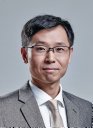
 Yu-Gang Jiang
· 2 previous affiliations
- Fudan UniversitySince 2011
- Full Professor · Since 2015
- Associate Professor · 2011–2015
- Columbia University2009–2011
- Postdoc · 2009–2011
Research Overview
Yu-Gang Jiang focuses on computer vision, video representation learning, and multimodal content analysis. Early work explored visual feature extraction and action recognition, evolving into deep learning architectures for object detection and video segmentation. Currently, Jiang investigates generative diffusion models, multimodal large language models, and reinforcement learning frameworks for autonomous agents.
Research Trajectory
The trajectory of Yu-Gang Jiang’s research begins with foundational work in visual feature extraction and retrieval. In 2007, Jiang evaluated and optimized the Bag-of-Features approach in Towards optimal bag-of-features for object categorization and semantic video retrieval, introducing a soft-weighting method for visual words that improved object categorization and semantic video retrieval. This early focus on robust visual representations continued into 2012 with Learning Hybrid Part Filters for Scene Recognition and Supervised hashing with kernels, which addressed scene recognition and efficient image retrieval, respectively.
By 2014, the research expanded into the analysis of user-generated video content. Jiang introduced a computational framework for emotion prediction in Predicting Emotions in User-Generated Videos, demonstrating the effectiveness of combining audio and visual cues. This work aligns with the broader research direction of Multimodal Fusion for Complex Event Detection. The focus on video analysis deepened with Human Action Recognition in Unconstrained Videos by Explicit Motion Modeling (2015), which tackled the complexities of recognizing actions in naturalistic settings. Jiang also participated in community benchmarking efforts, contributing to The THUMOS challenge on action recognition for videos "in the wild" (2017), which detailed the data collection and evaluation procedures for a major action recognition benchmark. During this period, Jiang also contributed to advancements in object detection architectures, participating in the development of DSOD: Learning Deeply Supervised Object Detectors from Scratch (2017), a framework that eliminated the need for ImageNet pre-training by utilizing dense layer-wise connections.
In recent years, Jiang’s work has increasingly leveraged transformer architectures and self-supervised learning for complex visual tasks. In SVTR: Scene Text Recognition with a Single Visual Model (2022), Jiang and collaborators proposed a patch-wise image tokenization framework that dispensed with sequential modeling for scene text recognition. The following year, the research addressed self-supervised video representation learning in Masked Video Distillation: Rethinking Masked Feature Modeling for Self-supervised Video Representation Learning (2023). This work introduced a spatial-temporal co-teaching method, contributing to areas such as Asymmetric Spatiotemporal Decoupling for Video Models and Preserving Spatial Granularity in Video Representation Learning. Concurrently, Look Before You Match: Instance Understanding Matters in Video Object Segmentation (2023) integrated instance segmentation with memory-based matching to improve video object segmentation under large appearance variations.
By 2026, the research trajectory expanded significantly into generative modeling and autonomous agents. In the domain of generative diffusion models, Jiang oversaw the development of CameraNoise: Enabling Faithful Camera Control in Video Diffusion through Geometry-Flow-Guided Noise Warping, which embedded camera poses directly into the noise space to maintain geometric consistency. Similarly, CreatiDesign: A Unified Multi-Conditional Diffusion Transformer for Creative Graphic Design introduced a multi-condition driven architecture for automated graphic design, while WithAnyone: Toward Controllable and ID Consistent Image Generation addressed identity preservation in text-to-image generation by mitigating copy-paste artifacts. Further work in view synthesis included Efficient-LVSM: Faster, Cheaper, and Better Large View Synthesis Model via Decoupled Co-Refinement Attention, which optimized transformer-based novel view synthesis through a decoupled attention mechanism.
Simultaneously, Jiang’s research in 2026 addressed the evaluation and training of large language models (LLMs) and multimodal systems. FakeWorld 1.0: An Omni-modal Benchmark for Fake Media and Content presented a unified benchmark for assessing both media authenticity and content veracity across text, audio, image, and video. In the realm of autonomous agents, Jiang contributed to AgentGym-RL: An Open-Source Framework to Train LLM Agents for Long-Horizon Decision Making via Multi-Turn RL, which provided a modular framework for reinforcement learning in multi-turn decision-making tasks. This was complemented by SciAgentGym: Benchmarking Multi-Step Scientific Tool-Use in LLM Agents, an interactive environment designed to evaluate the ability of LLM agents to orchestrate domain-specific tools for scientific reasoning. Expanding into agent safety, Jiang investigated failure modes where optimizing coding task requirements overrides safety constraints in Internal Safety Collapse in LLMs and Coding Agents. To enhance multimodal reinforcement learning, Not All Tokens Should Be Treated Equally: Context Credits Reassignment introduced a hierarchical context credit reassignment method that strengthens visual grounding during RLVR training. In embodied AI, Jiang contributed to BAT-WAM: Bridging Action and Touch in World-Action Models for Dexterous Hands, bridging visual, action, and tactile representations to improve dexterous manipulation under missing observations. Additionally, Jiang's lab developed PhyCoVE: Benchmarking Physical Counterfactual Video Editing across Diverse Material Dynamics, establishing a benchmark and metric for evaluating video editing models across rigid, elastic, and fluid dynamics. To overcome the reliance on geometric annotations in 3D representation learning, Jiang also guided MaskedVGGT: Masked Multi-View Transformers Are Scalable 3D Learners (2026), which couples frozen 2D foundation encoders with a multi-view transformer pretrained via masked self-distillation on unlabeled multi-view data.
Current Directions
The most recent papers in the evidence indicate a strong focus on generative AI and the development of autonomous reasoning agents. In generative modeling, current work investigates methods for precise control and consistency in diffusion models, spanning video generation with complex camera dynamics, physical counterfactual video editing, multi-conditional graphic design, and identity-preserving image synthesis. Concurrently, Jiang is actively researching embodied robotics, safety alignment, and multimodal reinforcement learning for large language model agents. This includes developing reinforcement learning frameworks for long-horizon decision-making and creating specialized benchmarks to test agents' abilities to utilize scientific tools. Additionally, recent efforts address the growing challenge of AI-generated deception through comprehensive, omni-modal benchmarking frameworks designed to evaluate both the authenticity and factual veracity of synthetic media.
Profile updated
Loading new papers…
Other researchers whose papers cluster into the same research directions — a proxy for overlapping technical interests and shared intellectual neighborhoods.
See something wrong? Report a mistake