

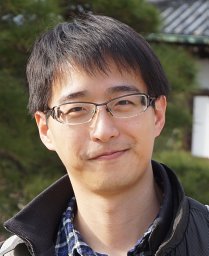
 Yi-Hsuan Yang
· 3 previous affiliations
- Academia SinicaSince 2011
- Associate Research Fellow · Since 2015
- Associate Professor · 2015–2023
- Assistant Research Fellow · 2011–2015
- National Taiwan UniversitySince 2023
- Full Professor · Since 2023
- PhD · 2006–2010
- Bachelor's degree, Electrical Engineering · 2002–2006
- Taiwan AILabs2019–2024
- Chief Music Scientist · 2019–2024
Research Overview
Yi-Hsuan Yang focuses on music information research, automatic music generation, and the application of deep learning to audio and symbolic music. His trajectory spans early work in music emotion recognition to advanced neural architectures for multi-track composition and expressive audio synthesis. Recently, his research investigates lightweight control mechanisms, state-space models, and geometry-aware diffusion for music generation and restoration.
Research Trajectory
Yang’s early research concentrated on music emotion recognition (MER), seeking to map audio signals directly to affective states. He introduced A Regression Approach to Music Emotion Recognition, which formulated MER as a regression problem to predict arousal and valence values directly, bypassing the ambiguities inherent in categorical taxonomies. He later consolidated the field's progress and methodologies in Machine Recognition of Music Emotion: A Review.
Shifting toward generative artificial intelligence, Yang and his collaborators developed foundational models for both symbolic and audio generation. In the area of Long Form Structural Coherence in Musical Audio Generation and the research direction of Vertical Synchronization in Multi-Track Music Generation, his group proposed MuseGAN: Multi-track Sequential Generative Adversarial Networks for Symbolic Music Generation and Accompaniment. This work addressed the unique temporal and polyphonic dependencies of multi-track music, where different instruments must unfold interdependently over time. To bridge the gap between symbolic scores and expressive audio, he contributed to PerformanceNet: Score-to-Audio Music Generation with Multi-Band Convolutional Residual Network, advancing the research direction of Hierarchical Coarse-to-Fine Audio Synthesis by rendering realistic music audio directly from scores. He also participated in the development of Pop Music Transformer: Beat-based Modeling and Generation of Expressive Pop Piano Compositions, which focused on generating expressive, beat-aligned piano performances.
Continuing to refine symbolic representations, his lab introduced Compound Word Transformer: Learning to Compose Full-Song Music over Dynamic Directed Hypergraphs. This approach explicitly grouped disparate musical attributes—such as pitch, duration, and velocity—into compound tokens, contributing to the broader area of Compound Token Representations for Symbolic Music. Building on this structural focus, his team recently developed Segment-Factorized Full-Song Generation on Symbolic Piano Music, a model that factorizes compositions into segments to enable interactive, user-guided co-creation via a web interface. Further expanding symbolic control, he authored METEOR: Melody-aware Texture-controllable Symbolic Music Re-Orchestration via Transformer VAE, which provides fine-grained textural control for re-orchestrating MIDI tracks across different ensembles while strictly preserving the original melody.
In parallel with symbolic generation, Yang’s research addresses complex audio signal processing and synthesis challenges, engaging with the research direction of The Perceptual Evaluation Gap in Generative Audio. The research extended to nonlinear effects in Distortion Recovery: A Two-Stage Method for Guitar Effect Removal, which established a framework for recovering dry signals from distorted electric guitar recordings. His lab also explored interpretable amplifier emulation with DDSP Guitar Amp: Interpretable Guitar Amplifier Modeling, utilizing differentiable digital signal processing to match black-box performance at a fraction of the computational cost. Further extending control to synthesizer sounds, work on SynthCloner: Synthesizer Preset Conversion via Factorized Codec with ADSR Envelope Control allowed for the independent manipulation of timbre, content, and envelope characteristics in synthesizer-style audio transfer.
Most recently, Yang has investigated the application of emerging neural architectures to music generation. In Exploring State-Space-Model based Language Model in Music Generation, his team adapted Mamba-based architectures for text-to-music tasks, demonstrating faster convergence and better text-to-audio alignment than traditional Transformers in resource-constrained environments. To improve the controllability of diffusion models, his lab developed MuseControlLite: Multifunctional Music Generation with Lightweight Conditioners, a fine-tuning framework utilizing Rotary Positional Embeddings for precise, time-varying control over melody and rhythm. Finally, addressing audio restoration, he oversaw the proposal of Zero-shot Geometry-Aware Diffusion Guidance for Music Restoration, which guides diffusion models using geometry-aware updates on a hypersphere to prevent sample drift and instability.
Current Directions
The most recent papers in the evidence indicate a strong focus on improving the controllability, efficiency, and interactivity of music generation models. Recent work investigates lightweight conditioning mechanisms for text-to-music diffusion models and explores interpretable, DSP-inspired neural architectures for audio emulation that drastically reduce computational overhead. Additionally, Yang's current research addresses the structural challenges of long-form symbolic music by developing segment-factorized models for human-AI co-creation and fine-grained re-orchestration tools that preserve melodic identity while altering musical texture. His group is also actively exploring the potential of state-space models and geometry-aware diffusion guidance to enhance the efficiency and stability of audio synthesis and restoration.
Profile updated
Loading new papers…
Other researchers whose papers cluster into the same research directions — a proxy for overlapping technical interests and shared intellectual neighborhoods.
See something wrong? Report a mistake