

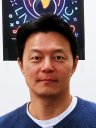
 Kyogu Lee
· 1 previous affiliation
- Seoul National UniversitySince 2009
- Professor · Since 2009
Research Overview
Kyogu Lee focuses on audio machine learning, music source separation, and generative models for speech and music. His trajectory spans early work in acoustic chord transcription to advanced neural architectures for expressive performance synthesis and cross-modal alignment. Recently, his research addresses efficient inference in diffusion models, physical modeling synthesis, and self-supervised representations for clinical and generative audio applications.
Research Trajectory
The early phase of his research focused on bridging symbolic music data and acoustic signal processing. In 2008, he developed an Acoustic Chord Transcription and Key Extraction From Audio Using Key-Dependent HMMs Trained on Synthesized Audio. This system utilized symbolic data to train hidden Markov models, bypassing the laborious process of human annotation by synthesizing audio that was perfectly aligned with automatically generated harmony labels.
As deep learning architectures became central to audio processing, his lab explored weakly-supervised learning and multi-source separation. In 2017, he proposed an Ensemble of Convolutional Neural Networks for Weakly-supervised Sound Event Detection Using Multiple Scale Input to identify sound events without relying on strongly labeled temporal boundaries. The following year, he participated in the development of Music Source Separation Using Stacked Hourglass Networks, contributing to joint estimation techniques for isolating overlapping sources in musical mixtures.
By 2019, his research expanded into generative modeling for both music and motion. He contributed to the area of Expressive Performance Modeling for Neural Audio Synthesis through work on VirtuosoNet: A Hierarchical RNN-based System for Modeling Expressive Piano Performance, which utilized multi-scale temporal attention to translate symbolic scores into nuanced audio performances. Concurrently, his group advanced the research direction of Rhythmic Synchronization in Cross-Modal Generation by developing an Automatic Choreography Generation with Convolutional Encoder-decoder Network. This model successfully mapped musical audio features to 3D spatial representations of human movement.
In 2024, his work addressed the domain of Bridging the Reality Gap in Audio Machine Learning with Differentiable Modal Synthesis for Physical Modeling of Planar String Sound and Motion Simulation. This research integrated differentiable physics into end-to-end learning, solving complex partial differential equations to simulate string vibration while maintaining physical grounding and computational efficiency.
The trajectory in 2025 reflects a broad expansion into generative audio, speech enhancement, and specialized clinical applications. In the realm of generative modeling, he introduced the Multidimensional Adaptive Coefficient for Inference Trajectory Optimization in Flow and Diffusion, a plug-in module that enables curved inference trajectories to improve generation quality in as few as five steps. Applying similar efficiency goals to speech enhancement, he proposed a Few-step Adversarial Schrödinger Bridge for Generative Speech Enhancement, which integrates GANs to mitigate the performance degradation of diffusion models under low signal-to-noise ratio conditions.
His lab also advanced audio synthesis and extraction techniques. He developed TokenSynth: A Token-based Neural Synthesizer for Instrument Cloning and Text-to-Instrument, utilizing a decoder-only transformer and contrastive language-audio pretraining embeddings for zero-shot timbre manipulation. In music processing, he introduced a generative approach for isolating percussive elements in DOSE: Drum One-Shot Extraction from Music Mixture, alongside efforts to improve chamber music processing via Synthetic Dataset Generation for String Ensemble Separation.
Simultaneously, he explored clinical and accessible applications of speech processing. He leveraged self-supervised learning for Voice-Based Dysphagia Detection: Leveraging Self-Supervised Speech Representation to overcome data scarcity in medical diagnostics. Additionally, he developed a framework for multi-speaker silent speech voicing from electromyography and facial inputs in Speaking Without Sound: Multi-speaker Silent Speech Voicing with Facial Inputs Only, enabling audible speech generation without acoustic input.
Further recent work includes Song Form-aware Full-Song Text-to-Lyrics Generation with Multi-Level Granularity Syllable Count Control, which ensures structural coherence in lyrics generation, and investigations into cross-modal retrieval in Understanding Audio-Text Retrieval Through Singular Value Decomposition. Finally, his research encompasses cognitive science, examining auditory perception in The Effects of Musical Factors on the Perception of Auditory Illusions.
Current Directions
Recent work investigates the efficiency, controllability, and physical grounding of generative models for audio and speech. The most recent papers in the evidence address the optimization of inference trajectories in flow and diffusion models, as well as the integration of adversarial training with Schrödinger Bridges for low-step speech enhancement. Another major current focus is the application of self-supervised and multimodal representations to specialized domains, including zero-shot instrument cloning, silent speech voicing from facial and electromyography inputs, and diagnostic tools for medical conditions like dysphagia. Additionally, ongoing research explores physical modeling through differentiable physics, structural coherence in long-form generative music and lyrics, and the refinement of source separation techniques for complex acoustic environments like chamber ensembles and drum mixtures.
Profile updated
Loading new papers…
Other researchers whose papers cluster into the same research directions — a proxy for overlapping technical interests and shared intellectual neighborhoods.
See something wrong? Report a mistake