

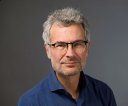
 Gaël Richard
· 1 previous affiliation
- Telecom ParisSince 2001
- Full Professor · Since 2001
Research Overview
Gaël Richard focuses on speech and audio signal processing, machine learning for music information research, and multimodal representation learning. His trajectory spans foundational work in source separation and non-negative matrix factorization to recent advances in physically informed spatial regularization and generative audio synthesis. Currently, his research emphasizes model-based deep learning and competitive specialization for multimodal prediction.
Research Trajectory
Richard’s early research established foundational techniques in audio analysis and feature extraction. He explored Musical instrument recognition by pairwise classification strategies and contributed to the development of YAAFE, an Easy to Use and Efficient Audio Feature Extraction Software. A major focus during this period was the research direction of Source Separation as a Foundation for Audio Analysis. He investigated Gaussian Processes for Underdetermined Source Separation and introduced novel frameworks in Informed source separation through spectrogram coding and data embedding. This latter work embedded side-information into audio mixtures using compression techniques to separate complex, non-sparse signals, enabling applications such as remixing.
Moving toward multimodal contexts in the late 2010s, his work expanded into audio-visual representation learning. He led research on Weakly Supervised Representation Learning for Unsynchronized Audio-Visual Events, proposing a multiple instance learning framework that classifies and localizes events using only video-level labels without timing information. This interest in cross-modal alignment was further detailed in the survey Audiovisual Analysis of Music Performances: Overview of an Emerging Field, touching upon the broader area of Visual Anchoring for Robust Speech Enhancement.
A significant theme in his trajectory is the pursuit of interpretable machine learning for audio, particularly through the research direction of Parts-Based Audio Decomposition with Non-negative Matrix Factorization. He developed methods to make neural network decisions audible to end-users, as presented in Listen to Interpret: Post-hoc Interpretability for Audio Networks with NMF. This approach was later expanded in Tackling Interpretability in Audio Classification Networks With Non-negative Matrix Factorization, which integrates NMF into deep architectures to decompose complex audio into high-level, listenable objects that explain specific classifications.
Richard has also advanced the area of Specialization Through Competitive Winner Take All Losses. He introduced Resilient Multiple Choice Learning: A learned scoring scheme with application to audio scene analysis, a framework that predicts multiple hypotheses with learned confidence scores to model complex distributions like multiple sound sources. This winner-takes-all strategy was subsequently adapted for natural language processing in Multiple Choice Learning of Low-Rank Adapters for Language Modeling, where specialized adapters capture distinct modes of plausible outputs to generate diverse sequences.
His recent work heavily emphasizes robust and generative audio processing. In the domain of sound event localization, he incorporated physical acoustics into deep learning via Physically Informed Spatial Regularization for Sound Event Localization and Detection, using an inverse Wishart distribution to align predictions with room geometry and improve robustness in reverberant environments. In generative AI, he contributed to Diff-TONE: Timestep Optimization for iNstrument Editing in Text-to-Music Diffusion Models, a training-free method for high-fidelity instrument transfer. Concurrently, he has advocated for integrating domain knowledge into neural architectures, a concept central to the area of Unified Architectures for General Audio Intelligence. This is exemplified in Model-Based Deep Learning for Music Information Research, which combines traditional music knowledge with differentiable frameworks. Applying this philosophy to the research direction of Audio Source Separation without Isolated Ground Truth, he developed Unsupervised Music Source Separation Using Differentiable Parametric Source Models, achieving high separation quality with minimal training data. Finally, he explored symbolic music manipulation in Groove2Groove: One-Shot Music Style Transfer with Supervision from Synthetic Data, proposing an encoder-decoder network trained on synthetic parallel examples.
Current Directions
Recent work investigates the integration of domain-specific physical and musical knowledge into deep learning architectures to improve data efficiency and interpretability. The most recent papers in the evidence address model-based deep learning for music information research, utilizing differentiable parametric source models to perform unsupervised music source separation. Additionally, current research explores physically informed spatial regularization to enhance sound event localization in reverberant environments, alongside training-free editing techniques for text-to-music diffusion models. Another active theme involves competitive specialization, adapting multiple-choice learning frameworks to train low-rank adapters that capture diverse, multimodal distributions in both audio scene analysis and language modeling.
Profile updated
Loading new papers…
Other researchers whose papers cluster into the same research directions — a proxy for overlapping technical interests and shared intellectual neighborhoods.
See something wrong? Report a mistake