

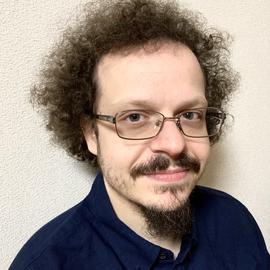
 Mathieu Fontaine
· 4 previous affiliations
- Télécom ParisSince 2021
- Associate Professor · Since 2021
- Telecom ParisCurrent
- Current
- RIKEN2019–2021
- Postdoc · 2019–2021
- PhD student · 2016–2019
Research Overview
Mathieu Fontaine focuses on machine listening, speech enhancement, and audio source separation using probabilistic models and deep neural networks. His trajectory spans the development of highly efficient architectures for real-time audio processing to the integration of physical acoustic constraints into generative models. Recently, his work emphasizes unsupervised dereverberation and multi-target speaker extraction for complex conversational environments.
Research Trajectory
Fontaine’s early trajectory includes collaborative work on modeling complex, multimodal distributions for audio scene analysis. He participated in the development of Resilient Multiple Choice Learning: A learned scoring scheme with application to audio scene analysis, which introduced a framework for predicting multiple hypotheses alongside learned confidence scores. By utilizing Voronoi tessellations, this approach mitigated hypothesis collapse in regression tasks. This foundational interest in multiple-choice learning was later expanded in Winner-takes-all learners are geometry-aware conditional density estimators, where he and his collaborators demonstrated how Winner-Takes-All (WTA) learners could function as conditional density estimators to calculate full probability distributions without altering the original training scheme.
Moving into 2024, Fontaine led several initiatives focused on efficient audio processing and generative modeling. Addressing the need for resource-constrained deployment, he introduced A Lightweight Dual-Stage Framework for Personalized Speech Enhancement Based on Deepfilternet2. This work integrated speaker-specific embeddings into a highly efficient architecture, advancing the broader areas of Coarse to Fine Refinement for Speech Enhancement and Ultra-Lightweight Neural Architectures for Real-Time Audio Enhancement. Concurrently, he developed Online Speaker Diarization of Meetings Guided by Speech Separation, an end-to-end pipeline that leverages speech separation to handle overlapping voices in real-time meeting scenarios.
In the domain of generative audio, Fontaine explored methods to improve both the speed and stability of synthesis. He developed SpecDiff-GAN: A Spectrally-Shaped Noise Diffusion GAN for Speech and Music Synthesis, which injected spectrally-shaped noise into low-energy regions during training. This technique forced the discriminator to adapt, contributing to the research direction of Adaptive Discriminator Regularization for Data-Efficient GANs. He also introduced GLA-GRAD: A Griffin-Lim Extended Waveform Generation Diffusion Model, integrating classic phase recovery algorithms into the reverse diffusion process. This approach improved zero-shot generalization to unseen speakers, aligning with work in the area of Extrapolating Beyond Training Data with Physics Informed Models.
By 2025, Fontaine’s research increasingly emphasized the integration of physical acoustic properties into deep learning frameworks. He proposed Physically Informed Spatial Regularization for Sound Event Localization and Detection, utilizing an inverse Wishart distribution to align model predictions with room acoustics and microphone geometry. This work advanced the research direction of Physics-Grounded Neural Audio Synthesis and Processing. Building on this physical grounding, he addressed speech dereverberation through weakly supervised and unsupervised paradigms. He introduced A Hybrid Model for Weakly-Supervised Speech Dereverberation, which trained models using only reverberant recordings and basic room parameters, contributing to the area of Physics-Informed Neural Acoustic Fields. He further eliminated the need for paired training data entirely with U-DREAM: Unsupervised Dereverberation guided by a Reverberation Model, integrating a physical room acoustics model directly into the deep learning pipeline.
Alongside his physics-informed work, Fontaine continued to refine systems for complex, multi-speaker environments. He developed MTSE: Multi-Target Speaker Extraction for Conversation Scenarios, employing a dual-stage curriculum learning approach to extract multiple specific voices simultaneously from noisy mixtures. To improve personalized speech enhancement, he proposed Contrastive Knowledge Distillation for Embedding Refinement in Personalized Speech Enhancement, which utilized a tiny speaker encoder to adapt representations on-the-fly with reduced computational cost. For edge-device applications, he introduced O-EENC-SD: Efficient Online End-to-End Neural Clustering for Speaker Diarization, replacing computationally heavy audio buffers with a constant-time neural clustering mechanism.
Most recently, Fontaine’s expertise in multiple-choice learning has been applied beyond audio processing. He collaborated on Multiple Choice Learning of Low-Rank Adapters for Language Modeling, a novel training scheme that applies a winner-takes-all strategy to Low-Rank Adapters (LoRA). This allows language models to capture distinct modes of plausible outputs, generating more diverse sequences by specializing different adapters to various parts of the data distribution.
Current Directions
The most recent papers in the evidence indicate a dual focus on physics-informed machine listening and highly efficient, edge-ready audio processing. Fontaine is actively investigating unsupervised and weakly supervised methods for speech dereverberation, utilizing physical room acoustic models to eliminate the need for paired training data. Concurrently, his work addresses the computational bottlenecks of real-time multi-speaker scenarios, developing constant-time neural clustering for online diarization and on-the-fly embedding refinement for personalized speech enhancement. Additionally, recent collaborative efforts explore the application of multiple-choice learning strategies to parameter-efficient fine-tuning, enabling language models to capture diverse output modes through specialized low-rank adapters.
Profile updated
Loading new papers…
Other researchers whose papers cluster into the same research directions — a proxy for overlapping technical interests and shared intellectual neighborhoods.
See something wrong? Report a mistake