

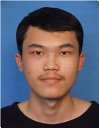
 Zhong-Qiu Wang
· 4 previous affiliations
- Associate Professor · Since 2024
- Carnegie Mellon University2021–2024
- Postdoc · 2021–2024
- Researcher · 2020–2021
- The Ohio State University2013–2020
- PhD student · 2013–2020
Research Overview
Zhong-Qiu Wang focuses on speech and audio signal processing, with an emphasis on speech separation, robust automatic speech recognition, and microphone array processing. His trajectory spans the development of joint training frameworks for acoustic models to advanced neural beamforming and unsupervised speech enhancement techniques. His most recent work investigates weakly supervised separation methods, multi-channel acoustic echo cancellation, and the application of generative priors to audio processing.
Research Trajectory
Wang’s early work addressed the challenge of robust automatic speech recognition (ASR) in noisy and reverberant environments. He introduced methods in the area of Joint Optimization of Speech Enhancement and Recognition, specifically by concatenating deep neural network-based speech separation frontends with acoustic models. This approach was detailed in Joint training of speech separation, filterbank and acoustic model for robust automatic speech recognition and expanded upon in A Joint Training Framework for Robust Automatic Speech Recognition. In these systems, the weights of both modules were jointly adjusted to provide enhanced speech optimized directly for the acoustic model, aligning closely with the broader area of Aligning Speech Enhancement with Machine Recognition Objectives.
Moving into 2018 and beyond, the focus shifted toward multi-channel processing and the utilization of spatial cues. Contributing to the research direction of Fusing Spatial and Spectral Cues for Multi Channel Audio, he developed Multi-Channel Deep Clustering: Discriminative Spectral and Spatial Embeddings for Speaker-Independent Speech Separation. This work demonstrated that encoding inter-microphone phase patterns alongside spectral features significantly improved separation performance. He subsequently advanced the broader area of Complex Spectral Mapping for Phase Aware Signal Reconstruction with Complex Spectral Mapping for Single- and Multi-Channel Speech Enhancement and Robust ASR, proposing a system that predicts the real and imaginary components of direct-path signals to compute minimum variance distortion-less response (MVDR) beamformers. This trajectory naturally led to work in Neural Beamforming for Distortionless Speech Separation, exemplified by Sequential Multi-Frame Neural Beamforming for Speech Separation and Enhancement, which iteratively combined neural network-based spectral separation with multi-frame linear beamforming.
Around 2023, Wang addressed the computational and latency constraints of speech enhancement. He proposed novel architectures integrating full- and sub-band modeling, as seen in Neural Speech Enhancement with Very Low Algorithmic Latency and Complexity via Integrated Full- and Sub-Band Modeling. This approach utilized an information highway to flow representations through modules that captured both global spectro-temporal patterns and localized sub-band features. This architecture was further refined in TF-GridNet: Integrating Full- and Sub-Band Modeling for Speech Separation, which stacked intra-frame, sub-band temporal, and cross-frame self-attention modules to achieve substantial improvements in signal-to-distortion ratios. Concurrently, he explored low-latency constraints in the short-time Fourier transform domain with STFT-Domain Neural Speech Enhancement With Very Low Algorithmic Latency.
In parallel, Wang began investigating unsupervised and weakly supervised paradigms to overcome the generalization limits of models trained purely on simulated data. In UNSSOR: Unsupervised Neural Speech Separation by Leveraging Over-determined Training Mixtures, he leveraged over-determined conditions—where microphones outnumber speakers—to constrain solutions and realize unsupervised separation. He applied a similar insight to dereverberation in USDnet: Unsupervised Speech Dereverberation via Neural Forward Filtering, using recorded mixture signals as constraints to narrow down solutions to target anechoic speech.
Expanding on weak supervision, he introduced methods that utilize close-talk microphones to guide far-field separation. Mixture to Mixture: Leveraging Close-Talk Mixtures as Weak-Supervision for Speech Separation utilized the high signal-to-noise ratio of close-talk recordings as a weak supervisory signal for training discriminative models. This concept was extended to address the specific problem of cross-talk in close-talk recordings themselves in Cross-Talk Reduction, stacking close-talk and far-field mixtures to isolate the target speaker. He further formalized this approach in ctPuLSE: Close-Talk, and Pseudo-Label Based Far-Field, Speech Enhancement, training enhancement models directly on real-recorded pairs of close-talk and far-field mixtures to improve generalization to real-world environments.
In 2025, his research expanded into new multi-channel and generative paradigms. He contributed to the research direction of Array Agnostic Multi Channel Speech Processing with ArrayDPS: Unsupervised Blind Speech Separation with a Diffusion Prior, participating in the development of a system that separates overlapping voices without prior knowledge of microphone layouts by leveraging pre-trained speech diffusion models. Additionally, he oversaw work on Multi-Channel Acoustic Echo Cancellation Based on Direction-of-Arrival Estimation, which incorporated sound source directional cues via a lightweight neural network to enhance the spatial awareness of subsequent beamforming stages.
Current Directions
The most recent papers in the evidence indicate a focus on highly adaptable, geometry-agnostic audio processing and the integration of generative AI into speech separation. Recent work investigates unsupervised blind speech separation techniques that utilize diffusion priors to handle overlapping voices in ad-hoc microphone setups, removing the need for predefined room acoustics or array geometries. Concurrently, there is an ongoing emphasis on improving full-duplex speech communication through multi-channel acoustic echo cancellation. By predicting direction-of-arrival to guide beamforming, these approaches aim to resolve spatial ambiguities and manage the trade-off between echo suppression and signal distortion in complex, real-world acoustic environments.
Profile updated
Loading new papers…
Other researchers whose papers cluster into the same research directions — a proxy for overlapping technical interests and shared intellectual neighborhoods.
See something wrong? Report a mistake