

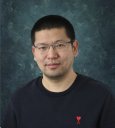
 Xin Wang
· 2 previous affiliations
- Assistant Professor · Since 2023
- PhD student · 2011–2015
- Keya Medical2016–2023
- Researcher · 2016–2023
49 other authors named Xin Wang: Xin Wang (Monash University Malaysia · 409 papers), Xin Wang (Tsinghua University · 371 papers), Xin Wang (Hong Kong University of Science and Technology · The Hong Kong University of Science and Technology (Guangzhou) · 294 papers), Xin Wang (Tianjin University · 204 papers), Xin Wang (Jilin University · 151 papers), and 44 more
Research Overview
Xin Wang focuses on robust machine learning optimization, medical image analysis, and the detection of synthetic media. His early work developed novel learning objectives and multimodal alignment techniques, which later evolved into specialized architectures for clinical diagnostics and generative AI forensics. Currently, his research emphasizes algorithmic fairness in deepfake detection and the application of foundation models to medical imaging.
Research Trajectory
Xin Wang’s early research focused on foundational optimization techniques and multimodal learning. In On Algorithms for Sparse Multi-factor NMF (2013), he introduced an efficient closed-form solution for multi-factor nonnegative matrix factorization, bypassing the slow iterative methods previously required to find sparse, hierarchical representations in data. He subsequently advanced cross-modal retrieval with Co-Regularized PLSA for Multi-Modal Learning (2016), proposing a flexible topic modeling framework that encourages topic distributions across different modalities, such as text and images, to be similar rather than strictly identical.
Moving into the 2020s, Wang developed new, robust learning objectives to handle outliers and irrelevant samples in training data. He introduced the Sum of Ranked Range (SoRR) framework in Learning by Minimizing the Sum of Ranked Range (2020), which aggregates a specific slice of sorted individual values to form a more resilient loss function. He further formalized and expanded this approach in Sum of Ranked Range Loss for Supervised Learning (2022). This body of work contributed significantly to the broader research direction of Difference of Convex Programming, as the SoRR minimization is solved efficiently using the Difference-of-Convex algorithm.
Building on his expertise in robust learning and feature extraction, Wang’s research expanded into the forensics of generative models. In Eyes Tell All: Irregular Pupil Shapes Reveal GAN-Generated Faces (2022), he identified that Generative Adversarial Networks struggle to replicate the natural, near-circular shape of human pupils. By automating pupil segmentation and ellipse-fitting, he provided an interpretable alternative to black-box detectors, advancing the area of Algorithmic Fingerprints for Synthetic Media Detection. He continued to explore the nuances of synthetic media forensics in Spotting the Fakes: A Deep Dive into GAN-Generated Face Detection (2025).
Recognizing that deepfake detection models often suffer from demographic biases, Wang began investigating equitable performance across different populations. In Preserving Fairness Generalization in Deepfake Detection (2024), he addressed the challenge of maintaining fairness during cross-domain testing, a critical step for the research direction of Demographic Performance Disparities in Facial Analysis Systems. To support the development of unbiased models, he also helped introduce AI-Face: A Million-Scale Demographically Annotated AI-Generated Face Dataset and Fairness Benchmark (2024), which provides comprehensive annotations for skin tone, age, and gender to audit state-of-the-art detectors.
In parallel with his work on synthetic media, Wang has made extensive contributions to medical image analysis, focusing on complex segmentation and classification tasks. He developed CGD-Net: A Hybrid End-to-end Network with gating decoding for Liver Tumor Segmentation from CT Images (2024), which integrates Transformer architectures with frequency-domain features to handle the fuzzy boundaries of hepatic lesions. For fine-grained classification, he proposed Robustly Optimized Deep Feature Decoupling Network for Fatty Liver Diseases Detection (2024), utilizing adaptive adversarial training to separate common features from disease-specific indicators in abdominal ultrasounds.
Wang has also been instrumental in adapting modern foundation models and volumetric rendering techniques for clinical use. He explored the integration of uncertainty estimation into medical segmentation in U-MedSAM: Uncertainty-Aware MedSAM for Medical Image Segmentation (2024). He later advanced this paradigm with Diffusion-empowered AutoPrompt MedSAM (2025), an end-to-end framework that uses a diffusion-based encoder to generate high-quality prompt embeddings from simple class labels, eliminating the need for manual bounding boxes or clicks. Additionally, he surveyed the transformative potential of 3D synthesis in Neural Radiance Fields in Medical Imaging: Challenges and Next Steps (2024), highlighting progress in the area of Sparse View Neural Volumetric Reconstruction for reducing radiation exposure and improving surgical planning.
In his most recent work, Wang has applied reinforcement learning and Bayesian methods to generative AI and image restoration. He introduced RLMiniStyler: Light-weight RL Style Agent for Arbitrary Sequential Neural Style Generation (2025), a highly parameter-efficient agent for controllable artistic style transfer. He further extended reinforcement learning to continuous state spaces in RL-I2IT: Image-to-image translation with deep reinforcement learning (2026), breaking down complex image translation into manageable steps via a meta-policy architecture. For motion deblurring, he developed VB-KGN: Variational Bayesian Kernel Generation Networks for Motion Image Deblurring (2025).
Wang has also continued to advance the reliability and fairness of machine learning systems. Leading a research team, he developed Pioneering Reliable Assessment in Text-to-Image Knowledge Editing: Leveraging a Fine-Grained Dataset and an Innovative Criterion (2024), which provides a rigorous methodology for updating facts inside models like Stable Diffusion without catastrophic forgetting. In collaborative work on algorithmic fairness, he contributed to Preserving AUC Fairness in Learning with Noisy Protected Groups (2025). This research combines distributionally robust optimization with noise estimation to maintain fairness guarantees when demographic labels are unreliable, advancing the intersecting areas of Deep AUC Maximization for Imbalanced Learning and Optimizing for Flat Minima in Loss Landscapes.
Current Directions
The most recent papers in the evidence indicate a strong focus on bridging the gap between large-scale foundation models and practical, automated applications in specialized domains. A major current direction is the automation of medical image segmentation; recent work investigates how diffusion models can be used to generate semantic prompts for models like MedSAM, removing the bottleneck of manual human interaction while preserving high diagnostic accuracy.
Simultaneously, Wang is exploring the intersection of deep reinforcement learning and generative computer vision. Recent architectures demonstrate how RL agents can be deployed as lightweight, highly efficient planners for complex, high-dimensional tasks such as sequential style generation and image-to-image translation. Finally, ensuring the robustness and fairness of these models remains a central theme, particularly in developing optimization frameworks that can guarantee equitable performance even when the underlying demographic data is noisy or subject to distribution shifts.
Profile updated
Loading new papers…
Other researchers whose papers cluster into the same research directions — a proxy for overlapping technical interests and shared intellectual neighborhoods.
See something wrong? Report a mistake