

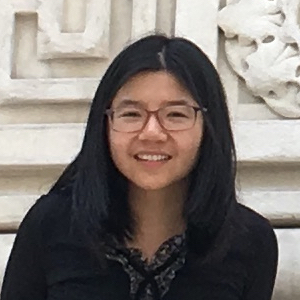
 Yuyin Zhou
· 3 previous affiliations
- University of California, Santa CruzSince 2022
- Assistant Professor · Since 2022
- Stanford University2020–2021
- Postdoc · 2020–2021
- Johns Hopkins University2016–2020
- PhD student · 2016–2020
Research Overview
Yuyin Zhou focuses on medical image analysis, multimodal artificial intelligence, and agentic clinical systems. Her early work addressed fundamental challenges in anatomical segmentation and adversarial robustness in computer vision. Currently, her research investigates the integration of large language models and diffusion models to build proactive, multimodal AI collaborators for healthcare and complex visual reasoning.
Research Trajectory
Zhou’s early trajectory concentrated on robust computer vision and medical image analysis. She introduced A Fixed-Point Model for Pancreas Segmentation in Abdominal CT Scans, utilizing coarse-to-fine spatial refinement and feedback loops to progressively refine masks for morphologically variable anatomical structures. This work in medical segmentation naturally intersected with the broader challenge of Addressing Extreme Spatial Class Imbalance in Medical Segmentation. Expanding on partially supervised settings, she developed Prior-Aware Neural Network for Partially-Supervised Multi-Organ Segmentation, which incorporated anatomical priors to bridge the pathological generalization gap and resolve background ambiguity. Concurrently, she participated in research on adversarial robustness, contributing to Improving Transferability of Adversarial Examples With Input Diversity. This work applied random transformations to input images to bridge the cross-architecture adversarial transferability gap, advancing the area of Optimizing Adversarial Transferability via Surrogate Ensembles.
Transitioning to advanced neural architectures, her lab explored the integration of self-attention mechanisms into medical imaging. She oversaw the development of TransUNet: Transformers Make Strong Encoders for Medical Image Segmentation, an architecture that combined the global context of Transformers with the localized high-resolution details of U-Net. Beyond architectural design, she investigated optimization challenges in distributed and noisy environments. She authored Rethinking Architecture Design for Tackling Data Heterogeneity in Federated Learning, addressing inductive bias deficiencies in vision transformers and knowledge retention. To handle corrupted annotations, she introduced L2B: Learning to Bootstrap for Combating Label Noise, a meta-learning approach that balances real labels against pseudo-labels, contributing to the direction of Mitigating Error Propagation in Pseudo Labeling and the area of Self Supervised Pretraining for High Stakes Label Efficiency.
In 2024, Zhou’s research expanded into generative models and 3D reconstruction. Her group developed RetinaRegNet: A Versatile Approach for Retinal Image Registration, a zero-shot framework that leverages semantic features from latent diffusion models to resolve correspondence ambiguity on featureless surfaces. This aligned with her broader interest in the research direction of Repurposing Pretrained Diffusion Models for Visual Perception. Similarly, she led work on MicroDiffusion: Implicit Representation-Guided Diffusion for 3D Reconstruction from Limited 2D Microscopy Projections, combining implicit neural representations with diffusion models to reconstruct high-fidelity biological volumes from depth-unresolved 2D projections.
Moving into multimodal generation and reasoning, her lab introduced Discrete Diffusion Models with MLLMs for Unified Medical Multimodal Generation (MeDiM), which repurposed multimodal large language models as bidirectional diffusion backbones to unify image and report generation. Investigating inference-time compute scaling for complex reasoning, she directed research on m1: Unleash the Potential of Test-Time Scaling for Medical Reasoning with Large Language Models, exploring how test-time scaling paradigms can be adapted for high-stakes medical domains. In the domain of natural image manipulation, her team curated HQ-Edit: A High-Quality Dataset for Instruction-based Image Editing, utilizing closed-loop visual feedback to advance the area of Preserving Background and Structure in Local Image Editing.
The most recent phase of her trajectory focuses on agentic systems, long-form video generation, and refining vision-language models (VLMs). She guided the development of Story-Iter: A Training-free Iterative Paradigm for Long Story Visualization, mitigating temporal drift in autoregressive video generation through a global reference cross-attention module. To address the visual perception bottleneck in VLMs, her group proposed a staged post-training curriculum in From Seeing to Thinking: Decoupling Perception and Reasoning Improves Post-Training of Vision-Language Models. In the medical domain, she oversaw the creation of Synthesizing High-Quality Visual Question Answering from Medical Documents with Generator-Verifier LMMs, bootstrapping multimodal datasets with foundation model pipelines to generate exam-grade visual question answering data. Pushing toward autonomous clinical systems, she led ClinSeekAgent: Automating Multi-modal Evidence Seeking for Agentic Clinical Reasoning, an agentic framework that actively acquires multimodal evidence from electronic health records and web searches. Finally, returning to foundational segmentation challenges, her lab adapted text-prompted foundation models for biomedical volumes in How to Adapt SAM3 as a Strong Text-Prompted 3D Medical Segmentor?.
In 2026, Zhou expanded into world models, generative agentic reasoning, and decoding strategies for multimodal diffusion. Zhou served as senior author on ImagineAgent: What if Agents Could Imagine? Reinforcing Open-Vocabulary HOI Comprehension through Generation, introducing an agentic framework that incorporates tool-augmented reinforcement learning and generative viewpoint synthesis to mitigate cross-modal hallucinations in open-vocabulary human-object interaction. Addressing visual representations for world models, Zhou collaborated on ALPS: Visual State Encoders for World Models, which unifies physical-state awareness, language alignment, and pixel reconstruction within a single visual state encoder. Additionally, Zhou contributed to Rethinking in Spikes: Mitigating Hallucinations in MDLMs with Step-Aware Decoding, proposing StepRefine to dynamically switch between discrete denoising and continuous latent refinement during localized entropy spikes in multimodal diffusion language models. Zhou also participated in the development of Nemotron-Labs-VisualCreation: Pixel as Code for Agentic Visual Creation, an agentic visual creation framework unifying discrete visual tokens with executable code across raster, vector, and document interfaces.
Current Directions
The most recent papers in the evidence address the development of agentic and reasoning-focused artificial intelligence, particularly for clinical applications. Recent work investigates how to transition medical AI from passive data processing to active evidence acquisition, utilizing agentic frameworks that autonomously query electronic health records and multimodal databases. Additionally, current research explores world models, generative agentic reasoning for visual interactions, and step-aware decoding to suppress hallucinations in multimodal models. By decoupling visual perception from textual reasoning during post-training, these efforts aim to mitigate hallucination risks and build more robust, proactive AI collaborators for high-stakes environments.
Profile updated
Loading new papers…
Other researchers whose papers cluster into the same research directions — a proxy for overlapping technical interests and shared intellectual neighborhoods.
See something wrong? Report a mistake