

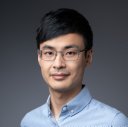
 Lequan Yu
· 4 previous affiliations
- University of Hong KongSince 2021
- Assistant Professor · Since 2021
- Current
- Stanford University2019–2021
- Postdoc · 2019–2021
- Chinese University of Hong Kong2015–2019
- PhD student · 2015–2019
- Zhejiang University2011–2014
- Undergrad student · 2011–2014
Research Overview
Lequan Yu focuses on the intersection of artificial intelligence and healthcare, developing advanced multimodal learning algorithms for biomedical data analysis. His research trajectory spans from early innovations in volumetric medical image segmentation to recent work on foundation models and agentic AI for computational pathology. Currently, he investigates trustworthy representation learning and causal inference to improve clinical decision-making.
Research Trajectory
Early in his career, research concentrated on designing deep learning architectures capable of precise medical image segmentation across various modalities. This included the development of the 3D deeply supervised network for automated segmentation of volumetric medical images, which improved the training of 3D convolutional networks for complex anatomical structures. Parallel work addressed histology with DCAN: Deep contour-aware networks for object instance segmentation from histology images, introducing a multi-task learning framework to separate touching objects in gland segmentation. This architectural exploration extended to magnetic resonance imaging with VoxResNet: Deep voxelwise residual networks for brain segmentation from 3D MR images, which adapted residual learning to 3D volumetric data.
As clinical deployment of these models highlighted challenges with data scarcity and domain shift, the focus expanded to semi-supervised learning and domain generalization. To leverage unlabeled data, he contributed to the Uncertainty-Aware Self-ensembling Model for Semi-supervised 3D Left Atrium Segmentation. Addressing the critical issue of models failing on unseen hospital data, he introduced DoFE: Domain-Oriented Feature Embedding for Generalizable Fundus Image Segmentation on Unseen Datasets. By dynamically injecting multi-source domain priors into the network, this framework significantly improved segmentation accuracy on new datasets without retraining, advancing the research direction of Overcoming Cross-Institutional Domain Shift in Medical AI and contributing to the area of Delineating Ambiguous Boundaries in Low-Contrast Images.
Subsequent research addressed fundamental architectural bottlenecks in both general computer vision and specialized medical imaging. In object detection, You Should Look at All Objects revealed that Feature Pyramid Networks often paradoxically degrade the detection of large objects by restricting early layers to small scales. By introducing auxiliary losses and feature grouping, this work ensured layers learned from all object sizes, contributing to the broader area of The Sensitivity of Multi-Objective Loss Balancing. In the medical domain, he explored the integration of self-attention mechanisms with nnFormer: Volumetric Medical Image Segmentation via a 3D Transformer, which interleaved convolutional and transformer blocks to capture both local and global volume-based features.
This period also marked a deep engagement with computational pathology and gigapixel-scale imaging. He developed MulGT: Multi-Task Graph-Transformer with Task-Aware Knowledge Injection and Domain Knowledge-Driven Pooling for Whole Slide Image Analysis, which jointly learned tumor typing and staging. This work was central to the research direction of Multi-Scale Feature Integration in Computational Pathology. Building on the natural hierarchy of pathology data, later work introduced HyperPath: Knowledge-Guided Hyperbolic Semantic Hierarchy Modeling for WSI Analysis, utilizing hyperbolic space and textual guidance to better capture the semantic associations between patches, regions, and whole slides. To make survival predictions from these massive images more robust and trustworthy, he integrated formal causal inference in C2MIL: Synchronizing Semantic and Topological Causalities in Multiple Instance Learning for Robust and Interpretable Survival Analysis.
Most recently, the trajectory has expanded to encompass large language models (LLMs), agentic workflows, and multimodal foundation models in healthcare. Recognizing the limitations of static prompts in medical visual question answering, he proposed A Dynamic Agent Framework for Large Language Model Reasoning for Medical and Visual Question Answering. This was followed by PASS: Probabilistic Agentic Supernet Sampling for Interpretable and Adaptive Chest X-Ray Reasoning, which adaptively samples workflows over a multi-tool graph to yield decision paths with interpretable probabilities. To evaluate the real-world utility of vision-language models, he co-developed MedDocBench: Benchmarking Vision-Language Models for Reliable Structured Extraction from Real-World Clinical Forms, highlighting the gap between basic optical character recognition and accurate structured data extraction.
In the realm of multimodal representation learning, he introduced Amplifying Prominent Representations in Multimodal Learning via Variational Dirichlet Process to balance the alignment of different modalities while preserving their unique features. This multimodal expertise was applied to bridge distinct medical disciplines in Bridging Radiology and Pathology Foundation Models via Concept-Based Multimodal Co-Adaptation, using clinically grounded concepts to allow macro-scale scans and micro-scale slides to inform each other prior to fusion. Alongside these medical AI advancements, he has also contributed to 3D generative modeling, developing AssetFormer: Modular 3D Assets Generation with Autoregressive Transformer for assembling complex 3D primitives, and Horseshoe Splatting: Handling Structural Sparsity for Uncertainty-Aware Gaussian-Splatting Radiance Field Rendering, which brings Bayesian uncertainty quantification to 3D Gaussian Splatting.
Current Directions
The most recent papers in the evidence point toward a strong focus on agentic AI, multimodal foundation models, and interpretable reasoning systems for healthcare. Current work investigates how to move beyond black-box medical predictions by designing dynamic, tool-augmented agentic frameworks that can transparently reason over complex multimodal data, such as chest X-rays and clinical forms. Another major theme is the co-adaptation of disparate medical modalities—specifically bridging the semantic gap between radiology and pathology—using concept-based tuning to create unified, highly interpretable medical intelligence systems. Additionally, recent methodological research continues to explore advanced 3D generation and rendering techniques, emphasizing structural sparsity and uncertainty awareness in spatial computing.
Profile updated
Loading new papers…
Other researchers whose papers cluster into the same research directions — a proxy for overlapping technical interests and shared intellectual neighborhoods.
See something wrong? Report a mistake