

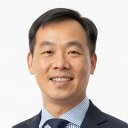
 Ming-Ching Chang
· 7 previous affiliations
- Associate Professor · Since 2022
- Assistant Professor · Since 2016
- Adjunct Professor · Since 2012
- Current
- Inventec (Taiwan)Since 2021
- Senior Principal Research Advisor · Since 2023
- Principal Researcher · Since 2021
- State University of New YorkCurrent
- Current
- GE Global Research (United States)2008–2016
- Lead Computer Scientist · 2008–2016
- Brown University2001–2008
- Ph.D. · 2001–2008
- Research Assistant · 1996–1998
- National Taiwan University1996–1998
- Master of Science (M.S.), Computer Science · 1996–1998
1 other author named Ming-Ching Chang: Ming-Ching Chang (8 papers)
Research Overview
Ming-Ching Chang focuses on computer vision, video analytics, and image forensics. His trajectory spans early work in industrial inspection and multi-camera tracking to advanced deep learning architectures for object detection and synthetic media detection. Currently, his research addresses robust out-of-distribution detection, continual learning, and efficient vision state space models.
Research Trajectory
Chang’s early research addressed automated visual inspection in manufacturing. In 1998, he developed Fast Search Algorithms for IC Printed Mark Quality Inspection, utilizing integral representations for efficient spatial aggregation to improve quality control processes.
Transitioning into complex video analytics and surveillance, his focus shifted toward multi-target tracking across distributed camera networks. He contributed to the research direction of Spatio-Temporal Filtering in Sparse Camera Networks, addressing the geometric and appearance ambiguities inherent in uncalibrated environments. This work culminated in Multi-Camera Multi-Target Tracking with Space-Time-View Hyper-graph (2017), which formulated tracking as a dense sub-hypergraph search to encode higher-order constraints across 3D geometry and motion continuity. He further scaled these methodologies to urban environments in AI City Challenge 2019 - City-Scale Video Analytics for Smart Transportation, optimizing vehicle trajectory continuity and travel duration across multiple city-scale camera views.
Concurrently, Chang began investigating synthetic media forensics, specifically targeting the detection of AI-generated content. In In Ictu Oculi: Exposing AI Generated Fake Face Videos by Detecting Eye Blinking (2018), he introduced a method combining Convolutional Neural Networks and Long-term Recurrent Convolutional Networks to identify the lack of physiological signals—such as eye blinking—in deepfakes. This contributed significantly to the broader area of detecting deepfakes through high-level semantic reasoning.
In the realm of core computer vision architectures, he sought to resolve the semantic-spatial trade-off in deep vision models. He developed the Parallel Residual Bi-Fusion Feature Pyramid Network for Accurate Single-Shot Object Detection (2021), which introduced parallel bi-directional feature fusion to address the challenge of detecting small objects. This work advanced the research direction of Preserving Tiny Features Against Spatial Resolution Degradation and the related area of Multi-Scale Fusion for Preserving Fine Grained Spatial Details, enabling high accuracy while maintaining real-time inference speeds.
By the mid-2020s, Chang's research expanded into specialized domains requiring robust learning from limited or imbalanced data, touching upon areas like Deep AUC Maximization for Imbalanced Learning. In industrial applications, his lab addressed the scarcity of high-quality training samples with PreAugNet: improve data augmentation for industrial defect classification with small-scale training data (2024). He subsequently introduced a training-free, vision-only framework for industrial anomaly detection in PatchEAD: Unifying Industrial Visual Prompting Frameworks for Patch-Exclusive Anomaly Detection (2025), which leverages local visual cues and automated object alignment across foundation models.
Applying deep learning to healthcare, his group developed IntelliCardiac: An Intelligent Platform for Cardiac Image Segmentation and Classification (2025). This system automates the analysis of 4D cardiac MRI scans using a 3D U-Net and a two-stage classification strategy, advancing the end-to-end automation of medical imaging workflows.
Chang also continued to deepen his work in image forensics, focusing on the research direction of Generalizing Detection of Unseen Generative Artifacts. He co-authored A Semantically Impactful Image Manipulation Dataset: Characterizing Image Manipulations Using Semantic Significance (2025), shifting the forensic paradigm from localizing edits to quantifying their semantic impact. Building on this, he proposed a zero-shot approach in Training-Free Image Manipulation Localization Using Diffusion Models (2025), which adaptively adds noise and compares conditional and unconditional reverse diffusion processes to highlight tampered regions without labeled datasets.
Addressing the fundamental reliability of neural networks, Chang explored adversarially robust out-of-distribution detection. In Sharpness-Aware Geometric Defense for Robust Out-Of-Distribution Detection (2025), he introduced a framework that smooths the loss landscape during adversarial training and projects data onto multi-geometric manifolds. To tackle catastrophic forgetting in streaming data, he developed Continual Learning with Synthetic Boundary Experience Blending (2025), utilizing privacy-preserving noise to generate synthetic boundary data that anchors decision boundaries between classes. In multimodal video understanding, his lab contributed to dual-stream architectures for audio-visual learning with SMART: Shot-Aware Multimodal Video Moment Retrieval with Audio-Enhanced MLLM (2025), mitigating the limitations of Multimodal Large Language Models by integrating audio tracks to navigate redundant data in long videos.
Chang's most recent work focuses on the computational efficiency and spatial reasoning of foundational vision models. He participated in the development of FlashSinkhorn: IO-Aware Entropic Optimal Transport on GPU (2026), a GPU-optimized solver that reframes Sinkhorn updates as biased dot-product attention to break the memory wall for large-scale distribution matching. Additionally, he explored multi-directional scanning for visual state space models in Partial Ring Scan: Revisiting Scan Order in Vision State Space Models (2026). This work introduced PRIS-Mamba, an architecture that processes images in concentric rings to preserve spatial context and achieve rotation invariance, mitigating spatial bias in computer vision. Expanding on visual state space models, Chang collaborated on Foveal-Mamba: Inside-Out Ring Scanning with Recurrent Offset Prediction for Visual State Space Models (2026), which couples inside-out ring scanning with a recurrent scan-path offset prediction network to achieve coherent, object-aware deformable sampling in complex scenes. In crowd analysis, Chang also contributed to Counting without Scale: Scale-Consistent Error Correction for Crowd Counting (2026), introducing a model-agnostic loss function combining multiscale supervision with probabilistic error correction to maintain scale invariance despite noisy annotations.
Current Directions
The most recent papers in the evidence indicate a strong focus on optimizing foundational vision architectures and enhancing the robustness of machine learning models. Recent work investigates the computational bottlenecks of large-scale distribution matching, developing IO-aware GPU solvers for Entropic Optimal Transport. Concurrently, Chang is addressing the spatial limitations of Vision State Space Models through adaptive, scan-path-aware deformable sampling mechanisms and developing scale-invariant error-correcting losses for crowd counting. Beyond architectural efficiency, his current research addresses the reliability of AI systems in dynamic environments, focusing on continual learning frameworks that prevent catastrophic forgetting and geometric defenses that improve out-of-distribution detection against adversarial attacks.
Profile updated
Loading new papers…
Other researchers whose papers cluster into the same research directions — a proxy for overlapping technical interests and shared intellectual neighborhoods.
See something wrong? Report a mistake