

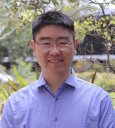
 Liang Zheng
· 7 previous affiliations
- Australian National UniversitySince 2018
- Associate Professor · Since 2024
- Senior Lecturer · 2021–2023
- Lecturer (Assistant Professor) · 2018–2020
- CanvaSince 2025
- Research Scientist · Since 2025
- 澳大利亚国立大学Since 2021
- Professor · Since 2026
- Associate Professor (tenured) · 2024–2026
- Senior Lecturer · 2021–2023
- Trendii2021–2025
- Head of AI · 2021–2025
- University of Technology Sydney2016–2018
- Postdoctoral Researcher · 2016–2018
- Postdoctoral Fellow · 2015–2016
- Tsinghua University2006–2015
- PhD student · 2010–2015
- Dual Degree, Economics · 2007–2010
- Undergrad student · 2006–2010
3 other authors named Liang Zheng: Liang Zheng (2 papers), Liang Zheng (University of Electronic Science and Technology of China · 1 paper), Liang Zheng (1 paper)
Research Overview
Liang Zheng focuses on computer vision, specifically person re-identification, multi-object tracking, and generative modeling. His trajectory spans from foundational datasets and retrieval algorithms for visual identification to robust representations and synthetic-to-real domain adaptation. Recently, his work investigates the training dynamics, representation alignment, and aesthetic optimization of diffusion models and multimodal large language models.
Research Trajectory
Zheng's early trajectory is defined by foundational contributions to person re-identification (re-ID), particularly in establishing realistic benchmarks and robust retrieval algorithms. In 2015, he introduced Scalable Person Re-identification: A Benchmark, which provided the Market-1501 dataset. By utilizing over 32,000 bounding boxes generated by pedestrian detectors, this work moved the field away from hand-drawn, idealized datasets toward more realistic evaluation settings. He expanded on this approach with Person Re-identification in the Wild (2017), presenting the PRW dataset to evaluate end-to-end detection and recognition in raw video frames. To improve retrieval accuracy without requiring additional labeled data, he developed an unsupervised re-ranking method in Re-ranking Person Re-identification with k-Reciprocal Encoding, which filters out distractor images by enforcing reciprocal nearest-neighbor relationships. Addressing data scarcity, he also explored semi-supervised pipelines, using Generative Adversarial Networks to hallucinate training data in Unlabeled Samples Generated by GAN Improve the Person Re-identification Baseline in Vitro. Collectively, this body of work significantly advanced the research direction of Robust Person Re-identification for Misaligned Detections.
Continuing to refine re-ID architectures, Zheng and collaborators challenged the complexity of existing models with Beyond Part Models: Person Retrieval with Refined Part Pooling (and A Strong Convolutional Baseline) in 2018. This work introduced a streamlined, high-performance baseline that became a standard reference in the area of Horizontal Spatial Partitioning for Robust Person Identification. Around the same time, his focus broadened to general visual robustness and multi-object tracking (MOT). He proposed a highly effective data augmentation strategy in Random Erasing Data Augmentation, which randomly masks image regions during training to force convolutional networks to recognize objects from partial information, thereby reducing overfitting across multiple vision tasks. In the MOT domain, he addressed computational bottlenecks with the Joint Detection and Embedding (JDE) framework in Towards Real-Time Multi-Object Tracking. By integrating object detection and appearance embedding into a single-shot network, this work achieved near real-time performance and contributed to the broader area of Unified Architectures for Simultaneous Detection and Identity Association.
As the field matured, Zheng's research shifted toward real-world deployment challenges, including out-of-distribution (OOD) generalization and synthetic-to-real transfer. He provided a comprehensive roadmap for the field's future in Object Re-identification: Problems, Algorithms and Responsible Research Practice, advocating for a data-centric and privacy-preserving paradigm, aligning with his ongoing work in the research direction of Generalizing Person Re-Identification Across Unseen Camera Networks. To rigorously evaluate these domain gaps, his group introduced the Alice Benchmarks: Connecting Real World Re-Identification with the Synthetic, exposing flaws in pseudo-labeling methods by pairing editable synthetic source data with messy real-world targets. This significantly advanced the area of Generative Image Translation for Synthetic to Real Transfer. Expanding beyond re-ID, he investigated broader model generalization with CIFAR-10-Warehouse: Broad and More Realistic Testbeds in Model Generalization Analysis, a massive testbed revealing that current models struggle more with real-world variety than with standard synthetic corruptions. Concurrently, he explored foundational learning mechanisms, addressing the limitations of single projection heads in Adaptive Multi-head Contrastive Learning, and ventured into autonomous systems by developing a transformer-based model for drone cinematography in Learning Camera Movement Control from Real-World Drone Videos.
In his most recent work, Zheng has focused heavily on the training dynamics of generative models and multimodal large language models (MLLMs). To improve MLLM reasoning, he contributed to the Effective Chart Dataset in Effective Training Data Synthesis for Improving MLLM Chart Understanding, utilizing a sophisticated synthesis pipeline to boost performance on complex visual data. He also advanced semantic matching techniques with Gromov Wasserstein Optimal Transport for Semantic Correspondences, integrating spatial smoothness into the matching process to achieve competitive accuracy without relying on expensive foundation model feature extraction. In the realm of diffusion models, his research addresses both aesthetic quality and training efficiency. He explored direct preference optimization to align generation trajectories with human visual preferences in Aesthetic post-training diffusion models from generic preferences with step-by-step preference optimization. Furthermore, he introduced novel end-to-end tuning methods for latent diffusion models (LDMs). In REPA-E: Unlocking VAE for End-to-End Tuning with Latent Diffusion Transformers., he utilized a representation alignment loss to jointly optimize the variational autoencoder and diffusion transformer, dramatically accelerating training. Building on this, he investigated the underlying mechanisms of representation alignment in What matters for Representation Alignment: Global Information or Spatial Structure?, demonstrating that local spatial relationships are a far more critical predictor of generation quality than global semantic accuracy. Zheng's group further extended representation alignment in Representation Conditioning for Generation by introducing RECON, which feeds semantic tokens directly to later layers of diffusion transformers during training and inference to dramatically speed up convergence. Aiming for extreme efficiency, Zheng also oversaw the development of MiniDog: Dog-Breed Text-to-image Flow Matching from Pretraining to Fine-Tuning on 4 Consumer GPUs, showcasing flow matching diffusion transformer pretraining and fine-tuning on modest consumer hardware. To better evaluate consistent generation, Zheng co-developed GWScore: A structural diversity metric for consistent text-to-image generation, using Gromov-Wasserstein distance to disentangle structural and pose diversity from identity preservation. Beyond diffusion, Zheng contributed to multimodal vision-language architectures by leveraging document structures across scientific literature in BioLoom: Scaling Biomedical Vision-Language Models by Learning from the Structure of Scientific Articles and participated in developing continuous robot control policies via autoregressive normalizing flows in NF-VLA: A Normalizing-Flow Baseline for Vision-Language-Action Learning.
Current Directions
Recent work investigates the training dynamics, alignment, and efficiency of modern generative architectures, particularly latent diffusion models (LDMs) and multimodal large language models (MLLMs). A major current focus is representation alignment in diffusion models, exploring how local spatial structures and end-to-end tuning of variational autoencoders can dramatically accelerate training and improve generation quality. Additionally, ongoing research addresses the aesthetic post-training of diffusion models through step-by-step preference optimization, ensuring outputs align with human visual preferences without conflating them with layout biases. Beyond generative modeling, current directions also encompass complex visual reasoning tasks, such as developing sophisticated synthetic data pipelines to enhance MLLM chart understanding, and leveraging optimal transport methods for efficient, dense semantic correspondence across intra-class variations.
Profile updated
Loading new papers…
Other researchers whose papers cluster into the same research directions — a proxy for overlapping technical interests and shared intellectual neighborhoods.
See something wrong? Report a mistake