

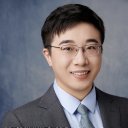
 Shu Hu
· 3 previous affiliations
- Purdue University West LafayetteSince 2023
- Assistant Professor · Since 2023
- Carnegie Mellon University2022–2023
- Postdoc · 2022–2023
- PhD student · 2020–2022
Research Overview
Shu Hu focuses on machine learning, media forensics, and computer vision, with a particular emphasis on the detection of AI-generated media. His work spans foundational algorithms for causal discovery and imbalanced learning to the development of robust, fair, and explainable systems for identifying deepfakes. Recently, his research addresses the intersection of algorithmic fairness and multimodal reasoning in complex visual and medical domains.
Research Trajectory
His early research focused on algorithmic efficiency and foundational machine learning optimization. In 2015, he addressed the computational bottlenecks of structure learning by introducing parallel-PC in A fast PC algorithm for high dimensional causal discovery with multi-core PCs, a method that significantly accelerated causal discovery on standard multi-core systems. Transitioning toward machine learning objectives, he explored aggregate loss functions in Learning by Minimizing the Sum of Ranked Range and analyzed the vulnerabilities of image annotation systems to adversarial perturbations in TkML-AP: Adversarial Attacks to Top-k Multi-Label Learning. Concurrently, he began contributing to the research direction of Explainable Deepfake Forensics, demonstrating how physical inconsistencies—such as mismatched eye reflections—could reveal synthetic media in Exposing GAN-Generated Faces Using Inconsistent Corneal Specular Highlights.
During his mid-trajectory work, he expanded on loss function design and robust learning. He formalized paradigms for loss design in Rank-Based Decomposable Losses in Machine Learning: A Survey. In computer vision, he developed methods for autonomous driving, leveraging motion continuity for robust pseudo-labeling in PseudoProp: Robust Pseudo-Label Generation for Semi-Supervised Object Detection in Autonomous Driving Systems. He also began addressing algorithmic fairness, proposing methods to minimize worst-case errors across subpopulations in Distributionally Robust Survival Analysis: A Novel Fairness Loss Without Demographics.
In recent years, a major theme of his research has become the intersection of media forensics and demographic equity, contributing heavily to the broader area of Demographic Performance Disparities in Facial Analysis Systems. He introduced methods to reduce bias across race and gender in Improving Fairness in Deepfake Detection. This evolved into a dual-mechanism framework combining structural fairness decoupling and global distribution alignment in Fairness-Aware Deepfake Detection: Leveraging Dual-Mechanism Optimization. He further challenged existing paradigms by identifying fundamental failures of individual fairness principles in synthetic media detection in Rethinking Individual Fairness in Deepfake Detection. He also addressed the reliability of demographic labels, providing theoretical guarantees for fairness under uncertainty in Preserving AUC Fairness in Learning with Noisy Protected Groups.
To tackle the challenge of models failing on unseen generative techniques, he advanced the area of Generalizing Deepfake Detection to Unseen Forgery Methods. His group developed domain-agnostic artifact extraction for audio in Improving Generalization for AI-Synthesized Voice Detection. He also contributed to evaluating these systems in unconstrained environments, participating in the creation of a benchmark for real-world political misinformation in Fit for Purpose? Deepfake Detection in the Real World, aligning with the broader direction of Detecting Deepfakes through High Level Semantic Reasoning. Addressing severe class imbalances and distribution shifts in facial forgery, his lab proposed new multimodal detection strategies in Robust AI-Generated Face Detection with Imbalanced Data, which connects to his broader interest in the area of Deep AUC Maximization for Imbalanced Learning and related work in Hybrid Loss Functions for Image Segmentation.
Beyond forensics, he has applied his expertise in computer vision and machine learning to other complex domains. In medical AI, his group developed a multi-agent framework integrating large language models with glaucoma detection in MedChat: A Multi-Agent Framework for Multimodal Diagnosis with Large Language Models. For infrastructure monitoring, he led the development of a scalable, camera-based anomaly detection system in Lane-Wise Highway Anomaly Detection. He also explored zero-shot semantic segmentation using shape- and context-aware prompt tuning in SCA-ZegCLIP: Shape- and Context-aware CLIP for Zero-shot Semantic Segmentation. Most recently, his research has expanded to generative modeling efficiency, introducing a deep reinforcement learning framework for image-to-image translation in RL-I2IT: Image-to-image translation with deep reinforcement learning.
Current Directions
The most recent papers in the evidence indicate a continued focus on the robustness, fairness, and real-world applicability of AI systems. A primary current direction involves refining deepfake detection to handle severe class imbalances, unseen generative techniques, and noisy demographic data, ensuring that forensic tools remain equitable and effective in unconstrained environments. Additionally, recent work investigates the integration of large language models with specialized visual tasks, such as deploying multi-agent frameworks for complex medical diagnostics. Finally, there is an emerging interest in optimizing generative processes themselves, utilizing deep reinforcement learning to create more efficient and lightweight architectures for image-to-image translation.
Profile updated
Loading new papers…
Other researchers whose papers cluster into the same research directions — a proxy for overlapping technical interests and shared intellectual neighborhoods.
See something wrong? Report a mistake