

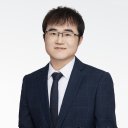
 Xiangyu Yue
· 4 previous affiliations
- Chinese University of Hong KongSince 2022
- Assistant Professor · Since 2022
- PhD student · 2016–2022
- Stanford University2014–2016
- MS student · 2014–2016
- Nanjing University2010–2014
- Undergrad student · 2010–2014
Research Overview
Xiangyu Yue focuses on multimodal learning, generative models, and transfer learning for complex visual and spatial understanding. His trajectory spans early work in efficient convolutional architectures and synthetic data generation for autonomous driving to recent advancements in unified multimodal frameworks. Currently, his research emphasizes aligning large language models and scaling high-fidelity video generation and 4D world models for embodied AI.
Research Trajectory
Early in his career, much of his research addressed the computational bottlenecks and data scarcity challenges inherent in autonomous driving perception. He developed Shift: A Zero FLOP, Zero Parameter Alternative to Spatial Convolutions, introducing a method to drastically reduce network parameters by shifting input channels in different spatial directions and interleaving them with point-wise convolutions. During this period, he also collaborated on SqueezeSeg: Convolutional Neural Nets with Recurrent CRF for Real-Time Road-Object Segmentation from 3D LiDAR Point Cloud, contributing to the area of Factorizing Convolutions into Spatial and Channel Operations to achieve high-accuracy, real-time semantic segmentation of road objects.
To overcome the high cost of manually labeling 3D environments, he led work in the research direction of Overcoming the 3D Point Cloud Annotation Bottleneck by extracting synthetic LiDAR data from video game engines in A LiDAR Point Cloud Generator: from a Virtual World to Autonomous Driving. This interest in synthetic environments continued with his participation in developing Scenic: a language for scenario specification and scene generation, a probabilistic programming language designed to generate diverse, safety-critical scenarios for testing machine learning perception systems. Recognizing the inherent domain gap between synthetic training data and real-world deployment, he subsequently introduced Domain Randomization and Pyramid Consistency: Simulation-to-Real Generalization Without Accessing Target Domain Data, a method that randomizes synthetic image styles to learn domain-invariant representations for semantic segmentation.
Building on these themes of transfer learning and representation, his focus expanded to unsupervised and self-supervised methods. He proposed Prototypical Cross-Domain Self-Supervised Learning for Few-Shot Unsupervised Domain Adaptation, an end-to-end framework designed to align low-level discriminative features when source domain labels are prohibitively expensive to collect. In the 3D domain, he contributed to the broader area of Reconstructing Complete Geometry from Partial Point Clouds through Unsupervised Point Cloud Pre-training via Occlusion Completion. This approach masks occluded points in a camera view and trains an encoder-decoder model to reconstruct them, yielding robust initializations for downstream point cloud tasks.
As foundation models began to dominate the field, his research shifted toward unifying diverse data types under single architectures. His lab developed Meta-Transformer: A Unified Framework for Multimodal Learning, which maps raw inputs from modalities as varied as images, point clouds, audio, and time series into a shared token space. This allows a frozen encoder to perform multimodal perception without relying on paired training data. Concurrently, he participated in research addressing the complex alignment of language models, contributing to the research direction of Mitigating the Alignment Tax in Large Language Models. The resulting paper, Beyond One-Preference-Fits-All Alignment: Multi-Objective Direct Preference Optimization, introduces a stable framework that generates a Pareto front of models, allowing users to balance conflicting objectives like helpfulness and safety without the instability of reinforcement learning.
Most recently, his group has focused on the rigorous evaluation and physical grounding of generative and multimodal systems. To systematically test reasoning capabilities, his team introduced MME-Reasoning A Comprehensive Benchmark for Logical Reasoning in MLLMs, which evaluates inductive, deductive, and abductive logic in multimodal large language models. In the generative space, he led research on aligning continuous denoising trajectories with human preferences in Consistent Noisy Latent Rewards for Trajectory Preference Optimization in Diffusion Models. To improve the computational efficiency of these high-resolution generative models, his lab proposed PreciseCache: Precise Feature Caching for Efficient and High-fidelity Video Generation, a dual-tier caching strategy that accelerates video generation by intelligently skipping redundant denoising steps and transformer computations.
His latest work bridges visual representation with physical and spatial grounding. In Twins: Learn to Predict Unified Representations with Focal Loss, he introduced a focal loss mechanism for flow matching that concatenates semantic features with fine-grained latents, enabling models to balance high-level understanding with detailed image generation. Applying these spatial representations to robotics, his lab developed MVISTA-4D: View-Consistent 4D World Model with Test-Time Action Inference for Robotic Manipulation, an embodied world model that infers executable actions from geometrically consistent multi-view predictions. Finally, SpaceVista: All-Scale Visual Spatial Reasoning from mm to km presents a comprehensive framework and dataset for spatial reasoning across vastly different physical scales, utilizing specialized scale experts to process everything from millimeter-level details to kilometer-wide landscapes.
Continuing this push into embodied perception, Yue led the development of Beyond Omni: A Unified MLLM for Embodied Sensory Understanding, presenting Unisense to process diverse modalities—including tactile, thermal, radar, and IMU data—within a shared architecture using modality-specific experts. In robot manipulation, their lab introduced CaPtain: A Pipeline for Post-Training Code-as-Policy Robot Agents, transforming open vision-language models into capable code-writing policies through supervised fine-tuning and multi-turn reinforcement learning guided by a privileged physical critic. Addressing long-horizon multi-step reasoning, Yue also contributed to OpenSearch-VL: An Open Recipe for Frontier Multimodal Search Agents, an open recipe mitigating cascading failures in the direction of Compounding Errors in Long Horizon Agent Execution with fatal-aware policy optimization. In multimodal reasoning and generation, Yue participated in developing OmniSE: Support-Faithful Optimization for Evidence-Centric Audio-Video Reasoning to ground audio-visual question answering on verified evidence traces, and supervised UniCoder: Unified Visual-to-Code Generation via Symbolic Rewards and Reference-Guided Code Optimization for translating visual inputs into structured code. Additionally, their lab explored specialized vision by introducing Rethinking Infrared Small Target Detection: A Foundation Driven Efficient Paradigm, distilling semantic priors from visual foundation models into lightweight detectors for infrared targets without inference overhead.
Current Directions
The most recent papers in the evidence indicate a strong focus on scaling and evaluating multimodal foundation models, particularly for complex spatial reasoning and embodied AI. Recent work investigates the alignment of diffusion models through trajectory preference optimization and the acceleration of high-fidelity video generation using precise feature caching. Additionally, there is a significant emphasis on building embodied agents and code-as-policy systems for robotic manipulation, developing deep multimodal search agents, and unifying heterogeneous physical sensory modalities into generalist foundation models.
Profile updated
Loading new papers…
Other researchers whose papers cluster into the same research directions — a proxy for overlapping technical interests and shared intellectual neighborhoods.
See something wrong? Report a mistake