

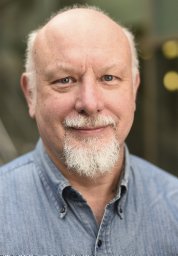
 Kurt Keutzer
· 11 previous affiliations
- University of California, BerkeleySince 1997
- Professor · Since 1997
- International Computer Science InstituteSince 1998
- Full Professor · Since 1998
- Narada AISince 2021
- Co-Founder · Since 2021
- University of CaliforniaCurrent
- Current
- SigIQ.aiSince 2023
- Co-Founder and Strategic Advisor · Since 2023
- Nexusflow2023–2025
- Chief Strategy Officer (CSO) · 2023–2025
- Synopsys Inc.1991–1998
- Principal Researcher · 1991–1998
- Bell Labs1984–1991
- Researcher · 1984–1991
- Indiana University Bloomington1979–1984
- PhD, Computer Science · 1979–1984
- Indiana University1979–1984
- PhD student · 1979–1984
- Maharishi International University1974–1978
- Undergrad student · 1974–1978
Research Overview
Kurt Keutzer focuses on efficient deep learning, neural architecture search, and hardware-aware model optimization. His trajectory spans from early electronic design automation to foundational techniques for compressing and accelerating modern neural networks. His current work investigates speculative decoding for large language models, efficient video generation, and 3D perception systems for autonomous driving.
Research Trajectory
Keutzer's early research addressed electronic design automation, exemplified by his work on technology binding and local optimization in DAGON: Technology Binding and Local Optimization by DAG Matching.
He subsequently focused on optimizing deep neural networks for constrained hardware environments. A major contribution to this effort was SqueezeNet: AlexNet-level accuracy with 50x fewer parameters and <1MB model size, which demonstrated that massive parameter counts are not strictly necessary for high performance. By utilizing a novel module architecture, the model matched baseline accuracy on ImageNet with a footprint small enough to fit on a floppy disk. Building on these efficiency principles for computer vision, he and his collaborators developed SqueezeDet: Unified, Small, Low Power Fully Convolutional Neural Networks for Real-Time Object Detection for Autonomous Driving, a fully convolutional neural network designed for real-time, energy-efficient object detection on embedded systems.
Expanding into automated model compression and design, Keutzer's research advanced the area of Searching the Exponential Space of Mixed Precision Quantization. In HAWQ: Hessian AWare Quantization of Neural Networks With Mixed-Precision, he introduced a deterministic, second-order method to automatically select optimal bit-precision across network layers by analyzing the Hessian spectrum. Concurrently, his work in the research direction of Continuous Relaxation for Differentiable Architecture Search led to FBNet: Hardware-Aware Efficient ConvNet Design via Differentiable Neural Architecture Search. This framework incorporated real-world hardware latency into a gradient-based loss function, addressing the broader problem of Why Theoretical FLOPs Fail to Predict Real Latency and discovering high-performance mobile architectures significantly faster than prior manual methods.
To tackle the computational bottlenecks of training large models, Keutzer participated in developing systems for memory optimization and large-batch training. Checkmate: Breaking the Memory Wall with Optimal Tensor Rematerialization formulated tensor rematerialization as a mixed-integer linear program to reduce memory usage during deep learning training. In parallel, he contributed to Large Batch Optimization for Deep Learning: Training BERT in 76 minutes, which explored layer-wise adaptive scaling strategies to accelerate the training of deep neural networks on massive datasets without degrading task performance.
More recently, his focus has expanded to the efficient deployment of large language models and advanced 3D perception systems. Addressing the challenge of The Memory Bandwidth Bottleneck in Transformer Decoding, he developed Speculative Decoding with Big Little Decoder. This plug-and-play framework pairs a fast, small model with a larger model to correct mistakes in parallel, significantly reducing inference latency and advancing the broader area of Speculative Decoding for Accelerated Autoregressive Inference. In the domain of autonomous driving, his work on Driv3R: Learning Dense 4D Reconstruction for Autonomous Driving introduced a temporal-spatial memory pool that accelerates reconstruction speeds, contributing to the research direction of Eliminating Per-Scene Optimization with Feed-Forward 3D Reconstruction. He further addressed sensor generalization in UniDrive: Towards Universal Driving Perception Across Camera Configurations, standardizing diverse camera setups into a unified virtual space to allow 3D perception models to operate across different vehicle types without retraining.
Continuing to optimize generative models, Keutzer introduced ODEt (ODEl): Shortcutting the Time and Length in Diffusion and Flow Models for Faster Sampling, a method that accelerates diffusion sampling by shortcutting both the time dimension and network depth. His recent work also explores test-time scaling for complex reasoning tasks, as seen in V1: Unifying Generation and Self-Verification for Parallel Reasoners, which unifies generation and verification through efficient pairwise ranking. In video generation, Quant VideoGen: Auto-Regressive Long Video Generation via 2-Bit KV-Cache Quantization leverages spatiotemporal redundancy to drastically reduce the memory requirements of auto-regressive video diffusion models. To evaluate these visual generators efficiently, he developed K-Sort Eval: Efficient Preference Evaluation for Visual Generation via Corrected VLM-as-a-Judge, which models Vision-Language Model biases as observation noise in a Bayesian framework. Finally, returning to autonomous driving perception, GaussianDet3D: Bridging Gaussian Splatting and Sparse LiDAR Detection for Multi-View 3D Object Detection applies 3D Gaussian Splatting from multi-view images to generate pseudo-LiDAR point clouds for accurate 3D object detection.
Current Directions
The most recent papers in the evidence indicate a focus on three primary areas: the acceleration of generative models, advanced 3D perception for autonomous systems, and test-time scaling for reasoning and evaluation. In generative modeling, current work investigates methods to drastically reduce the latency and memory footprint of diffusion and auto-regressive video models, employing techniques such as spatiotemporal redundancy exploitation and extreme KV-cache quantization. In the domain of autonomous driving, recent research explores universal perception frameworks that generalize across diverse sensor configurations, as well as the application of 3D Gaussian Splatting to bridge multi-view imagery with sparse LiDAR detection. Finally, ongoing work addresses the evaluation and reasoning bottlenecks in large models, developing frameworks that unify generation with pairwise self-verification and utilizing Bayesian-corrected Vision-Language Models for efficient preference ranking.
Profile updated
Loading new papers…
Other researchers whose papers cluster into the same research directions — a proxy for overlapping technical interests and shared intellectual neighborhoods.
See something wrong? Report a mistake