

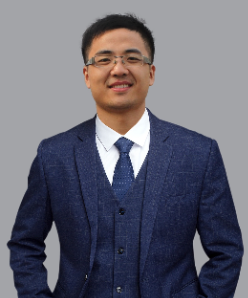
 Tao Chen
· 3 previous affiliations
- Fudan UniversitySince 2019
- Full Professor · Since 2019
- Huawei Technologies (China)2017–2019
- Senior scientist · 2017–2019
- Scientist · 2013–2017
17 other authors named Tao Chen: Tao Chen (Nanjing University of Science and Technology · 70 papers), Tao Chen (University of Science and Technology of China · 29 papers), Tao Chen (Dexmate · 24 papers), Tao Chen (Google (United States) · 21 papers), Tao Chen (University of Birmingham · 4 papers), and 12 more
Research Overview
Tao Chen focuses on lightweight deep vision model design, multimodal visual analysis, and edge-aware applications. His early work addressed mobile landmark recognition and efficient semantic segmentation, gradually expanding into robust model compression and 3D point cloud processing. Recently, his research emphasizes parameter-efficient adaptation, long-context reasoning in large language models, and accelerated generation in diffusion transformers.
Research Trajectory
Tao Chen’s early research focused on mobile vision applications, beginning with his work on Integrated Content and Context Analysis for Mobile Landmark Recognition (2011). Over the next decade, his focus expanded to encompass efficient architectures and 3D vision. He participated in the area of Deep Learning on Unstructured 3D Point Clouds, contributing to Point Cloud Instance Segmentation With Semi-Supervised Bounding-Box Mining (2022), which introduced a semi-supervised framework to reduce the reliance on expensive dense annotations. In the same year, he collaborated on TopFormer: Token Pyramid Transformer for Mobile Semantic Segmentation, aligning with the broader direction of Hierarchical Token Pruning for Efficient Transformers to optimize models for mobile devices.
In 2023, his research increasingly emphasized computational efficiency and domain adaptation. He introduced a triple sparse convolution mechanism in SpVOS: Efficient Video Object Segmentation With Triple Sparse Convolution, advancing the field of Generalizing Model Pruning Across Diverse Neural Architectures by adaptively skipping or reusing features to significantly reduce FLOPs without sacrificing accuracy. Concurrently, his work explored hardware-aware design in Hyperscale Hardware Optimized Neural Architecture Search, addressing the challenge of Why Theoretical FLOPs Fail to Predict Real Latency. He also contributed to research in Selective Instance Sampling for Domain Adaptation through Rethinking Cross-Domain Pedestrian Detection: A Background-Focused Distribution Alignment Framework for Instance-Free One-Stage Detectors, which demonstrated that aligning only background features prevents the accidental mixing of foreground objects and background scenery during domain transfer.
Moving into 2024, his group led the development of 3DET-Mamba: Causal Sequence Modelling for End-to-End 3D Object Detection, the first end-to-end 3D object detector to successfully leverage linear-complexity State Space Models in place of computationally expensive attention mechanisms. This focus on architectural innovation continued into 2025, as his team investigated knowledge transfer across diverse model families in Multi-Level Decoupled Relational Distillation for Heterogeneous Architectures. By decoupling model outputs into fine-grained relationships, the framework successfully transferred dark knowledge between CNNs, Transformers, and Mambas. He also addressed deployment efficiency for physical systems in Boost Embodied AI Models with Robust Compression Boundary, and developed dynamic weight expansion techniques for multi-modal tasks in Once-Tuning-Multiple-Variants: Tuning Once and Expanded as Multiple Vision-Language Model Variants. Further optimizing large-scale models, his lab proposed a novel decomposition paradigm in DeRS: Towards Extremely Efficient Upcycled Mixture-of-Experts Models to reduce the parameter inefficiency of upcycled MoE layers.
Most recently, his research has tackled the reasoning capabilities and efficiency of foundation models. He advanced long-context understanding in PaceLLM: Brain-Inspired Large Language Models for Long-Context Understanding (2025), utilizing activation memory banks to mitigate semantic fragmentation. To prevent policy collapse during long-horizon training, his group introduced momentum-anchored policy optimization in M-GRPO: Stabilizing Self-Supervised Reinforcement Learning for Large Language Models with Momentum-Anchored Policy Optimization (2025). In 2026, his team enhanced vision-language models with FRISM: Fine-Grained Reasoning Injection via Subspace-Level Model Merging for Vision–Language Models, merging models at the subspace level to boost logic and math capabilities without degrading visual perception. He also optimized parameter-efficient fine-tuning with E²LoRA: Efficient and Effective Low-Rank Adaptation with Entropy-Guided Adaptive Sharing, and accelerated instruction-based image editing in RegionE: Adaptive Region-Aware Generation for Efficient Image Editing. This latter work contributes to the direction of Exploiting Temporal Redundancy in Iterative Generative Models by utilizing a fast-track denoising process for unedited image regions.
Current Directions
The most recent papers in the evidence address the efficiency, reasoning capabilities, and alignment of large-scale foundation models. This includes stabilizing self-supervised reinforcement learning for large language models to prevent policy collapse during extended reasoning tasks, and injecting fine-grained logic into Vision-Language Models via subspace-level merging. Additionally, current work investigates parameter-efficient adaptation techniques, such as entropy-guided rank allocation for LoRA, and training-free inference acceleration for diffusion-based image editing by optimizing iterative compute for localized regions.
Profile updated
Loading new papers…
Other researchers whose papers cluster into the same research directions — a proxy for overlapping technical interests and shared intellectual neighborhoods.
See something wrong? Report a mistake