

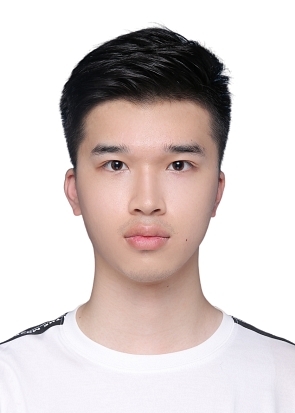
 Jiakang Yuan
· 2 previous affiliations
- Intern · Since 2024
- Intern · 2022–2024
- Fudan UniversitySince 2018
- PhD student · Since 2022
- Current
- Undergrad student · 2018–2022
Research Overview
Jiakang Yuan focuses on 3D computer vision, multimodal large language models, and artificial intelligence for scientific discovery. His early work addressed cross-domain adaptation and pre-training for 3D perception in autonomous driving environments. More recently, he investigates advanced reasoning capabilities in vision-language systems and the development of closed-loop frameworks for automated scientific research.
Research Trajectory
Yuan’s early research concentrated on improving the robustness and generalization of 3D perception models, particularly for autonomous driving applications. In 2022, he participated in developing ADAS: A Simple Active-and-Adaptive Baseline for Cross-Domain 3D Semantic Segmentation, which addressed the challenges of transferring models across different source environments. Continuing this focus on cross-domain generalization, he contributed to Uni3D: A Unified Baseline for Multi-Dataset 3D Object Detection in 2023. This work tackled the performance degradation that occurs when 3D object detectors are deployed across multiple datasets, leveraging data-level correction and semantic-level coupling to handle variations in LiDAR types and acquisition standards. To further reduce the annotation costs associated with unsupervised domain adaptation, he collaborated on Bi3D: Bi-Domain Active Learning for Cross-Domain 3D Object Detection, which introduced a domainness-aware source sampling strategy. Building on these foundational efforts, he introduced AD-PT: Autonomous Driving Pre-Training with Large-scale Point Cloud Dataset, a pre-training paradigm that utilizes massive point cloud datasets and semi-supervised pseudo-labeling to create robust representations, significantly boosting performance across major autonomous driving benchmarks.
In 2024, Yuan’s work expanded into efficient model architectures and the design of multimodal generalist models. He contributed to Training-Free Adaptive Diffusion with Bounded Difference Approximation Strategy, a plug-and-play method that accelerates diffusion models by adaptively skipping noise-prediction steps based on input prompts. Returning to 3D perception, he explored state space models by participating in the development of 3DET-Mamba: Causal Sequence Modelling for End-to-End 3D Object Detection. By applying causal sequence modeling to indoor 3D object detection, this work aimed to overcome the limitations of traditional attention mechanisms, advancing the broader area of Scaling Point Cloud Transformers Beyond Quadratic Complexity. Expanding into vision-language systems, he developed Chimera: Improving Generalist Model with Domain-Specific Experts, a scalable pipeline that enhances Large Multi-modal Models (LMMs) by integrating domain-specific experts for complex tasks like math and document understanding. This architecture contributes to research directions such as Unified Model Interfaces for Modular Machine Learning.
By 2025, Yuan’s trajectory shifted toward leveraging AI for scientific discovery and refining multimodal reasoning frameworks. He introduced Dolphin: Moving Towards Closed-loop Auto-research through Thinking, Practice, and Feedback, a framework designed to automate the scientific process by iteratively generating ideas, implementing code, and learning from experimental results. Continuing the theme of automated research assistance, he collaborated on SURVEYFORGE : On the Outline Heuristics, Memory-Driven Generation, and Multi-dimensional Evaluation for Automated Survey Writing, a system that automates literature synthesis through memory-driven generation and structural analysis, which intersects with the study of Temporal Bias and Latency in Citation Networks. In the domain of visual reasoning, he participated in creating OmniCaptioner: One Captioner to Rule Them All, a unified visual captioning framework that enhances LLM reasoning across diverse visual domains. Additionally, he contributed to OmniQuality-R: Advancing Reward Models Through All-Encompassing Quality Assessment, a structured reward modeling framework that transforms multi-task quality reasoning into continuous reward signals. This work advanced key research directions such as Preventing Entropy Collapse in Reinforcement Learning and Reward Guided Inference for Scaling Model Performance.
Most recently, in 2026, Yuan has focused on the rigorous evaluation and optimization of logical reasoning in multimodal models. He led the creation of MME-Reasoning: A Broad-Spectrum Benchmark for Evaluating Logical Reasoning in MLLMs, a comprehensive benchmark designed to stress-test the deductive, inductive, and abductive reasoning capabilities of vision-language systems. He also collaborated on VisualScore: Learning Holistic Visual Quality Scores via Multi-Task Reasoning, a unified framework for image quality assessment that forces models to generate interpretable "think processes" before predicting scores. Finally, he participated in the development of Segment-Aligned Policy Optimization for Multi-Modal Reasoning, a reinforcement learning framework that optimizes LLMs by treating coherent reasoning steps—rather than individual tokens—as the fundamental units of learning.
Current Directions
Yuan’s most recent work investigates the logical foundations and reasoning capabilities of Multimodal Large Language Models (MLLMs). Moving beyond simple visual recognition, his current research focuses on evaluating and optimizing pure logic—specifically deduction, induction, and abduction—in vision-language systems. This involves developing broad-spectrum benchmarks to identify reasoning gaps in state-of-the-art models and designing segment-aligned policy optimization frameworks that align reinforcement learning updates with natural, step-wise reasoning structures.
Parallel to model optimization, he is actively exploring the application of these advanced reasoning models to automated scientific discovery. Recent projects emphasize closed-loop AI systems capable of autonomously proposing research ideas, executing experimental code, and synthesizing complex scientific literature, aiming to bridge the gap between AI-assisted tools and fully autonomous research agents.
Profile updated
Loading new papers…
Other researchers whose papers cluster into the same research directions — a proxy for overlapping technical interests and shared intellectual neighborhoods.
See something wrong? Report a mistake