

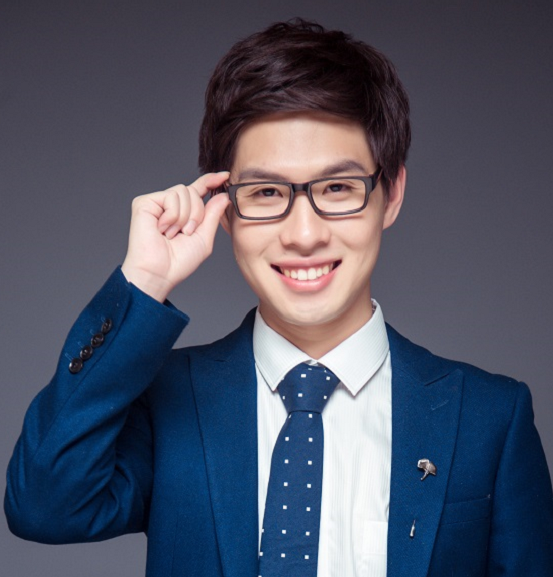
 Tianxing Wu
2 previous affiliations
- Southeast University2015–2026
- Associate Professor · 2023–2026
- Assistant Professor · 2020–2023
- PhD student · 2015–2018
- Nanyang Technological University2018–2019
- Postdoc · 2018–2019
2 other authors named Tianxing Wu: Tianxing Wu (Nanyang Technological University · 11 papers), Tianxing Wu (1 paper)
Research Overview
Tianxing Wu focuses on knowledge graph construction, knowledge representation, and the integration of large language models with structured reasoning. His early research addressed the extraction and alignment of multilingual taxonomies from web sources to build foundational knowledge bases. More recently, his work emphasizes uncertain knowledge graphs, continual learning, and applying retrieval-augmented generation to complex domains like healthcare and predictive analytics.
Research Trajectory
Tianxing Wu’s early research focused on the foundational challenges of extracting and structuring information from the web to build robust knowledge bases. In Mining Type Information from Chinese Online Encyclopedias, he developed approaches to extract type information from abstracts, infoboxes, and categories in Chinese web sources, addressing the language-dependency and sparsity of existing techniques. Recognizing the need for cross-lingual knowledge sharing, he subsequently introduced methods to align categories across different languages in Cross-Lingual Taxonomy Alignment with Bilingual Biterm Topic Model. This line of work culminated in a comprehensive framework for integrating non-English data, detailed in Knowledge graph construction from multiple online encyclopedias, which formalized the core modules of knowledge extraction and linking across diverse sources.
As knowledge graphs became more prevalent, his focus expanded to their maintenance and practical application in dynamic environments. He addressed the computational cost of evolving databases in Efficiently embedding dynamic knowledge graphs. By enabling online learning that rapidly adapts to updates without full retraining, this work contributed significantly to the research direction of Graph Attention Mechanisms for Adaptive Feature Aggregation. He also applied graph-based reasoning to complex industrial systems; with collaborators, he oversaw the development of KGroot: Enhancing Root Cause Analysis through Knowledge Graphs and Graph Convolutional Neural Networks, a framework designed to automate fault localization and manage the cascading alerts typical of online micro-services.
A major theme in his recent trajectory is managing the inherent uncertainty and noise in automated knowledge extraction. In Triple confidence measurement in knowledge graph with multiple heterogeneous evidences, he proposed methods to measure the veracity of individual facts by combining explicit and embedding-based evidence. Building on this concept, he advanced the capability of AI systems to process probabilistic facts in Uncertain Knowledge Graph Completion via Semi-Supervised Confidence Distribution Learning. This research treats confidence scores as probability distributions rather than absolute values, utilizing meta-learning to hallucinate low-confidence examples and overcome data imbalance.
Most recently, his work explores the intersection of large language models (LLMs), structured reasoning, and domain-specific applications. He has contributed to the broader area of Automated Knowledge Graph Construction from Unstructured Data by grounding generative models in structured medical knowledge. For instance, his lab developed Leveraging Retrieval-Augmented Large Language Models for Dietary Recommendations With Traditional Chinese Medicine’s Medicine Food Homology: Algorithm Development and Validation, a retrieval-augmented generation framework that reduces hallucinations by aligning LLMs with an uncertain knowledge graph of medical-food facts. Similarly, in Supervised prediction of post-stroke upper limb motor recovery with uncertain knowledge graph and large language model, he leveraged unstructured electronic health records alongside LLMs to dynamically predict patient recovery outcomes. Beyond healthcare, he has investigated continual learning architectures, as seen in K-DeCore: Facilitating Knowledge Transfer in Continual Structured Knowledge Reasoning via Knowledge Decoupling, which decouples schema filtering from query building to allow models to learn new reasoning tasks sequentially without catastrophic forgetting. Finally, demonstrating the breadth of his data mining expertise, he applied tabular learning to large-scale judicial data for economic forecasting in City-Level Foreign Direct Investment Prediction with Tabular Learning on Judicial Data.
Current Directions
Recent work investigates the integration of large language models with uncertain knowledge graphs to enable reliable, domain-specific reasoning. A primary focus is on retrieval-augmented generation frameworks that ground generative AI in structured, probabilistic databases, particularly for complex healthcare applications such as personalized dietary recommendations and dynamic patient recovery predictions. Additionally, current research addresses the challenges of continual structured knowledge reasoning, developing architectures that allow models to sequentially learn new tasks—like query generation—without forgetting previously acquired knowledge. Across these efforts, a unifying theme is the drive to make automated reasoning systems more adaptable, evidence-based, and capable of handling the inherent uncertainty of real-world data.
Profile updated
Loading new papers…
Other researchers whose papers cluster into the same research directions — a proxy for overlapping technical interests and shared intellectual neighborhoods.
See something wrong? Report a mistake