

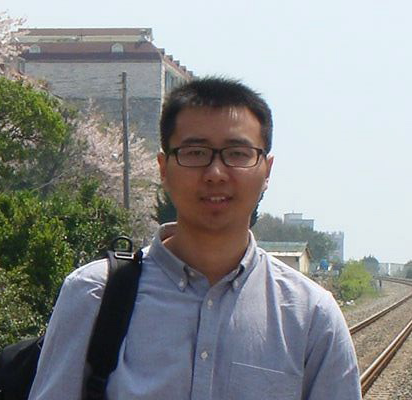
 Yuxiang Wang
· 3 previous affiliations
- Hangzhou Dianzi UniversitySince 2016
- Full Professor · Since 2025
- Associate Professor · Since 2016
- Nanyang Technological University2019–2020
- Researcher · 2019–2020
- Southeast University2010–2015
- PhD student · 2010–2015
5 other authors named Yuxiang Wang: Yuxiang Wang (Shenzhen Research Institute of Big Data · 4 papers), Yuxiang Wang (Wuhan University · 3 papers), Yuxiang Wang (1 paper), Yuxiang Wang (Peking University · 1 paper), Yuxiang Wang (Peking University · 1 paper)
Research Overview
Yuxiang Wang focuses on graph search, approximate query processing, and graph-based approximate nearest neighbor search. His trajectory spans from early work on online aggregation for big data analytics to advanced community search and semantic querying over large-scale knowledge graphs. Currently, he investigates scalable, learning-based methods for community search and privacy-preserving graph synthesis.
Research Trajectory
Yuxiang Wang's early research focused on optimizing approximate query processing for large-scale data. He developed partition-based strategies to improve online aggregation (OLA) over skewed data distributions in Improving Online Aggregation Performance for Skewed Data Distribution. Building on this, he addressed the challenges of executing multiple OLA queries in cloud environments, introducing a two-level sharing strategy for MapReduce frameworks in OATS: online aggregation with two-level sharing strategy in cloud.
Transitioning toward complex graph structures, Wang began investigating search and aggregation over knowledge graphs (KGs). To resolve structural mismatches between queries and predefined KG schemas, he proposed methods for Semantic Guided and Response Times Bounded Top-k Similarity Search over Knowledge Graphs. He also led a comprehensive evaluation of the field in A Comprehensive Survey and Experimental Comparison of Graph-Based Approximate Nearest Neighbor Search. Returning to his roots in approximate querying, he combined semantic-aware sampling with KG structures to accelerate complex queries in Aggregate Queries on Knowledge Graphs: Fast Approximation with Semantic-aware Sampling.
Wang subsequently expanded his focus to heterogeneous information networks, utilizing explicit structural relationships like co-authorship to enhance node representation. This led to Efficient and Effective Academic Expert Finding on Heterogeneous Graphs through ( k , 𝒫)-Core based Embedding. Concurrently, he applied knowledge base construction to the medical domain, participating in the development of AsdKB: A Chinese Knowledge Base for the Early Screening and Diagnosis of Autism Spectrum Disorder.
A major theme in Wang's recent trajectory is community search over attributed and heterogeneous graphs. He extended the (k,P)-core model to attributed heterogeneous information networks, designing cohesiveness-aware indices and greedy search frameworks in Efficient and effective (k,P)-core-based community search over attributed heterogeneous information networks. To scale these operations, he explored neural solutions, replacing traditional Graph Convolutional Networks with Graph Transformers to better capture community cohesiveness in Scalable Community Search over Large-scale Graphs based on Graph Transformer. He also addressed the trade-off between exact graph traversal and loose approximations by developing methods with runtime accuracy guarantees in Scalable Community Search with Accuracy Guarantee on Attributed Graphs. This body of work significantly advances the broader research direction of Incremental Maintenance of Graph Based Search Indices. Additionally, Wang broadened his retrieval research to multimodal contexts, introducing MUST: An Effective and Scalable Framework for Multimodal Search of Target Modality, which intelligently fuses auxiliary modalities to retrieve target items.
In his most recent publications, Wang continues to refine graph search indices while exploring new applications. He contributed to Cohesiveness-aware Hierarchical Compressed Index for Community Search on Attributed Graphs, further optimizing storage and retrieval for community search. He has also expanded into graph security and privacy, participating in the development of STM: A Spatio-Temporal Model for Dynamic Graph Fraud Detection and PrivAGS: Differentially Private Attributed Graph Synthesis.
Current Directions
Recent work investigates the security, privacy, and scalability of complex graph systems. The most recent papers in the evidence address dynamic graph fraud detection through spatio-temporal modeling and explore techniques for differentially private attributed graph synthesis. Alongside these new application domains, ongoing research continues to refine community search on attributed graphs by developing cohesiveness-aware hierarchical compressed indices that balance retrieval efficiency with storage overhead.
Profile updated
Loading new papers…
Other researchers whose papers cluster into the same research directions — a proxy for overlapping technical interests and shared intellectual neighborhoods.
See something wrong? Report a mistake