

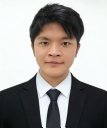
 Qinggang Zhang
· 2 previous affiliations
- Jilin UniversitySince 2026
- Full Professor · Since 2026
- Hong Kong Polytechnic University2021–2026
- Postdoc · 2025–2026
- PhD student · 2021–2025
Research Overview
Qinggang Zhang focuses on the intersection of knowledge graphs, large language models, and retrieval-augmented generation. His research addresses the factual reliability and reasoning capabilities of foundation models by grounding them in structured, domain-specific knowledge. Currently, he investigates advanced GraphRAG architectures and robust representation learning to mitigate hallucinations and improve complex multi-hop question answering.
Research Trajectory
Zhang's early work focused on improving the structural integrity and reasoning capabilities of knowledge graphs (KGs). In 2022, he developed Contrastive Knowledge Graph Error Detection, which introduced methods to identify noise in KGs. This work addressed the challenge of detecting diverse error patterns when ground-truth labels are rare, bypassing the need for domain-specific logical rules or standard negative sampling. He subsequently contributed to multi-hop question answering architectures in Hierarchy-Aware Multi-Hop Question Answering over Knowledge Graphs (2023).
By 2024, his focus expanded to the intersection of structured knowledge and foundation models. He addressed inductive knowledge graph completion in Logical Reasoning with Relation Network for Inductive Knowledge Graph Completion and proposed the AEKE framework in Integrating Entity Attributes for Error-Aware Knowledge Graph Embedding. This framework leverages the semantics contained in entity attributes to guide embedding models, mitigating the performance degradation caused by inherent graph errors. To bridge these structured representations with large language models (LLMs), he introduced KnowGPT: Knowledge Graph based Prompting for Large Language Models. This work advanced the research direction of Mitigating Path Explosion in Multi-Hop Graph Reasoning by using KGs to prompt LLMs more effectively. He also collaborated on Cost-efficient Knowledge-based Question Answering with Large Language Models, which modeled model selection as a multi-armed bandit problem to intelligently route queries between lightweight knowledge graph models and more computationally expensive LLMs, optimizing both accuracy and inference costs.
In 2025, Zhang investigated how LLMs interface with external databases and tools. He participated in a comprehensive review of the field in Next-Generation Database Interfaces: A Survey of LLM-Based Text-to-SQL, examining the complexities of schema comprehension and SQL generation. Building on these insights, he developed Structure-Guided Large Language Models for Text-to-SQL Generation, a framework that employs graph neural networks to map user queries to database schemas and uses syntax trees to break down the generation process. This contribution aligns with the broader area of Generalizing Semantic Parsers to Unseen Database Schemas. Expanding beyond databases, he proposed LoSemB: Logic-Guided Semantic Bridging for Inductive Tool Retrieval, which constructs logical graphs to help LLMs transfer functional knowledge to unseen APIs, significantly accelerating integration time compared to full model retraining.
A major theme of Zhang's recent trajectory is ensuring the factual faithfulness of retrieval-augmented generation (RAG). In FaithfulRAG: Fact-Level Conflict Modeling for Context-Faithful Retrieval-Augmented Generation (2025), he addressed scenarios where retrieved context conflicts with an LLM's parametric knowledge, critiquing existing methods that forcibly blend the two and proposing more precise conflict modeling. He synthesized his approaches to graph reliability in Enhancing Large Language Models with Reliable Knowledge Graphs, detailing a pipeline for cleaning, completing, and integrating KGs into LLMs. This work contributes to the research direction of Denoising Subgraphs for Knowledge Augmented Reasoning. He also formalized the emerging paradigm of GraphRAG in A Survey of Graph Retrieval-Augmented Generation for Customized Large Language Models, exploring the area of Why General Language Models Fail at Expert Tasks and how structured graph representations can overcome complex query understanding challenges in specialized domains.
In 2026, Zhang's research has continued to refine GraphRAG and temporal graph learning. He co-authored When to use Graphs in RAG: A Comprehensive Analysis for Graph Retrieval-Augmented Generation, which introduced the GraphRAG-Bench framework to evaluate when graph-based retrieval outperforms traditional vector-based RAG. The study highlighted its strengths in large-scale datasets while acknowledging the associated computational trade-offs, advancing work in Iterative Retrieval Augmented Generation for Multi Hop Reasoning. He also contributed to Temporal Graph Thumbnail: Robust Representation Learning with Global Evolutionary Skeleton, which utilizes von Neumann graph entropy to stabilize representation learning in noisy, time-evolving graphs. Most recently, he collaborated on From Retrieval to Translation: Translating Query into Graph-level Clues for Retrieval-Augmented Generation, proposing a framework that translates user queries directly into graph-level clues via constrained decoding. By navigating a hypergraph built with lightweight NLP, this approach bypasses traditional embedding-based matching to reduce semantic drift and retrieval suspension.
Current Directions
Recent work investigates the optimization, evaluation, and architectural refinement of Graph Retrieval-Augmented Generation (GraphRAG) systems. The most recent papers in the evidence address the limitations of traditional vector-based retrieval by translating natural language queries directly into graph-level clues, thereby minimizing semantic drift. This includes benchmarking the specific scenarios where GraphRAG excels—such as complex multi-hop reasoning over large-scale datasets—while analyzing the computational costs involved. Additionally, ongoing research explores robust representation learning for time-evolving graphs, focusing on information bottleneck techniques to filter transient noise and preserve essential long-term structural dependencies.
Profile updated
Loading new papers…
Other researchers whose papers cluster into the same research directions — a proxy for overlapping technical interests and shared intellectual neighborhoods.
See something wrong? Report a mistake