

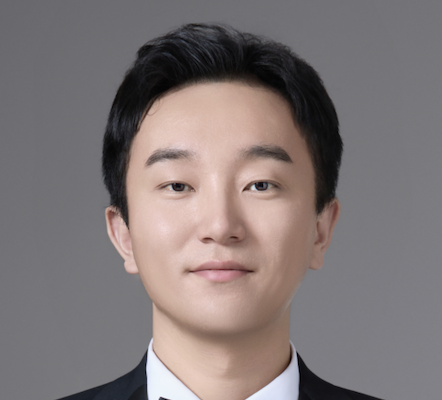
 Yongrui Chen
· 1 previous affiliation
- Southeast UniversitySince 2017
- Postdoc · Since 2024
- PhD student · 2020–2024
- MS student · 2017–2020
Research Overview
Yongrui Chen focuses on integrating structured knowledge into large language models and developing continual learning mechanisms for artificial intelligence. His work spans from early methods in semantic parsing and knowledge graph question answering to recent frameworks that decouple reasoning from knowledge storage. Currently, he investigates unified structured knowledge reasoning and dynamic knowledge updating to enhance model adaptability and factual accuracy.
Research Trajectory
Chen’s early research concentrated on improving how systems parse natural language into executable queries for databases and knowledge graphs. In 2020, he introduced a two-stage approach in Formal Query Building with Query Structure Prediction for Complex Question Answering over Knowledge Base. By predicting the query structure first to constrain candidate generation, this work reduced noise in complex question answering, contributing to the broader research direction of Reasoning Beyond Tree Structured Queries in Knowledge Graphs. He subsequently addressed the challenge of data scarcity in semantic parsing with Improving Few-Shot Text-to-SQL with Meta Self-Training via Column Specificity, developing a framework that combined self-training with meta-learning to help models generalize faster to new database schemas.
By 2023, his focus expanded to the intersection of semantic parsing and continual learning, addressing how models can acquire new tasks sequentially without catastrophic forgetting. He developed SFNET in Learn from Yesterday: A Semi-supervised Continual Learning Method for Supervision-Limited Text-to-SQL Task Streams, a framework utilizing a dual-sampling strategy to retain past knowledge while labeling new data. This advanced the area of Pseudo-Labeling for Knowledge Retention in Incremental Learning. In parallel, he proposed the C3 framework in Parameterizing Context: Unleashing the Power of Parameter-Efficient Fine-Tuning and In-Context Tuning for Continual Table Semantic Parsing, which compressed knowledge from training demonstrations into task-specific prompt parameters to achieve continual learning with zero forgetting. During this period, he also explored hierarchical approaches to knowledge graph interactions in Outlining and Filling: Hierarchical Query Graph Generation for Answering Complex Questions Over Knowledge Graphs.
As large language models (LLMs) became central to artificial intelligence, Chen’s work shifted toward refining their instruction-following capabilities and factual grounding. To overcome the high costs and hallucination risks of standard data collection, he introduced a scalable text-grounded task design in TeGit: Generating High-Quality Instruction-Tuning Data with Text-Grounded Task Design. This methodology connected to the research areas of Data Efficient Instruction Tuning for Large Language Models and Grounding Language Models with External Knowledge Retrieval. He refined this approach further in DoG-Instruct: Towards Premium Instruction-Tuning Data via Text-Grounded Instruction Wrapping, demonstrating that training an LLM to reformat human-written documents could produce high-quality instruction-response pairs with significantly less data. Concurrently, he contributed to the emerging field of machine unlearning, participating in the development of Single Image Unlearning: Efficient Machine Unlearning in Multimodal Large Language Models, which explored how to remove specific copyrighted or private data without retraining, aligning with the research direction of Preserving Model Utility During Machine Unlearning.
In 2025, Chen synthesized his expertise in structured data and LLMs to tackle complex reasoning and knowledge transfer. He provided a comprehensive taxonomy of the field in Large Language Models Meet Knowledge Graphs for Question Answering: Synthesis and Opportunities, detailing how knowledge graphs can serve as factual validators and reasoning guides for LLMs. Building on this, he introduced frameworks to unify disparate structured knowledge tasks. K-DeCore: Facilitating Knowledge Transfer in Continual Structured Knowledge Reasoning via Knowledge Decoupling decoupled reasoning into task-agnostic schema filtering and task-specific query building, enabling sequential learning across heterogeneous data types. He also led the development of Pandora: Leveraging Code-driven Knowledge Transfer for Unified Structured Knowledge Reasoning, which utilized Python's Pandas API as a unified representation to dismantle barriers between different structured knowledge reasoning tasks.
A significant portion of his recent trajectory involves rigorously benchmarking LLM capabilities and decoupling their internal architectures. He spearheaded OneEval: Benchmarking LLM Knowledge-intensive Reasoning over Diverse Knowledge Bases, revealing a "structure gap" where model performance degrades as data complexity increases. He also collaborated on ELAIPBench: A Benchmark for Expert-Level Artificial Intelligence Paper Understanding, which demonstrated that frontier models still struggle with deep comprehension of scientific literature. To address the architectural limitations of LLMs, he participated in designing Peripheral Memory for LLMs: Integration of Sequential Memory Banks with Adaptive Querying, a system that treats the model as a CPU and memory as external RAM. This work advanced the area of Decoupling Reasoning and Knowledge in Language Models. He further contributed to this paradigm in 2026 with Knowledge Externalization: Reversible Unlearning and Modular Retrieval in Multimodal Large Language Models, a framework allowing models to forget sensitive data by default while enabling authorized restoration via external memory tokens. Most recently, his collaborative work includes TaxReasoning: Benchmarking Knowledge-Intensive Mathematical Reasoning with Evolving Tax Laws, which tests the ability of LLMs to integrate dynamic, frequently updated regulations into complex mathematical reasoning.
Current Directions
The most recent papers in the evidence indicate a strong focus on modularizing large language models and evaluating their capacity for dynamic, highly structured reasoning. A primary theme in this current work is the architectural decoupling of reasoning capabilities from knowledge storage. By developing externalized, plug-and-play memory banks, this research aims to allow models to update facts, unlearn sensitive information, and adapt to new domains without the prohibitive costs of full retraining or the destructive side effects of traditional machine unlearning.
Additionally, recent work investigates the unification of structured knowledge reasoning. Rather than treating databases, tables, and knowledge graphs as isolated modalities requiring bespoke strategies, current frameworks attempt to bridge these formats using code-driven representations and decoupled schema filtering. This is paired with an emphasis on rigorous, expert-level benchmarking—testing models against evolving real-world constraints, such as dynamic tax laws and complex scientific literature, to identify and overcome the structural bottlenecks in contemporary AI reasoning.
Profile updated
Loading new papers…
Other researchers whose papers cluster into the same research directions — a proxy for overlapping technical interests and shared intellectual neighborhoods.
See something wrong? Report a mistake