

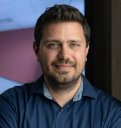
 Stephan Mandt
· 7 previous affiliations
- University of California, IrvineSince 2018
- Full Professor · Since 2026
- Current
- Associate Professor · 2022–2026
- Assistant Professor · 2018–2022
- AI Residency · 2024–2025
- ETH Zurich2025
- Visiting Professor · 2025
- Visiting Research Scientist · 2019
- Walt Disney (Switzerland)2016–2018
- Senior Research Scientist · 2018
- Researcher · 2016–2017
- Columbia University2014–2016
- Postdoctoral Researcher · 2014–2016
- Princeton University2012–2014
- Postdoctoral Fellow · 2012–2014
Research Overview
Stephan Mandt focuses on probabilistic machine learning, deep generative modeling, and neural data compression. His trajectory spans foundational work connecting stochastic optimization to approximate Bayesian inference, as well as the development of sequential latent variable models for complex temporal data. Recently, his research emphasizes controlled diffusion models, generative physics emulators, and scalable architectures for both lossless compression and scientific data assimilation.
Research Trajectory
Stephan Mandt's early work involved the probabilistic modeling of temporal data and the theoretical underpinnings of optimization algorithms. In 2017, he explored tracking semantic evolution in text via Dynamic Word Embeddings, which represented words and contexts as latent trajectories over time. Concurrently, he made influential contributions to the area of Variational Inference as an Optimization Problem. In Stochastic Gradient Descent as Approximate Bayesian Inference, he demonstrated that constant-rate stochastic gradient descent can be tuned to approximate complex posterior distributions, effectively reframing a standard optimization tool as an approximate Bayesian inference engine.
Between 2018 and 2020, his focus expanded to sequential latent variable models. He contributed to the research direction of Disentangling Static and Dynamic Factors in Sequential Latent Spaces, introducing a variational autoencoder architecture to separate time-invariant features from temporal dynamics in high-dimensional data like video in the Disentangled Sequential Autoencoder. This interest in sequence modeling continued with Improving Sequential Latent Variable Models with Autoregressive Flows, which utilized autoregressive transforms across time to remove temporal correlations and simplify the modeling of higher-level dynamics. Around this time, he also participated in evaluating the fidelity of Bayesian neural networks, contributing to discussions on the broader area of The Cold Posterior Effect in the collaborative study How Good is the Bayes Posterior in Deep Neural Networks Really?.
In subsequent years, his research increasingly intersected with data compression and anomaly detection. In the research area of Autoregressive Weight Modeling for Neural Video Compression, he explored conditioning internal priors on temporal information from previous frames in SCALE SPACE FLOW WITH AUTOREGRESSIVE PRIORS. Expanding into the broader area of Neural Networks as Probability Engines for Lossless Compression, he co-authored Lossless Compression with Probabilistic Circuits, establishing a class of tractable models that permit efficient encoding and decoding without the overhead typical of variational autoencoders. Concurrently, he addressed robust machine learning through the area of Estimating Outlier Proportions in Unsupervised Anomaly Detection. His work on Latent Outlier Exposure for Anomaly Detection with Contaminated Data introduced a framework that treats anomaly labels as latent variables, allowing models to learn effectively even when training datasets are contaminated with hidden outliers.
More recently, the trajectory has shifted heavily toward advanced generative modeling, particularly diffusion models and their application to compression, view synthesis, and scientific data. He led efforts to adapt diffusion models for progressive image compression by replacing computationally expensive Gaussian noise with uniform noise channels, detailed in Towards Scalable Compression with Universally Quantized Diffusion Models and its subsequent refinement, Progressive Compression with Universally Quantized Diffusion Models. In computer vision, he developed hybrid architectures like UMAMI: Unifying Masked Autoregressive Models and Deterministic Rendering for View Synthesis, which combines the efficiency of deterministic rendering with the generative capacity of diffusion models for novel view synthesis.
Returning to temporal and sequential data, he addressed the complexities of real-world event sequences—such as electronic health records with mixed discrete and continuous marks—in Transformers for Mixed-type Event Sequences. He also advanced the theoretical grounding of generative models by proposing a Bayesian framework to estimate sample quality in Generative Uncertainty in Diffusion Models. Furthermore, he applied diffusion processes to chaotic systems, introducing a learned control network for efficient forecasting in Control-Augmented Diffusion for Autoregressive Data Assimilation.
His latest work focuses on controlling and guiding generative models for complex inference tasks. He framed diffusion model guidance as a variational optimal control problem in Variational Control for Guidance in Diffusion Models, enabling high-quality solutions for non-linear inverse problems. This was extended to scientific applications in Calibrated Test-Time Guidance for Bayesian Inference, which introduced a framework to sample from true Bayesian posteriors rather than merely maximizing a reward. He also explored the fundamental trade-offs in machine-learned physics simulators, proposing condition-to-condition guidance to balance accuracy and diversity in Trading off Controllability and Realism in Generative Physics Emulators. Finally, he contributed to the efficiency of large language models with Parallel Token Prediction for Language Models, a framework that shifts randomness to input variables to allow the simultaneous generation of multiple interdependent tokens.
Current Directions
Recent work investigates the control, calibration, and efficiency of large-scale generative models, with a particular emphasis on scientific applications and inference-time guidance. The most recent papers in the evidence address the challenge of steering diffusion models to solve complex inverse problems without retraining. This includes developing calibrated Bayesian guidance frameworks that sample from true posteriors rather than simply maximizing rewards, which is critical for scientific tasks like black hole imaging and data assimilation in chaotic systems.
Additionally, current research explores the fundamental trade-offs between controllability and realism in generative physics emulators, seeking methods to adapt simulators to real-world observations while maintaining ensemble diversity. Beyond continuous diffusion models, recent efforts also target the efficiency of discrete sequence generation, proposing parallel token prediction frameworks that accelerate language model inference by generating multiple interdependent tokens simultaneously.
Profile updated
Loading new papers…
Other researchers whose papers cluster into the same research directions — a proxy for overlapping technical interests and shared intellectual neighborhoods.
See something wrong? Report a mistake