

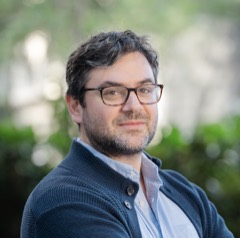
 Theofanis Karaletsos
· 6 previous affiliations
- Achira IncSince 2026
- Co-Founder · Since 2026
- Head of AI · 2024–2025
- Inistro Inc.2021–2023
- VP of ML · 2021–2023
- Meta (United States)2020–2021
- Staff Scientist · 2020–2021
- Uber AI (United States)2016–2020
- Researcher · 2016–2020
- Max Planck Society2009–2013
- PhD student · 2009–2013
Research Overview
Theofanis Karaletsos focuses on probabilistic machine learning, deep learning architectures, and the application of machine intelligence to complex scientific domains. His trajectory spans foundational work in Bayesian inference and continual learning to the development of robust models for biological systems. Currently, his research emphasizes scalable generative modeling for single-cell biology, scientific reasoning in language models, and the interpretability of neural representations.
Research Trajectory
Karaletsos’s early published work in the provided corpus centers on probabilistic machine learning and Bayesian inference. In 2021, he introduced Variational Auto-Regressive Gaussian Processes for Continual Learning, proposing a novel Bayesian framework to combat catastrophic forgetting. By utilizing a structured, auto-regressive variational distribution alongside task-specific inducing points, this work allowed models to preserve past knowledge while adapting to new tasks. This contribution advanced the broader research direction of Recursive Bayesian Updating for Continual Learning. The following year, his group developed Black-box coreset variational inference, addressing the computational bottlenecks of Bayesian inference on massive datasets. This work demonstrated how selecting representative datapoints could replace large volumes of data, preserving statistical information while accelerating downstream tasks without relying on intractable posterior sampling. This aligns with his interest in the area of Decoupling Model Specification from Inference Procedures.
Moving into 2023, Karaletsos increasingly applied deep learning architectures to complex, multi-modal, and scientific domains. He guided the development of Channel Vision Transformers: An Image Is Worth C x 16 x 16 Words, which modified the standard Vision Transformer (ViT) to better handle multi-channel imaging fields like microscopy and satellite imagery. This architecture treated each image channel as a distinct set of tokens, a concept further refined in the 2024 follow-up Channel Vision Transformers: An Image Is Worth 1 x 16 x 16 Words. By incorporating Hierarchical Channel Sampling, these models achieved significant robustness to missing data, contributing to the research direction of Segment Embeddings for Multi-Source Sequence Modeling.
Simultaneously, Karaletsos expanded his focus on computational biology and genetics. He oversaw the creation of Compositional Deep Probabilistic Models of DNA Encoded Libraries, introducing DEL-Compose, a model that analyzes DNA-Encoded Library data by breaking molecules into constituent synthons to account for experimental noise and identify molecular features. In 2024, he led the design of EmbedGEM: a framework to evaluate the utility of embeddings for genetic discovery, providing a quantitative approach to assess the heritability and disease relevance of machine learning embeddings in genetic research.
In 2025, his research bridged large language models (LLMs) and biological systems. His team introduced Scalable Single-Cell Gene Expression Generation with Latent Diffusion Models, a generative framework combining transformer-based Variational Auto-Encoders with Latent Diffusion Models to simulate single-cell gene expression as an unordered set. He also directed research on rbio1 - training scientific reasoning LLMs with biological world models as soft verifiers, exploring the integration of biological world models to enhance the scientific reasoning capabilities of LLMs.
Alongside biological applications, Karaletsos contributed to fundamental improvements in language model efficiency. With collaborators, he developed Parallel Token Prediction for Language Models, a framework enabling LLMs to generate multiple interdependent tokens in a single forward pass. This approach, which achieved significant wall-clock speedups without sacrificing output quality, was subsequently formalized in the 2026 publication Parallel Token Prediction for Language Models.
Most recently, in 2026, his work has heavily emphasized the interpretability and identifiability of neural representations. He participated in investigating Statistical and structural identifiability in representation learning, which introduced a framework of "$\epsilon$-near-identifiability" to prove that intermediate representations in self-supervised models are mathematically consistent up to rigid transformations. This advanced the broader area of Unsupervised Disentanglement of Independent Factors of Variation. Building on this theme, he collaborated on Toward Identifiable Sparse Autoencoders, introducing the iSAE architecture to make Sparse Autoencoders statistically identifiable and reliable for LLM interpretability. This work directly supports the research direction of Sparse Constraints for Identifiable and Interpretable Latent Spaces.
Current Directions
The most recent papers in the evidence indicate a dual focus on the intersection of generative AI with biology, and the fundamental interpretability of large-scale neural networks. In the biological domain, recent work investigates scalable generative modeling for single-cell transcriptomics, utilizing latent diffusion models to simulate complex cellular responses to genetic perturbations. Concurrently, efforts in scientific reasoning explore the use of biological world models to verify and guide language models. On the foundational machine learning front, current research addresses the mathematical identifiability of latent spaces. By developing novel regularizers and bidirectional features for Sparse Autoencoders, this work seeks to ensure that the concepts learned by deep models are stable, interpretable, and structurally consistent across different training paradigms.
Profile updated
Loading new papers…
Other researchers whose papers cluster into the same research directions — a proxy for overlapping technical interests and shared intellectual neighborhoods.
See something wrong? Report a mistake