

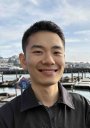
 Yibo Yang
· 3 previous affiliations
- Researcher · Since 2025
- University of California, Irvine2019–2024
- PhD student · 2019–2024
- The University of Texas at Dallas2014–2018
- Undergrad student · 2014–2018
2 other authors named Yibo Yang: Yibo Yang (Shanghai Jiao Tong University · King Abdullah University of Science and Technology · 66 papers), Yibo Yang (Meta (United States) · 1 paper)
Research Overview
Yibo Yang focuses on the intersection of deep generative modeling, information theory, and neural network optimization, with a primary emphasis on lossy image and video compression. His work investigates the fundamental limits of data compression—specifically the rate-distortion function—and develops practical algorithms that leverage variational inference and diffusion models to achieve efficient, high-fidelity data representations. Recently, his research has expanded to address stability in representation learning and the optimization of large-scale models through low-rank adaptation and informed initialization.
Research Trajectory
Yang’s early research, beginning around 2018, focused on the efficiency of neural network architectures through model compression. This work addressed the computational overhead of deep learning by proposing methods for simultaneous pruning and quantization. By integrating Gaussian priors and L1 regularization into the optimization objective, he developed techniques to reduce parameter counts while maintaining competitive performance, laying a foundation for his subsequent focus on data-centric compression.
By 2020, Yang’s focus shifted toward neural image and video compression, viewing these tasks through the lens of hierarchical variational autoencoders (VAEs). He identified critical bottlenecks in standard VAE-based compression, such as the amortization, discretization, and marginalization gaps, which limit the ability of inference networks to find optimal latent representations. During this period, he contributed to the development of sequential density estimation models for video, treating video coding as a generalized stochastic temporal autoregressive transform. This work sought to improve rate-distortion performance by conditioning priors on temporal information and utilizing normalizing flows to capture complex dependencies in high-resolution video data.
Between 2021 and 2023, Yang’s work became increasingly theoretical, focusing on the empirical estimation of the rate-distortion (R-D) function. While the R-D function defines the theoretical limit of compression for a given data source, calculating it for continuous, high-dimensional data is traditionally difficult. Yang proposed algorithms to "sandwich" the R-D function between provable upper and lower bounds, providing a benchmark for evaluating existing compression codecs. This line of inquiry culminated in the application of optimal transport theory, specifically using Wasserstein gradient descent to learn the support of optimal reproduction distributions without the constraints of traditional algorithms like Blahut-Arimoto.
In his most recent work (2024–2025), Yang has integrated diffusion probabilistic models into the compression pipeline. Recognizing that diffusion models are essentially deep hierarchical latent variable models, he developed frameworks for progressive coding. This approach allows for the incremental transmission of data, where reconstruction quality improves as more bits are received. By introducing universal quantization into diffusion-based codecs, he addressed the computational complexity typically associated with these models, achieving state-of-the-art results in the "rate-distortion-realism" trade-off.
Beyond compression, Yang has participated in broader machine learning research concerning Likelihood Gradients as Optimal Summary Statistics and Scalable Bayesian Uncertainty for Large Neural Networks. He has also contributed to studies on Sparse Attention for Robust Visual Representation and the application of Transformers to mixed-type event sequences in irregular time series data.
Current Directions
Yang’s current research continues to bridge the gap between generative modeling and practical deployment. A significant area of interest is Fixed Geometric Anchors for Stable Representation Learning, which addresses the "moving target" problem in neural network training by fixing the final classification layer. This approach aims to mitigate model drift and catastrophic forgetting, a theme also explored in his work on Balancing Backbone Plasticity and Classifier Alignment in Continual Learning.
Additionally, he is investigating methods to improve the efficiency of fine-tuning large-scale models. This includes Informed Initialization for Low-Rank Adaptation (LoRA), which seeks to overcome the "cold start" problem in parameter-efficient fine-tuning by moving away from standard zero or random initializations. These efforts reflect a broader commitment to making complex generative and representative models more stable, scalable, and theoretically grounded.
Representative Work
Scalable Neural Network Compression and Pruning Using Hard Clustering and L1 Regularization This early work proposes a compression algorithm that modifies the standard optimization problem by adding K independent Gaussian priors and an L1 penalty. The approach achieves parameter quantization through hard clustering assignments and pruning through regularization, offering a computationally efficient alternative to more complex state-of-the-art compression methods.
Improving Inference for Neural Image Compression Focusing on lossy image compression with deep latent variable models, this paper identifies three approximation gaps—amortization, discretization, and marginalization—that hinder the performance of hierarchical VAEs. Yang proposes remedies based on iterative inference and stochastic annealing, marking a significant advancement in the application of variational inference to neural coding.
Towards Empirical Sandwich Bounds on the Rate-Distortion Function This research addresses a fundamental problem in information theory: estimating the R-D function for continuous data sources without restrictive distributional assumptions. Yang introduces an algorithm that provides empirical upper and lower "sandwich" bounds, allowing researchers to quantify the remaining room for improvement in existing compression algorithms.
Estimating the Rate-Distortion Function by Wasserstein Gradient Descent Building on his work in R-D theory, Yang proposes a method to estimate the rate-distortion function using optimal transport. By employing Wasserstein gradient descent, the algorithm learns the support of the optimal reproduction distribution by moving particles, bypassing the limitations of the classic Blahut-Arimoto algorithm which requires a fixed support in advance.
Insights From Generative Modeling for Neural Video Compression In this comprehensive study, Yang and his collaborators analyze neural video coding through the lens of deep autoregressive and latent variable modeling. They present video codecs as instances of a generalized stochastic temporal autoregressive transform and propose new architectures inspired by normalizing flows that achieve state-of-the-art performance on high-resolution video.
Towards Scalable Compression with Universally Quantized Diffusion Models This work explores the potential of diffusion probabilistic models for progressive image coding. By replacing standard Gaussian noise with uniform noise and utilizing universal quantization, Yang enables the incremental transmission of bits while maintaining high reconstruction quality and realism, effectively adapting diffusion models for efficient, scalable compression.
Profile updated
Loading new papers…
Other researchers whose papers cluster into the same research directions — a proxy for overlapping technical interests and shared intellectual neighborhoods.
See something wrong? Report a mistake