

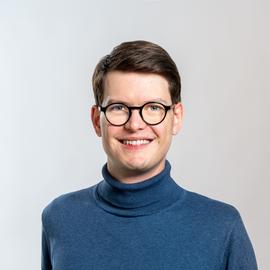
 Vincent Fortuin
· 11 previous affiliations
- Helmholtz AISince 2022
- Principal Investigator · Since 2023
- Principal Researcher · Since 2022
- Zuse Institute BerlinSince 2023
- Fellow · Since 2023
- University of Technology NurembergSince 2026
- Full Professor · Since 2026
- Technical University of Munich2023–2026
- Principal Researcher · 2023–2026
- University of Cambridge2022–2023
- Researcher · 2022–2023
- St John's College, Cambridge2022–2023
- Research Fellow · 2022–2023
- ETH Zurich2015–2021
- Doctor of Science, Machine Learning · 2017–2021
- Master of Science (MSc), Computational Biology and Bioinformatics · 2015–2017
- Research Intern · 2021
- Research Intern · 2019
- Lab Associate · 2017
- Universität Hamburg2012–2015
- Undergrad student · 2012–2015
Research Overview
Vincent Fortuin focuses on probabilistic machine learning, Bayesian deep learning, and sequential decision making, with an emphasis on developing reliable and data-efficient AI for scientific applications. His trajectory spans foundational work in time series modeling and amortized inference to scalable Bayesian methods for modern neural networks. Currently, he investigates advanced uncertainty quantification, meta-learning priors, and efficient inference techniques for large-scale models.
Research Trajectory
Vincent Fortuin's early research focused on time series modeling and foundational uncertainty quantification. In 2019, he developed SOM-VAE: Interpretable Discrete Representation Learning on Time Series to extract interpretable, low-dimensional discrete representations from high-dimensional temporal data. Extending deep probabilistic models to handle missing data in multivariate sequences, he subsequently proposed GP-VAE: Deep Probabilistic Time Series Imputation. Concurrently, he advanced uncertainty quantification by introducing Conservative Uncertainty Estimation By Fitting Prior Networks, a method that trains predictor networks to match randomly initialized prior networks, yielding conservative uncertainty estimates that reliably detect out-of-distribution data.
By 2021, his research expanded into meta-learning, ensemble methods, and dimensionality reduction. He contributed to PACOH: Bayes-Optimal Meta-Learning with PAC-Guarantees, which derived a PAC-optimal hyper-posterior to prevent meta-overfitting in few-shot scenarios with unbounded loss functions. This work advanced the area of Task Level Memorization and Meta Overfitting and the broader field of Variational Inference as an Optimization Problem. In parallel, collaborative work explored functional diversity in Repulsive Deep Ensembles are Bayesian, demonstrating that discouraging alignment between independently trained ensemble members improves both predictive performance and uncertainty calibration. He also investigated dimensionality reduction for Bayesian inference, showing in PCA Subspaces Are Not Always Optimal for Bayesian Learning that random projections can outperform Principal Component Analysis, contributing to the research direction of Subspace Bayesian Inference for Scalable Deep Learning.
Between 2022 and 2023, focusing on the foundations of Bayesian Neural Networks (BNNs), he examined weight distributions in Bayesian Neural Network Priors Revisited. This research found that incorporating spatial correlations for convolutional networks and heavy-tailed distributions for fully connected networks yields better priors than standard isotropic Gaussians. He also participated in large-scale architectural research, evaluating the integration of neural network ensembles with sparse routing in Sparse MoEs meet Efficient Ensembles. This work intersected with the areas of Conditional Computation via Sparse Mixture of Experts and Resource Constrained Uncertainty Estimation. To synthesize ongoing debates and bridge frequentist deep learning with Bayesian statistics, his group published A Primer on Bayesian Neural Networks: Review and Debates, a detailed review discussing the area of Specifying Functional Priors in Bayesian Neural Networks.
In 2024, his work emphasized sparsity, interpretability, and scaling Bayesian principles to large models. He presented a framework for Bayesian sparsification in Shaving Weights with Occam's Razor: Bayesian Sparsification for Neural Networks using the Marginal Likelihood, optimizing thousands of sparsity-inducing prior hyperparameters during training to maintain accuracy at high compression rates while introducing a free pruning criterion called Optimal Posterior Damage. Applying similar rigorous uncertainty quantification to interpretable architectures, he guided the development of Improving Neural Additive Models with Bayesian Principles, utilizing Laplace approximations to yield calibrated uncertainty intervals and prune uninformative features in glass-box models. Addressing the computational demands of modern architectures, his research demonstrated practical reliability improvements for Large Language Models in Gaussian Stochastic Weight Averaging for Bayesian Low-Rank Adaptation of Large Language Models. Returning to time series applications, he also explored efficient data collection in Towards Dynamic Feature Acquisition on Medical Time Series by Maximizing Conditional Mutual Information, balancing diagnostic accuracy against measurement costs by approximating Conditional Mutual Information via Gumbel-Softmax sampling.
Most recently, in 2025 and 2026, he has focused on the theoretical underpinnings of variational inference and the broader generative AI landscape. He co-authored a broad perspective on the field's trajectory in On the Challenges and Opportunities in Generative AI. Continuing to bridge Bayesian methods with meta-learning, he explored the Bayesian Neural Network Process in Amortising Inference and Meta-Learning Priors in Neural Networks, meta-learning weight priors directly from data to scale uncertainty quantification and enable within-task minibatching. In optimization, his group challenged prevailing assumptions by showing in Standard Acquisition Is Sufficient for Asynchronous Bayesian Optimization that standard acquisition functions can match or exceed specialized asynchronous methods. Finally, he re-evaluated the mechanics of Mean Field Variational Inference (MFVI) in Gaussian Mean Field Variational Inference can Overestimate Predictive Variance, proving that MFVI frequently overestimates predictive uncertainty on in-distribution data, offering a new mechanistic explanation for why "Cold Posteriors" often improve performance in Bayesian deep learning.
Current Directions
Recent work investigates the theoretical mechanics of variational inference, particularly how standard approximations like Mean Field Variational Inference behave with respect to predictive variance and the "Cold Posterior" effect. He is also actively exploring the intersection of meta-learning and Bayesian deep learning, developing methods to amortize inference and meta-learn weight priors directly from data to bridge Bayesian Neural Networks with Neural Processes. Additionally, the most recent papers in the evidence address the efficiency of asynchronous Bayesian optimization and the broader structural challenges facing modern large-scale generative AI models.
Profile updated
Loading new papers…
Other researchers whose papers cluster into the same research directions — a proxy for overlapping technical interests and shared intellectual neighborhoods.
See something wrong? Report a mistake