

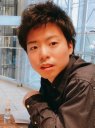
 Ren Togo
· 1 previous affiliation
- Hokkaido UniversitySince 2019
- Associate Professor · Since 2025
- Assistant Professor · 2019–2024
Research Overview
Ren Togo focuses on medical image analysis, generative modeling, and representation learning. His trajectory spans from early applications of deep learning in gastric X-ray diagnostics to the development of advanced generative frameworks and dataset distillation techniques. Currently, his work investigates domain-specific representation learning and efficient data synthesis methods to improve model generalization and interpretability.
Research Trajectory
Togo's early research concentrated on automating the analysis of gastric X-ray images to assist in clinical diagnostics. In 2016, he introduced a method for the Estimation of salient regions related to chronic gastritis using gastric X-ray images. Recognizing the persistent challenge of data scarcity and privacy constraints in medical imaging, he subsequently explored generative adversarial networks (GANs) to synthesize anonymized training data. This led to the development of Synthetic Gastritis Image Generation via Loss Function-Based Conditional PGGAN in 2019, which demonstrated that generated images could effectively train medical classification models without exposing patient information.
Continuing his focus on gastric diagnostics, Togo designed Deep convolutional neural network-based anomaly detection for organ classification in gastric X-ray examination in 2020. That same year, he extended his generative approaches to multimodal contexts with Multimodal Image-to-Image Translation for Generation of Gastritis Images. By integrating visual characteristics from X-rays with blood inspection results, this work provided a more sophisticated, integrated tool for predicting gastric cancer risk.
In 2021, Togo broadened his application of generative models beyond medical imaging. He introduced a novel framework in Text-Guided Style Transfer-Based Image Manipulation Using Multimodal Generative Models, which allowed users to manipulate image styles using natural language sentences rather than reference images. Concurrently, his work explored industrial applications and uncertainty estimation in Rubber Material Property Prediction Using Electron Microscope Images of Internal Structures Taken under Multiple Conditions. By intelligently selecting reliable predictions across various imaging conditions, this research contributed to the areas of selective prediction via uncertainty estimation and robust multi-source fusion via Dempster-Shafer theory. Building on the theme of multi-source data, he collaborated on Union-Set Multi-source Model Adaptation for Semantic Segmentation in 2022, addressing a relaxed domain adaptation setting where source domains share only a subset of the target domain's label space.
By 2023, Togo's focus expanded into foundational representation learning. He co-developed Gromov-Wasserstein Autoencoders, a method that directly matches latent and data distributions using the Gromov-Wasserstein metric rather than traditional likelihood-based objectives. This work advanced research in manifold regularization for geometry-preserving representation learning, relational structure in deep representation learning, and relational optimal transport for incomparable data spaces.
Building on these foundational techniques, Togo applied advanced modeling to healthcare, contributing to the broader research direction of Specialized Visual Grounding for Medical Foundation Models. In 2024, he investigated privacy-preserving diagnostics by proposing Prompt-Based Personalized Federated Learning for Medical Visual Question Answering, which utilizes small learnable prompts to reduce communication overhead between distributed clinical clients. That same year, he explored masked image modeling for clinical data in RGMIM: Region-Guided Masked Image Modeling for Learning Meaningful Representations from X-Ray Images.
Parallel to his medical imaging research, Togo has actively investigated dataset distillation—the process of compressing large datasets into smaller, synthetic equivalents for efficient model training. He participated in the design of Generative Dataset Distillation: Balancing Global Structure and Local Details in 2024, addressing the common failure of distillation methods to capture fine textures and shapes. He later collaborated on Foreground-Aware Dataset Distillation via Dynamic Patch Selection (2026), which enhances patch selection to avoid the generation of unrealistic, noise-like images and improve architectural generalization.
Most recently, Togo has continued to formalize representation learning frameworks. In 2025, he introduced the Exponential Dissimilarity-Dispersion Family for Domain-Specific Representation Learning, addressing performance degradation in variational autoencoders when handling high-dimensional data. Concurrently, he proposed ConcVAE: Conceptual Representation Learning, an unsupervised strategy that aligns latent spaces with human-interpretable concepts by structuring representations around antonym pairs.
Current Directions
The most recent papers in the evidence address the dual challenges of efficient dataset construction and interpretable representation learning. Recent work investigates dataset distillation, specifically focusing on foreground-aware methods and dynamic patch selection to reduce the computational overhead of training large-scale models while preserving essential visual information. Concurrently, Togo is exploring domain-specific and conceptual representation learning. This includes developing novel distribution families for variational autoencoders to handle high-dimensional visual data and designing unsupervised strategies that align latent spaces with human-interpretable semantic axes.
Profile updated
Loading new papers…
Other researchers whose papers cluster into the same research directions — a proxy for overlapping technical interests and shared intellectual neighborhoods.
See something wrong? Report a mistake