

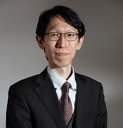
 Takahiro Ogawa
· 1 previous affiliation
- Hokkaido UniversitySince 2008
- Full Professor · Since 2023
- Associate Professor · 2016–2022
- Assistant Professor · 2008–2016
Research Overview
Takahiro Ogawa focuses on adaptive multivariate analysis, multimedia signal processing, and cross-media data visualization. His early work developed techniques for missing texture reconstruction and image restoration. More recently, his research has expanded into multimodal artificial intelligence, applying deep learning and self-supervised methods to domains ranging from medical imaging and sports analytics to financial decision-making.
Research Trajectory
Ogawa’s early research centered on image processing and restoration. In 2005, he introduced Reconstruction method of missing texture using error reduction algorithm, which utilized phase retrieval methods to estimate Fourier transform magnitudes for missing areas. This established a long-running interest in the broader area of Image Processing via Local Texture Clustering. He expanded on these restoration techniques over the next decade, developing Adaptive Subspace-Based Inverse Projections via Division Into Multiple Sub-Problems for Missing Image Data Restoration in 2016 to iteratively solve missing data problems using higher-dimensional subspace models. He continued to refine these techniques, later contributing to Inpainting via Sparse Representation Based on a Phaseless Quality Metric in 2020.
Around 2018, Ogawa's research broadened to encompass human-centric multimedia analysis and physiological signals. He participated in developing Multi-classifier Decision: Integration of Multiple Brain Activity-based Classifications, a framework that fused noisy EEG data from multiple users to classify images, advancing research in the functional alignment of neural representational geometries and collective neural decoding for robust signal extraction. Concurrently, he explored how group physical reactions could inform individual preferences in Accurate Estimation of Personalized Video Preference Using Multiple Users' Viewing Behavior. This work contributed to several areas, including hybrid information fusion for cold-start personalization and ordinal modeling for discrete human feedback. Building on this personalization theme, he collaborated on Few-Shot Personalized Saliency Prediction Based on Adaptive Image Selection Considering Object and Visual Attention, which introduced an adaptive image selection method to predict visual attention with minimal user data, aligning with the direction of Personalized Saliency and Scanpath Prediction.
As deep learning matured, Ogawa directed his expertise toward complex, real-world applications. In the medical domain, he oversaw a preliminary study on Preliminary study of AI-assisted diagnosis using FDG-PET/CT for axillary lymph node metastasis in patients with breast cancer. This 3D deep-learning model demonstrated that human-in-the-loop collaboration could significantly boost diagnostic sensitivity, contributing to research areas such as explainable deep learning for clinical diagnostics. In foundational machine learning, he co-developed TriBYOL: Triplet BYOL for Self-Supervised Representation Learning, a framework that evolved Siamese networks into a triplet architecture to enable high-quality representation learning on standard hardware. This advanced the research directions of Preventing Representation Collapse with Asymmetric Gradient Flow and Preventing Representation Collapse in Joint Embedding Architectures. His team also addressed affective computing in Zero-Shot Visual Sentiment Prediction via Cross-Domain Knowledge Distillation, leveraging knowledge distillation to predict unseen emotional categories and bridging gaps in the area of modeling subjective emotion distributions in visual media. In the generative space, he guided the development of TolerantGAN: Text-guided Image Manipulation Tolerant to Real-world Image, which introduced modules to handle unaligned compositions in "in-the-wild" photos, contributing to the direction of eliminating seams in localized image generation.
In recent years, Ogawa has investigated efficiency and robustness across diverse domains. He participated in research on Generative Dataset Distillation: Balancing Global Structure and Local Details, addressing the challenge of preserving local textures during dataset compression. This work aligns with the broader areas of Dataset Distillation for Efficient Model Training and Why Distilled Datasets Overfit to Specific Neural Architectures. In sports analytics, his lab proposed Generalized Jersey Number Recognition Using Multi-task Learning With Orientation-guided Weight Refinement to improve player identification from broadcast footage, contributing to the area of deep learning for long-tailed distributions. Expanding into financial recommender systems, his recent work includes Risk-Aware Utility Re-Ranking for Financial Asset Recommendation, which optimizes user-specific expected utility by injecting investor risk tolerance. He also co-authored Dynamic Objective Selection with Safeguards and LLM Oversight for Financial Decision-Making, introducing a system that dynamically selects objective functions for portfolio allocation, advancing the direction of selective prediction via uncertainty estimation. Returning to medical imaging, he contributed to ASMIL: Attention-Stabilized Multiple Instance Learning for Whole-Slide Imaging, which stabilizes attention mechanisms in digital pathology to produce reliable heatmaps for cancer detection, intersecting with the area of non-sum-to-one attention for robust transformers.
Current Directions
The most recent papers in the evidence indicate a focus on deploying robust machine learning models in complex, high-stakes environments. This includes stabilizing attention mechanisms for whole-slide medical imaging to improve the interpretability of cancer detection models. Additionally, recent work investigates financial decision-making, developing dynamic objective selection systems and risk-aware re-ranking methods for asset recommendation. Across these domains, a unifying theme is the optimization of model efficiency and reliability, whether through generative dataset distillation to balance global structures and local details, or through multi-task learning approaches designed to handle long-tailed distributions in challenging visual conditions.
Profile updated
Loading new papers…
Other researchers whose papers cluster into the same research directions — a proxy for overlapping technical interests and shared intellectual neighborhoods.
See something wrong? Report a mistake