

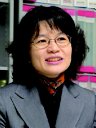
 Miki Haseyama
· 1 previous affiliation
- Hokkaido UniversitySince 2006
- Full Professor · Since 2006
Research Overview
Miki Haseyama focuses on multimedia processing, next-generation information access systems, and data-driven fusion research. Her trajectory spans from early foundational work in adaptive spectral estimation and image reconstruction to advanced representation learning and dataset distillation. Currently, she investigates efficient neural architectures, generative dataset distillation, and specialized machine learning applications in medical imaging and financial decision-making.
Research Trajectory
Miki Haseyama’s early research focused on signal processing and spectral estimation. In 1993, she introduced a method for designing an adaptive four-line lattice filter in An adaptive ARMA four-line lattice filter for spectral estimation with frequency weighting, which enabled more accurate spectral estimation for specific frequency bands using an autoregressive moving-average model. Her work later expanded into advanced image processing techniques, including methods for reconstructing missing visual data. This is exemplified by Missing Intensity Interpolation Using a Kernel PCA-Based POCS Algorithm and its Applications (2011), which aligned with her broader interest in the area of Image Processing via Local Texture Clustering.
In the 2020s, her focus shifted toward deep learning, specifically self-supervised representation learning and the optimization of neural network training. Her group developed TriBYOL: Triplet BYOL for Self-Supervised Representation Learning (2022), a framework that evolved Siamese networks into a triplet architecture to enable high-quality image representation learning with small batch sizes. This contribution advanced the research direction of Preventing Representation Collapse with Asymmetric Gradient Flow and the broader area of Preventing Representation Collapse in Joint Embedding Architectures.
A major theme in her recent trajectory is dataset distillation—the process of compressing large datasets into smaller, efficient synthetic proxies while maintaining model performance. She has made extensive contributions to the area of Dataset Distillation for Efficient Model Training and the related direction of Why Distilled Datasets Overfit to Specific Neural Architectures. In 2024, she explored methods to preserve both high-level semantics and local features in Generative Dataset Distillation: Balancing Global Structure and Local Details, and extended these generative approaches in Generative Dataset Distillation Based on Diffusion Model. Pushing this paradigm further, she introduced Hyperbolic Dataset Distillation (2025), which moved the distillation process into curved hyperbolic space to better capture hierarchical data structures in extremely low-data regimes. Concurrently, she integrated self-knowledge distillation to achieve more precise distribution matching between synthetic and original data in Generative Dataset Distillation Based on Self-knowledge Distillation.
Her 2025 research output demonstrates a broad engagement with diverse machine learning architectures and specialized applications. In dimensionality reduction, she developed StarMAP: Global Neighbor Embedding for Faithful Data Visualization, a method combining the global structure preservation of PCA with local clustering capabilities. In video analysis, she adapted efficient state-space models for long sequences in Manta: Enhancing Mamba for Few-Shot Action Recognition of Long Sub-Sequence. She also addressed multi-task learning optimization in Adaptive Shared Experts with LoRA-Based Mixture of Experts for Multi-Task Learning, utilizing parameter-efficient modules and dynamic gating to balance shared and task-specific knowledge.
Her applied machine learning work spans medical imaging, infrastructure, and personalized systems. She boosted the performance of lightweight medical models without increasing inference costs in Dual-Model Weight Selection and Self-Knowledge Distillation for Medical Image Classification. In the infrastructure domain, she explored multimodal approaches in Damage-level classification considering both correlation between image and text data and confidence of attention map. Additionally, she addressed privacy and personalization in first-person video analysis through Personalized Federated Learning for Egocentric Video Gaze Estimation with Comprehensive Parameter Frezzing.
Most recently, in 2026, her collaborative work has expanded into robust decision-making and digital pathology. She participated in the development of Dynamic Objective Selection with Safeguards and LLM Oversight for Financial Decision-Making, a system that dynamically selects objective functions based on market features. She also contributed to ASMIL: Attention-Stabilized Multiple Instance Learning for Whole-Slide Imaging, which resolves unstable attention mechanisms in digital pathology AI to produce reliable, interpretable heatmaps for cancer detection.
Current Directions
The most recent papers in the evidence indicate a strong ongoing focus on parameter-efficient architectures and the stabilization of machine learning models in specialized, high-stakes domains. A primary current direction is the advancement of dataset distillation, particularly through the use of non-Euclidean geometries (such as hyperbolic space) and generative models to create highly representative synthetic data for efficient training.
Additionally, current work investigates the adaptation of novel neural architectures—such as State Space Models (Mamba) and LoRA-based Mixture-of-Experts—to overcome computational bottlenecks in long-sequence video recognition and multi-task learning. Another significant theme is improving the reliability and interpretability of AI systems in applied contexts, visible in recent efforts to stabilize attention mechanisms in whole-slide medical imaging, implement self-knowledge distillation for resource-constrained medical classification, and design safeguard-aware dynamic objective selection for financial decision-making.
Profile updated
Loading new papers…
Other researchers whose papers cluster into the same research directions — a proxy for overlapping technical interests and shared intellectual neighborhoods.
See something wrong? Report a mistake