

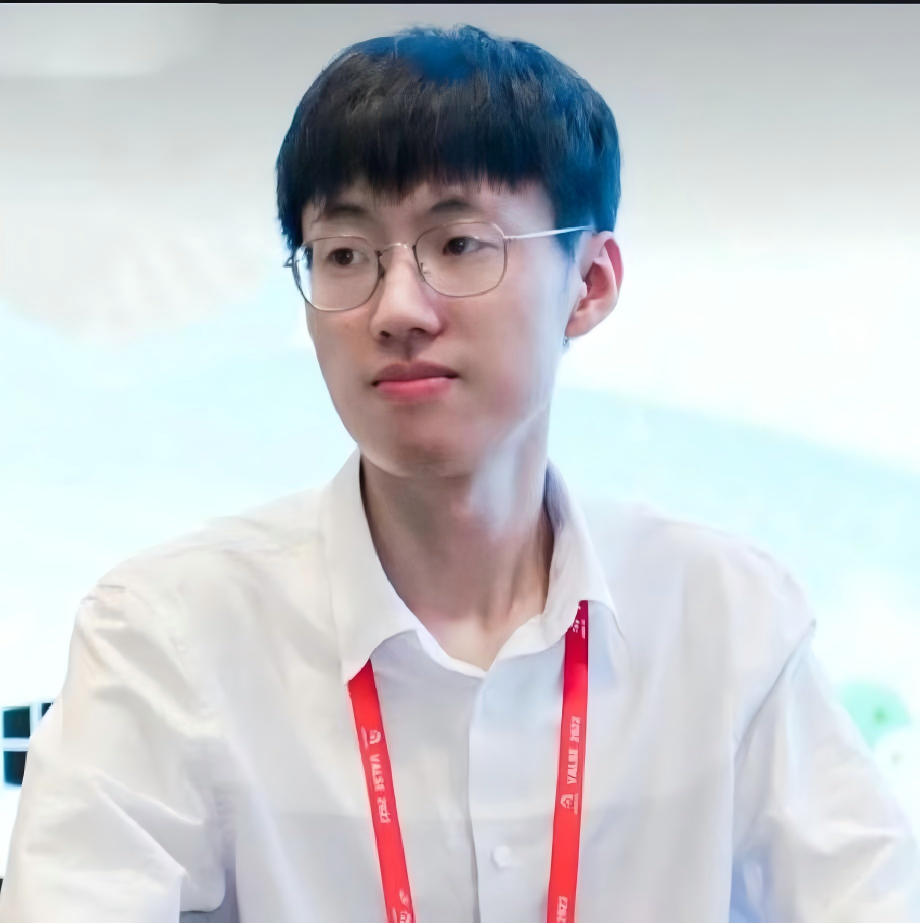
 Qibin Hou
· 2 previous affiliations
- Nankai UniversitySince 2021
- Associate Professor · Since 2021
- Current
- National University of Singapore2019–2021
- Postdoc · 2019–2021
Research Overview
Qibin Hou focuses on computer vision, deep learning architectures, and visual scene understanding. His early work explored spatial pooling and attention mechanisms to improve the efficiency of convolutional networks and vision transformers. More recently, his research investigates vision foundation models, multimodal representation learning, and generative frameworks for visual content.
Research Trajectory
His early trajectory focused on salient object detection. He participated in the development of Deeply supervised salient object detection with short connections (2016), which utilized short connections in fully convolutional networks to fuse high-level semantics with low-level spatial details. This work contributed to the broader area of High Information Density Curation for Model Training. He later co-authored a comprehensive review, Salient object detection: A survey (2019), which synthesized the field's progress and examined issues such as the Spatial Center Bias in Deep Visual Representations.
Transitioning toward architectural improvements for scene parsing and mobile networks, he introduced a novel spatial pooling strategy in Strip Pooling: Rethinking Spatial Pooling for Scene Parsing (2020). By utilizing long, narrow kernels, the model efficiently captured long-range contextual dependencies. Continuing to optimize network design, he developed a novel attention mechanism in Coordinate Attention for Efficient Mobile Network Design (2021), embedding positional information into channel attention to advance the research direction of Coordinate Attention for Efficient Spatial Localization. Around the same time, he collaborated on All Tokens Matter: Token Labeling for Training Better Vision Transformers (2021), which improved Vision Transformer (ViT) training by leveraging all image patch tokens for granular supervision.
Between 2022 and 2023, his work explored alternatives and enhancements to self-attention mechanisms. He participated in the design of SegNeXt: Rethinking Convolutional Attention Design for Semantic Segmentation (2022), demonstrating that convolutional attention could efficiently encode contextual information, contributing to the area of Efficient Receptive Field Expansion via Convolutional Kernel Decomposition. He also proposed the Vision Permutator: A Permutable MLP-Like Architecture for Visual Recognition (2023), an MLP-like model that independently encodes features along spatial dimensions to preserve spatial information without heavy convolutions. Further work on vision transformers included Token Selection is a Simple Booster for Vision Transformers (2023), which explored token selection behaviors to maximize the potential of vanilla self-attention. Concurrently, he continued his earlier trajectory in saliency with PoolNet+: Exploring the Potential of Pooling for Salient Object Detection (2023).
By 2024, his research group was directing efforts toward dense prediction, 3D representation, and generative models. They addressed target conflicts in object detection through cross-head distillation in CrossKD: Cross-Head Knowledge Distillation for Dense Object Detection (2024). In 3D vision, his team challenged standard RGB-to-depth repurposing with DFormer: Rethinking RGBD Representation Learning for Semantic Segmentation (2024), achieving high performance with reduced computational cost. Expanding into generative AI, his lab developed StoryDiffusion: Consistent Self-Attention for Long-Range Image and Video Generation (2024), focusing on maintaining character and environmental consistency across multiple generated frames.
Recent work emphasizes foundation models, multimodal learning, and advanced reasoning. His team introduced Depth Anything at Any Condition (2025), a monocular depth estimation model robust to adverse weather. They also optimized video tokenization in OneVAE: Joint Discrete and Continuous Optimization Helps Discrete Video VAE Train Better (2025), unifying discrete and continuous video Variational Autoencoders for faster training and higher reconstruction quality. In multimodal segmentation, they proposed OmniSegmentor: A Flexible Multi-Modal Learning Framework for Semantic Segmentation (2025), which pretrains across five visual modalities to avoid the computational bloat of multi-sensor training. He also contributed to Trust but Verify: Adaptive Conditioning for Reference-Based Diffusion Super-Resolution via Implicit Reference Correlation Modeling (2026), a single-step diffusion framework advancing the area of Resolving One to Many Ambiguity in Image Super Resolution. Finally, his group developed Discriminative Visual Process Rewards for Scaling Thinking at Test-Time with Images (2026), introducing a multimodal Process Reward Model to evaluate intermediate visual actions and textual reasoning.
Current Directions
The most recent papers in the evidence point toward a focus on multimodal foundation models and advanced reasoning frameworks for visual tasks. Current work investigates flexible architectures that can process diverse sensor modalities—such as RGB, depth, LiDAR, and thermal data—without prohibitive computational overhead. Additionally, recent research addresses the generation and restoration of visual content through optimized diffusion models and video autoencoders. Another emerging direction involves scaling test-time compute for multimodal models, utilizing process reward models to evaluate intermediate visual actions and textual reasoning paths.
Profile updated
Loading new papers…
Other researchers whose papers cluster into the same research directions — a proxy for overlapping technical interests and shared intellectual neighborhoods.
See something wrong? Report a mistake