

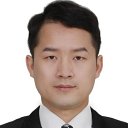
 Ming-Ming Cheng
· 5 previous affiliations
- Nankai UniversitySince 2014
- Full Professor · Since 2016
- Current
- Associate Professor · 2014–2016
- Research fellow · 2014
- Oxford Brookes University2012–2013
- Research Fellow · 2012–2013
- Xidian University2003–2007
- Undergrad student · 2003–2007
- Tsinghua University2003–2007
- PhD student · 2003–2007
Research Overview
Ming-Ming Cheng focuses on computer vision, image scene understanding, and adaptive visual perception. His early work established foundational methods in salient object detection and edge extraction, significantly advancing structural image evaluation and multi-scale feature representations. More recently, his research investigates high-fidelity 3D scene generation, continual learning, and unified multimodal models for complex visual reasoning.
Research Trajectory
The trajectory begins in the late 2000s and early 2010s with foundational contributions to image composition and visual saliency. Early collaborative work explored internet-driven image montage, developing systems like Sketch2Photo: internet image montage to seamlessly stitch photographs based on freehand sketches and text labels. Building on this interest in image structure, he introduced methods for salient region detection that simultaneously evaluated global contrast differences and spatial coherence. This resulted in Global contrast based salient region detection, which provided simple, efficient, and full-resolution saliency maps. This focus on efficient object localization continued with BING: Binarized Normed Gradients for Objectness Estimation at 300fps, which utilized the norm of gradients as a compact feature to rapidly generate candidate object windows, accelerating the sliding window detection paradigm.
As deep learning transformed computer vision in the mid-2010s, the research expanded into convolutional neural network (CNN) architectures, edge detection, and rigorous evaluation metrics. Recognizing the limitations of traditional pixel-wise metrics for salient object detection, he proposed a new evaluation paradigm in Structure-Measure: A New Way to Evaluate Foreground Maps, prioritizing region-aware and object-aware structural similarity to better align with human visual perception. Concurrently, he advanced edge detection through Richer Convolutional Features for Edge Detection, a framework that holistically fused multi-scale representations from all convolutional layers to capture superior object boundaries.
His work on CNNs also addressed fundamental feature transformation processes. He participated in the development of self-calibrated convolutions to adaptively build long-range spatial dependencies in Improving Convolutional Networks With Self-Calibrated Convolutions. This interest in multi-scale feature extraction culminated in Res2Net: A New Multi-Scale Backbone Architecture, which constructed hierarchical, residual-like connections within single blocks to increase the receptive field and boost performance across various vision tasks. These architectural improvements supported broader research areas such as the direction of Input Adaptive Convolutional Networks and the area of Robust Object Recognition in Cluttered Real World Scenes. Additionally, he contributed to the research direction of Co-Salient Object Detection across Image Groups, notably addressing dataset biases and semantic similarities in real-world situations through the introduction of the CoSOD3k benchmark in Re-Thinking Co-Salient Object Detection.
In recent years, the trajectory has shifted significantly toward high-fidelity generative models, 3D scene synthesis, and continual learning. A major theme is the generation of consistent 3D structures from 2D inputs. He guided the development of AR-1-to-3: Single Image to Consistent 3D Object Generation via Next-View Prediction, which uses an autoregressive framework to synthesize views progressively, ensuring high geometric consistency. This was expanded to sprawling environments in GeoWorld: Unlocking the Potential of Geometry Models to Facilitate High-Fidelity 3D Scene Generation, utilizing a video-to-3D pipeline to hallucinate fly-throughs for 3D reconstruction. Further advancing complex object synthesis, DIPO: Dual-State Images Controlled Articulated Object Generation Powered by Diverse Data introduced a dual-state diffusion model to generate accurate 3D articulated objects from resting and articulated image pairs.
Alongside 3D generation, his group has refined 2D generative processes and model alignment. InterLCM: Low-Quality Images as Intermediate States of Latent Consistency Models for Effective Blind Face Restoration redefined blind face restoration by treating low-quality images as intermediate states rather than starting from pure noise, improving identity preservation. To address fine-grained inaccuracies in AI image generation, he oversaw The Consistency Critic: Correcting Inconsistencies in Generated Images via Reference-Guided Attentive Alignment, which corrects localized structural and textual errors. Another prominent recent focus is mitigating catastrophic forgetting in AI systems. He led research on KAC: Kolmogorov-Arnold Classifier for Continual Learning, replacing standard linear classifiers with learnable radial basis functions to create class-specific feature zones. Similarly, Knowledge Graph Enhanced Generative Multi-modal Models for Class-Incremental Learning integrated evolving knowledge graphs to help models associate images with structured relational facts, preserving memory of older categories.
Most recently, his collaborative efforts have pushed the boundaries of unified and interactive models. He contributed to ORION: Decoupling and Alignment for Unified Autoregressive Understanding and Generation, a monolithic framework that resolves conflicts between semantic understanding and low-level generation. Finally, Infinite-World: Scaling Interactive World Models to 1000-Frame Horizons via Pose-Free Hierarchical Memory introduced an interactive world model capable of maintaining visual consistency over long horizons in complex environments. Expanding into the practical deployment of embodied systems, Cheng also participated in developing Quantization for Action, Execution for Deployment: Joint Precision and Execution Selection for World Action Models, a post-training quantization framework that co-selects precision assignments and execution routes to satisfy strict hardware constraints while preserving decision-making fidelity.
Current Directions
The most recent papers in the evidence point to a strong focus on high-fidelity 3D generation, interactive world models, and continual learning. Recent work investigates the synthesis of complex 3D scenes and articulated objects from sparse 2D inputs, leveraging autoregressive next-view prediction and dual-state diffusion models to ensure geometric consistency. Another major current direction involves scaling interactive world models to simulate long-horizon, real-world environments without temporal drift. Additionally, ongoing research addresses catastrophic forgetting in class-incremental learning, exploring novel architectures like Kolmogorov-Arnold networks and knowledge-graph-enhanced multimodal models to maintain robust memory representations as new categories are introduced.
Profile updated
Loading new papers…
Other researchers whose papers cluster into the same research directions — a proxy for overlapping technical interests and shared intellectual neighborhoods.
See something wrong? Report a mistake