

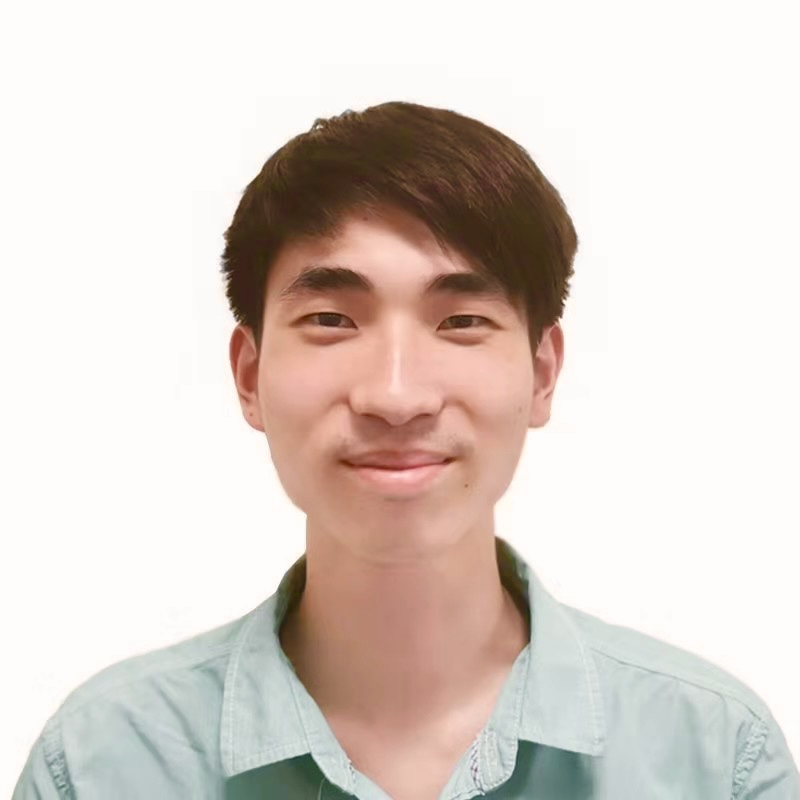
 Zihang Jiang
· 2 previous affiliations
- Researcher · Since 2023
- Current
- Undergrad student · 2015–2019
- National University of Singapore2019–2023
- PhD student · 2019–2023
Research Overview
Zihang Jiang focuses on computer vision, transformer architectures, and medical image processing. His early research explored efficient attention mechanisms and architectural scaling for both natural language and visual recognition models. More recently, his work addresses multimodal reasoning and the application of foundational vision-language models to complex 3D medical imaging tasks.
Research Trajectory
Jiang’s early research investigated attention mechanisms and feature representations for both computer vision and natural language processing. In 2020, he introduced an adaptive attention mechanism for few-shot classification in Few-shot Classification via Adaptive Attention, using a meta-reweighting strategy to generate precise spatial attention maps that localize relevant objects. In parallel, he developed ConvBERT: Improving BERT with Span-based Dynamic Convolution, which replaced global self-attention heads with span-based dynamic convolutions to reduce computation redundancy and model local dependencies more efficiently in language models.
In 2021, his focus expanded to optimizing and scaling Transformer architectures. Addressing the performance ceiling in deep vision models, he identified attention collapse as a key bottleneck and proposed a re-attention mechanism in DeepViT: Towards Deeper Vision Transformer. This work contributed significantly to the research direction of Deep and Narrow Scaling for Efficient Transformers. He also challenged the fixed interleaved patterns of standard Transformers with LV-BERT: Exploiting Layer Variety for BERT, utilizing neural architecture search to find optimal sequences of dynamic convolutions and self-attention layers for improved computational efficiency.
Continuing his work on Vision Transformers (ViTs), Jiang introduced a novel training objective in All Tokens Matter: Token Labeling for Training Better Vision Transformers, leveraging all image patch tokens for granular supervision to boost accuracy and generalization. This approach advanced the broader area of Token Space Data Augmentation for Vision Transformers. He further collaborated on Tokens-to-Token ViT: Training Vision Transformers from Scratch on ImageNet, which improved training sample efficiency by modeling local structures among neighboring pixels, contributing to the area of Inductive Bias Injection for Data-Efficient Vision Transformers.
Between 2022 and 2023, his research extended into the area of Initial Representation Quality in Class Incremental Learning with his participation in Mimicking the Oracle: An Initial Phase Decorrelation Approach for Class Incremental Learning, demonstrating that aligning initial-phase representations with an oracle model mitigates catastrophic forgetting. He also contributed to visual recognition architectures with VOLO: Vision Outlooker for Visual Recognition, advancing work in the research direction of Window Based Attention for High Resolution Vision.
Jiang’s recent trajectory demonstrates a strong shift toward 3D vision, multimodal reasoning, and medical image processing. He developed E3D-GPT: Enhanced 3D Visual Foundation for Medical Vision-Language Model, a framework that bridges 3D medical imaging and large language models by pre-training a visual foundation model on hundreds of thousands of CT volumes. In 2025, he provided a comprehensive taxonomy of an emerging search paradigm in Composed Multi-modal Retrieval: A Survey of Approaches and Applications, detailing the shift toward zero-shot approaches powered by foundation models. He also addressed 3D human mesh recovery in PostoMETRO: Pose Token Enhanced Mesh Transformer for Robust 3D Human Mesh Recovery, integrating prior anatomical knowledge into a Transformer architecture via discrete pose tokens.
Most recently, his collaborative work in 2026 includes MedGMAE: Gaussian Masked Autoencoders for Medical Volumetric Representation Learning, which replaces voxel-level reconstruction with 3D Gaussian primitives to represent anatomy as continuous geometric shapes. He also contributed to advanced medical segmentation and survival analysis through Hi-End-MAE: Hierarchical encoder-driven masked autoencoders are stronger vision learners for medical image segmentation and Pathway-Aware Multimodal Transformer (PAMT): Integrating Pathological Image and Gene Expression for Interpretable Cancer Survival Analysis, addressing complex clinical challenges and supporting the broader area of Addressing Class Imbalance in Clinical Machine Learning.
Current Directions
The most recent papers in the evidence indicate a dedicated focus on multimodal medical imaging and 3D volumetric representation learning. Current work investigates the integration of diverse data modalities—such as combining pathological images with gene expression data—to build interpretable models for complex clinical tasks like cancer survival analysis. Additionally, there is an ongoing emphasis on moving beyond discrete voxel-based representations in medical imaging toward continuous, geometric modeling using 3D Gaussian primitives. This aligns with a broader effort to develop robust, self-supervised visual foundation models capable of zero-shot reasoning and high-fidelity 3D reconstruction in specialized clinical domains.
Profile updated
Loading new papers…
Other researchers whose papers cluster into the same research directions — a proxy for overlapping technical interests and shared intellectual neighborhoods.
See something wrong? Report a mistake