

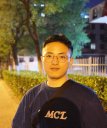
 Peng-Tao Jiang
· 3 previous affiliations
- VivoSince 2023
- Researcher · Since 2023
- Zhejiang University2022–2023
- Postdoc · 2022–2023
- Nankai University2017–2022
- PhD student · 2017–2022
Research Overview
Peng-Tao Jiang focuses on computer vision, generative modeling, and computational photography. His early work addressed weakly supervised semantic segmentation by mining integral object regions from classification networks. More recently, his research has shifted toward interactive video generation, diffusion-based image editing, and unified models for visual understanding and enhancement.
Research Trajectory
Jiang’s early research primarily addressed the challenges of weakly supervised semantic segmentation (WSSS), focusing on how to extract complete object regions from image classifiers that typically only highlight discriminative parts. He collaborated on the Self-Erasing Network for Integral Object Attention (2018), which introduced a strategy to prevent attention maps from improperly expanding into background regions during training. Building on the observation that classification networks focus on different object parts at different stages of training, he developed Integral Object Mining via Online Attention Accumulation (2019). This approach was later expanded in Online Attention Accumulation for Weakly Supervised Semantic Segmentation (2022) to further improve the generation of integral object localization maps. To address the coarse spatial resolution of traditional class activation maps, he introduced LayerCAM: Exploring Hierarchical Class Activation Maps for Localization (2021), which leveraged hierarchical features to produce pixel-accurate object locations. Continuing this line of inquiry, he proposed L2G: A Simple Local-to-Global Knowledge Transfer Framework for Weakly Supervised Semantic Segmentation (2022), utilizing local image patches to help classification models discover finer object details and transferring that knowledge to a global network.
Moving into 3D vision and efficient architectural design, Jiang tackled the problem of multi-view consistency in the presence of reflections. He introduced Looking Through the Glass: Neural Surface Reconstruction Against High Specular Reflections (2023), a method that physically decomposes scenes into target objects and auxiliary planes to recover accurate surfaces despite high specular reflections. In the domain of efficient multi-task learning, he developed Multi-Task Dense Prediction via Mixture of Low-Rank Experts (2024). This decoder-focused architecture combined a shared convolution path with re-parameterizable low-rank experts, addressing challenges in the research direction of Gradient Interference in Multi-Task Optimization while maintaining computational efficiency.
In his recent work, including his tenure as a lead researcher at vivo BlueImage Lab, Jiang has directed extensive research into generative models, video editing, and diffusion architectures. He contributed to foundational vision sequence modeling in Boosting Vision State Space Model with Fractal Scanning (2025), which utilized Hilbert scanning curves to preserve 2D spatial relationships in linear-time models. This work advances the area of Preserving Spatial Locality in Sequence Models and the closely related area of Locality Preserving Serialization for Vision Sequence Models.
In computational photography and image restoration, Jiang guided the development of CameraMaster: Unified Camera Semantic-Parameter Control for Photography Retouching (2025), a framework that decouples semantic instructions from camera parameters for physically consistent image editing. He also oversaw SDMatte: Grafting Diffusion Models for Interactive Matting (2025), which repurposed Stable Diffusion priors for precise foreground extraction using visual prompts. To address motion blur using neuromorphic sensors, he directed RED: Robust Event-Guided Motion Deblurring with Modality-Specific Disentangled Representation (2025), balancing the trade-off between noise reduction and event under-reporting. Furthermore, he led research on single-step diffusion for image enhancement in Trust but Verify: Adaptive Conditioning for Reference-Based Diffusion Super-Resolution via Implicit Reference Correlation Modeling (2026), introducing a gating module to selectively leverage high-quality reference details.
Jiang has also focused heavily on video generation and human animation. He directed MagicTryOn: Harnessing Diffusion Transformer for Garment-Preserving Video Virtual Try-on (2025) to improve spatiotemporal consistency and garment fidelity in consecutive frames. For complex human movements, he oversaw HyperMotion: DiT-Based Pose-Guided Human Image Animation of Complex Motions (2025), which introduced new benchmarks and methods for highly dynamic animations. To improve structural stability in instruction-driven scene evolution, he guided MagicWorld: Interactive Geometry-driven Video World Exploration (2025), integrating 3D geometric priors and historical retrieval to mitigate error accumulation, and contributed to FutureWorld: A Plug-and-Play Causal Next-State Predictor for Interactive Video World Exploration (2026), which predicts future scene states to limit error recirculation across long interaction sequences. Expanding into multimodal synthesis, Jiang also oversaw Here the World in Stereo: Learning Dynamic Spatial Correspondence for Immersive Joint Video-Audio Generation (2026), introducing the StereoBind framework to bind visual motion tracks to dynamic stereo audio generation. Advancing controllable video editing, he led Any-to-Bokeh: Arbitrary-Subject Video Refocusing with Video Diffusion Model (2026), a one-step diffusion framework that generates temporally stable bokeh effects, contributing to the research direction of Generative Refocusing and Boundary Aware Bokeh Synthesis as well as the broader area of Noise Augmented Training for Robust Geometric Vision.
Beyond core vision and generative tasks, Jiang has participated in the evaluation of complex multimodal systems, contributing to MedMASLab: A Unified Orchestration Framework for Benchmarking Multimodal Medical Multi-Agent Systems (2026), which provides a standardized environment for testing collaborative medical AI agents.
Current Directions
The most recent papers in the evidence indicate a strong focus on diffusion-based generative models for controllable video and image synthesis. A major theme is the enforcement of physical, geometric, and temporal consistency in generative outputs. This includes developing interactive video world models that leverage predictive priors to maintain structural stability across multi-step interactions, joint video-audio models that bind visual motion to stereo sound, as well as diffusion transformers designed for complex human motion animation and temporally coherent virtual try-on.
Additionally, recent work investigates efficient architectures for visual understanding and restoration. This encompasses the adaptation of state space models (like Vision Mamba) using fractal scanning to better preserve spatial locality, as well as the design of single-step diffusion frameworks for tasks like reference-based super-resolution and video refocusing. Across these domains, the overarching goal is to bridge high-level semantic control with fine-grained, physically accurate visual generation.
Profile updated
Loading new papers…
Other researchers whose papers cluster into the same research directions — a proxy for overlapping technical interests and shared intellectual neighborhoods.
See something wrong? Report a mistake