

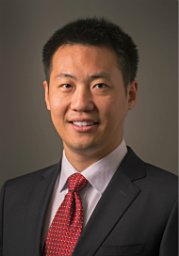
 Meng Jiang
· 5 previous affiliations
- University of Notre DameSince 2017
- Associate Professor · Since 2023
- Assistant Professor · 2017–2023
- Postdoctoral Research Associate · 2015–2017
- Tsinghua University2006–2015
- PhD student · 2010–2015
- Computer Science Undergraduate · 2006–2010
- Internship · 2014
- Carnegie Mellon University2012–2013
- Visiting Student · 2012–2013
1 other author named Meng Jiang: Meng Jiang (University of Science and Technology of China · 2 papers)
Research Overview
Meng Jiang focuses on multimodal artificial intelligence, machine unlearning, and AI for scientific discovery. Early work developed scalable anomaly detection and pattern mining techniques for large-scale graphs and text corpora. Recently, their research has shifted toward building controllable, safe, and robust foundation models, with applications ranging from molecular design to mathematical reasoning.
Research Trajectory
The early trajectory of this research centered on anomaly detection in large-scale networks. In 2014, Jiang introduced methods to identify suspicious nodes in directed graphs based on connectivity patterns. This work included CatchSync: catching synchronized behavior in large directed graphs, which quantified synchronicity and normality to detect fraudulent behavior without relying on side information. This approach was further applied to social media platforms in Detecting suspicious following behavior in multimillion-node social networks, targeting the identification of zombie followers and artificially inflated engagement metrics.
Following this, the focus expanded to automated text mining and knowledge extraction from massive corpora. In 2017, Jiang developed MetaPAD: Meta Pattern Discovery from Massive Text Corpora, a context-aware segmentation framework that bypassed costly dependency parsing to discover high-quality typed textual patterns. This work contributed to the broader research direction of Mitigating Cascading Errors in Sequential Processing Pipelines. During this period, collaborative efforts also produced Automated Phrase Mining from Massive Text Corpora, leveraging distant supervision from general knowledge bases to eliminate the need for expensive human labeling. This line of unsupervised semantic analysis continued with TaxoGen: Unsupervised Topic Taxonomy Construction by Adaptive Term Embedding and Clustering in 2018, which utilized adaptive spherical clustering and local embeddings to construct hierarchical topic taxonomies.
By 2022, the research incorporated causal inference and large language models (LLMs) into representation learning. Learning from Counterfactual Links for Link Prediction applied causal frameworks to graph neural networks, generating counterfactual links to distinguish essential connectivity factors from surface-level structural associations. In the natural language domain, Generate rather than Retrieve: Large Language Models are Strong Context Generators proposed replacing traditional document retrievers with LLM generators for knowledge-intensive tasks, demonstrating that prompting models to generate contextual documents could outperform standard retrieve-then-read pipelines.
As LLMs became more prominent, Jiang investigated their reasoning capabilities and safety mechanisms. The 2024 paper Large Language Models Can Self-Correct with Minimal Effort introduced an iterative verify-then-correct framework, advancing the area of The Inference Latency of Iterative Refinement by demonstrating how simple verification prompts could unlock inherent self-correction abilities in LLMs. The integration of external knowledge into these systems was synthesized in the monograph Knowledge-augmented Methods for Natural Language Processing. Concurrently, a major focus emerged around AI safety, specifically in the area of Preserving Model Utility During Machine Unlearning. This was formalized in Machine Unlearning in Generative AI: A Survey and operationalized in Towards Safer Large Language Models through Machine Unlearning, which introduced a selective knowledge negation framework to eliminate harmful information while maintaining robust performance on normal prompts.
Recent work in 2025 and 2026 has diversified into multimodal systems, collaborative agents, rigorous alignment, and AI for scientific discovery. In natural language verification, Optimizing Decomposition for Optimal Claim Verification framed claim decomposition as a bilevel optimization problem, using reinforcement learning to dynamically decompose claims for optimal factuality evaluation. In the visual domain, Leopard: A Vision Language Model for Text-Rich Multi- Image Tasks addressed the challenges of reasoning across multiple text-heavy images by dynamically optimizing visual sequence lengths based on aspect ratios. In agent architectures, Jiang's lab introduced HyperHarness: Learning to Generate Personalized Agent Harnesses from User Histories, generating executable, user-specific retrieval and guidance code from interaction logs to amortize adaptation costs. Jiang also contributed to collaborative agent coordination in Grounding Collaborative Agents in Group Cognition, which formalized group briefing to reconstruct shared context, dynamics, and grounding gaps across multi-party interaction histories.
In the physical sciences, Jiang has developed specialized architectures for molecular and materials informatics. SPECTRA: Spectral Target-Aware Graph Augmentation for Imbalanced Molecular Property Regression introduced spectral domain data augmentation to generate chemically realistic synthetic molecules, improving predictions for rare compounds. Similarly, Learning Repetition-Invariant Representations for Polymer Informatics proposed a method to learn polymer representations that remain invariant to the number of repeating structural units. This scientific focus culminated in Graph Diffusion Transformers are In-Context Molecular Designers, which presented a demonstration-conditioned diffusion model capable of in-context molecular design without relying on text prompts, followed by Controllable Molecular Generative Foundation Models, which combined motif-aware graph diffusion with reinforcement learning over chemically meaningful spaces to improve controllability across materials and drug discovery targets.
Simultaneously, research on model alignment and safety has continued to mature. Dual-Space Smoothness for Robust and Balanced LLM Unlearning proposed a unified framework enforcing smoothness in both representation and parameter spaces to defend against jailbreak and relearning attacks. Furthermore, Learning to Optimize Multi-Objective Alignment Through Dynamic Reward Weighting addressed the limitations of fixed-weight linear scalarization in reinforcement learning, introducing dynamic reward weighting to better navigate non-convex Pareto fronts during online preference alignment. Safety considerations also extended to embodied agents in Teaching Vision-Language-Action Models to Stop Safely, which presented State-Aware Fallback Imitation to teach robots stationary fallback responses mid-execution when instructed to halt prohibited tasks.
Current Directions
The most recent papers in the evidence indicate a strong ongoing focus on AI for scientific discovery, personalized and collaborative agent systems, and the robust alignment of foundation models. In the scientific domain, current work investigates specialized architectures for molecular and materials design, treating tasks like polymer property prediction and in-context molecular generation as complex graph representation problems. Concurrently, research in model alignment addresses the theoretical and practical challenges of multi-objective reinforcement learning and machine unlearning. This involves developing dynamic reward weighting schemes to balance conflicting alignment objectives and designing dual-space optimization techniques to ensure that unlearning procedures are robust against adversarial attacks without degrading the model's general utility.
Profile updated
Loading new papers…
Other researchers whose papers cluster into the same research directions — a proxy for overlapping technical interests and shared intellectual neighborhoods.
See something wrong? Report a mistake