

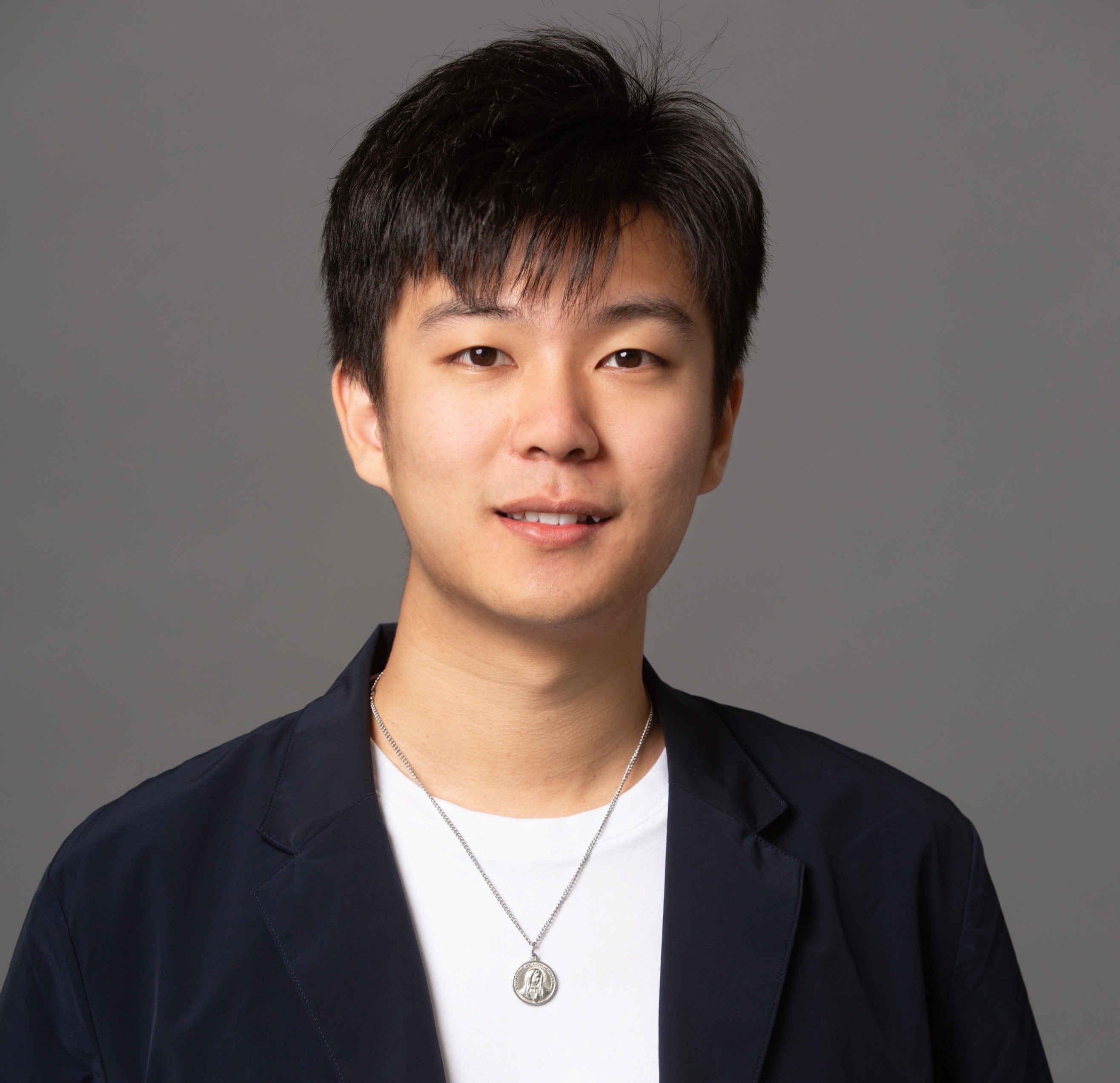
 Wenhao Yu
· 3 previous affiliations
- OpenAI (United States)Since 2026
- Researcher · Since 2026
- Tencent (China)2023–2025
- Researcher · 2023–2025
- University of Notre Dame2019–2023
- PhD student · 2019–2023
4 other authors named Wenhao Yu: Wenhao Yu (Google (United States) · Google DeepMind (United Kingdom) · 55 papers), Wenhao Yu (50 papers), Wenhao Yu (Chinese University of Hong Kong · 3 papers), Wenhao Yu (2 papers)
Research Overview
Wenhao Yu focuses on natural language processing, reinforcement learning for language models, and autonomous agentic behaviors. His early work explored knowledge-enhanced text generation and retrieval-augmented reasoning to improve factual fidelity. More recently, his research investigates self-improving large language models that continuously learn through interaction, verifiable rewards, and parallel reasoning paths.
Research Trajectory
Yu’s early research addressed the integration of external knowledge into language models to improve factual accuracy and reasoning. In 2020, he developed Tri-Train: Automatic Pre-Fine Tuning between Pre-Training and Fine-Tuning for SciNER, introducing a transitional training phase to adapt large foundation models for specialized scientific named entity recognition. He then focused on the research direction of Pointer Generator Mechanisms for Grounded Text Generation. In this area, he introduced Injecting Entity Types into Entity-Guided Text Generation (2021), a method that explicitly incorporates entity type information during decoding to generate more coherent narratives from sparse inputs.
This interest in knowledge-grounded generation culminated in a comprehensive overview, A Survey of Knowledge-enhanced Text Generation (2022), which synthesized approaches for embedding internal and external knowledge into encoder-decoder architectures. Around the same time, he explored dictionary-based enhancements in Dict-BERT: Enhancing Language Model Pre-training with Dictionary (2022) and unified retrieval strategies in Retrieval Augmentation for Commonsense Reasoning: A Unified Approach (2022). These works align with his broader efforts in the area of Reducing Contextual Noise for Robust Reasoning.
Moving beyond traditional retrieve-and-read pipelines, Yu proposed a paradigm shift in how language models access knowledge. In Generate rather than Retrieve: Large Language Models are Strong Context Generators (2023), he demonstrated that prompting a large language model to generate its own contextual documents often yields better performance on knowledge-intensive tasks than retrieving documents from an external corpus. He also collaborated on methods to improve logical deduction over texts, contributing to Pre-training Language Models for Comparative Reasoning (2023). This work introduced a scalable data collection method and pre-training framework to enhance entity comparison, intersecting with the broader area of Factual Fidelity in Data to Text Generation.
As language models evolved into multimodal and agentic systems, Yu's focus expanded to visual reasoning and interactive environments. He led the development of Leopard: A Vision Language Model For Text-Rich Multi-Image Tasks (2024), addressing the scarcity of instruction-tuning data for scenarios requiring logical flow across multiple text-heavy images, such as presentations or scanned documents. In the domain of digital agents, he investigated the transition from static datasets to dynamic environments. MobileGUI-RL: Advancing Mobile GUI Agent through Reinforcement Learning in Online Environment (2025) introduced a reinforcement learning framework and synthetic curriculum that significantly improved mobile navigation capabilities. Recognizing the vulnerabilities of these autonomous systems, he also authored Towards Trustworthy GUI Agents: A Survey (2025), which categorized critical challenges in security, reliability, and evaluation methodologies for interface-driven agents.
Currently a Senior Researcher at Tencent AI, Yu's most recent trajectory centers on self-evolving models and advanced reinforcement learning techniques. He contributed to Parallel-R1: Towards Parallel Thinking via Reinforcement Learning (2025), a framework designed to move beyond teacher-forced imitation by using RL to encourage models to explore multiple reasoning paths concurrently. This aligns with the research direction of Scaling Reasoning via Test Time Compute and Policy Optimization. He also explored interpretability and control in Self-Regularization with Sparse Autoencoders for Controllable LLM-based Classification (2025), proposing a method to identify and suppress unwanted features within model embeddings.
His work on autonomous self-improvement includes Guided Self-Evolving LLMs with Minimal Human Supervision (2025), which demonstrated how models can learn from their own generated data using a small fraction of human anchor data to prevent concept drift. In 2026, he co-developed Vision-SR1: Self-Rewarding Vision-Language Model via Reasoning Decomposition and Multi-Reward Policy Optimization, a framework that combats visual hallucinations by rewarding models based on the sufficiency of their self-generated visual descriptions. Finally, his collaborative work on R-Zero: Self-Evolving Reasoning LLM from Zero Data (2026) established a co-evolutionary loop between internal "Challenger" and "Solver" roles, allowing models to develop advanced capabilities without human-curated labels. This work heavily advances the areas of General Purpose Reasoning from Specialized Reinforcement Learning and Scaling Language Model Reasoning Beyond Verifiable Rewards.
Current Directions
Recent work investigates the autonomous self-improvement of large language and vision-language models. A primary focus is developing frameworks that allow models to continuously evolve using minimal or zero human-curated data. By employing co-evolutionary loops—where models generate their own curricula or act as both challengers and solvers—this research aims to scale reasoning capabilities autonomously.
Additionally, current efforts emphasize the application of reinforcement learning to elicit complex reasoning and agentic behaviors. This includes optimizing policies for parallel thinking, utilizing verifiable self-rewards to ground multimodal understanding, and transitioning the training of graphical user interface agents from static datasets to dynamic, online environments. A persistent theme across these directions is ensuring that as models become more autonomous, they remain robust against hallucinations, concept drift, and reward hacking.
Profile updated
Loading new papers…
Other researchers whose papers cluster into the same research directions — a proxy for overlapping technical interests and shared intellectual neighborhoods.
See something wrong? Report a mistake